Today, 18 January, the Portuguese are electing a new President of the Republic. More than eleven million registered voters have the opportunity to decide who will succeed Marcelo Rebelo de Sousa, who has served two full terms and, according to the Constitution, cannot run again.
Polling stations are open from 8 am in mainland Portugal and Madeira and close at 7 pm. The first exit poll results are expected at around 8 pm, while preliminary official data will be released during the night.
These elections take place amid deep political instability, following a series of votes that have left the Portuguese people weary and divided.
In the past two years, Portugal has experienced an extremely turbulent period. Since March 2024, citizens have participated in several election cycles – parliamentary, European, local, and snap parliamentary elections – which at times created a sense of a continuous election campaign.
This frequency is not only a logistical challenge but also a symptom of a deeper crisis of confidence in traditional parties.
The ruling centre-right coalition governs without an absolute parliamentary majority, while the opposition remains deeply divided. In this context, the presidential role, although largely ceremonial, becomes a key stabiliser for institutions.
The President of Portugal does not have executive power like the Prime Minister but holds significant influence. The president can disband parliament and call snap elections, as Marcelo Rebelo de Sousa did three times during his term.
The president also has the right to veto laws, which parliament can usually override with an absolute majority of all deputies, while in certain areas, such as organic laws, a larger majority is required.
The president represents the country abroad as a moral authority. In times of crisis, the president becomes a stabilising factor, preventing the total chaos that could result from a parliamentary stalemate.
Polls show a close race among Portugal’s leading candidates
A record number of candidates marks this year’s elections. Eleven candidates collected the required seven and a half thousand signatures and passed the Constitutional Court's verification.
This is the highest number in the history of Portuguese democracy since the Carnation Revolution of 1974. The diversity of candidates reflects a wide range of social sentiments, from serious political figures to satirical ones who use the campaign to criticise the system.
Among them is the artist Manuel João Vieira, known as Candidate Vieira, whose absurd proposals – such as a Ferrari for every citizen or wine on tap – attract attention and highlight voters' frustrations.
However, the real contest is between the five main contenders. Polls released on Friday, the last day of legal campaigning, indicate a close race. António José Seguro, supported by the Socialist Party (PS), leads with around 25 per cent support.
Chega, founded seven years ago, became the main opposition force after the 2025 snap parliamentary elections
A former socialist leader, Seguro, represents the continuity of the centre-left tradition and emphasises social justice and European integration.
Close behind is André Ventura, leader of the Chega party, with about 23 per cent. Chega, founded seven years ago, became the main opposition force after the 2025 snap parliamentary elections, securing more than 20 per cent of the vote and focusing on anti-immigration rhetoric and criticism of the establishment.
Even closer is João Cotrim de Figueiredo of the Liberal Initiative (Iniciativa Liberal), a pro-European right-liberal party advocating free markets and reduced state intervention, with support around 22 per cent.
Luís Marques Mendes, supported by the ruling PSD, represents the centre-right and stresses the need for ambition against what he calls the conformity of Portuguese society.
The fifth major candidate is Henrique Gouveia e Melo, a retired admiral who led a successful vaccination campaign during the COVID pandemic and is running as an independent under the slogan that his only party is Portugal.
Portugal headed for its first runoff since 1986
It is highly likely that no candidate will win an absolute majority in the first round. This would lead to the first runoff election in forty years, since 1986.
The fragmentation of votes among so many candidates almost guarantees a runoff, scheduled for 8 February.
Most analyses indicate that Ventura, despite strong support, would struggle to win the second round due to a high rejection rate among voters, over 60 per cent.
While many foreign media outlets highlight the potential historic breakthrough of the right through Ventura, the reality is more complex.
Portugal is experiencing fatigue from political instability, and voters are seeking a figure who can act as an arbiter above daily party disputes.
Polls for the runoff predict a landslide victory for any mainstream candidate against Ventura
Candidates such as Gouveia e Melo or Marques Mendes find their strength in precisely this situation. The admiral's popularity stems from a period of crisis when he demonstrated efficiency and unity, while Mendes' experience comes from a governing structure without excessive polarisation.
Undoubtedly, Chega has grown, but parliamentary arithmetic limits its influence. The party has no coalition partners willing to engage in open cooperation, which isolates it in the legislative process.
Presidential elections, with direct voting, differ from proportional parliamentary elections. Voters often vote strategically, choosing a lesser evil or a figure of stability over an ideological favourite.
This explains why polls for the runoff predict a landslide victory for any mainstream candidate against Ventura.
Portugal chooses stability over extremes
The broader European context adds weight to these elections. While countries such as Italy, Hungary or the Netherlands are seeing the strengthening of populist forces in executive positions, Portugal remains resilient.
Economic recovery after the pandemic, supported by European funds, has brought growth and reduced unemployment but also new tensions around immigration and housing.
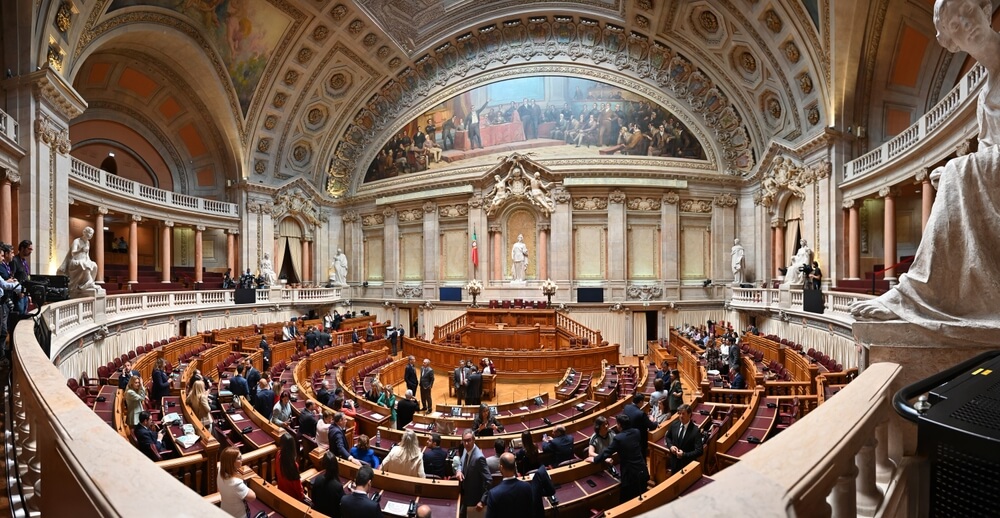 In the long term, these elections could force parties to reform the electoral system or cooperate more. Frequent elections waste resources and erode trust
Foreign workers have become more visible, which Ventura uses to mobilise support. However, Portuguese society, with deep memories of the Salazar dictatorship, remains cautious about extremes.
The forecast for this election differs from the usual narrative of an unstoppable right-wing wave. Portugal is more likely to elect a president who will act as a brake on further divisions.
If Gouveia e Melo or Mendes reach the second round, they could consolidate the votes of the centre and the right, preventing polarisation.
Even if Ventura advances, his defeat in the runoff would signal that voters are distinguishing parliamentary protest support from a desire for stability at the head of state.
In the long term, these elections could force parties to reform the electoral system or cooperate more. Frequent elections waste resources and erode trust.
The new president, whoever he is, will face the challenge of using his powers wisely, avoiding too frequent calls for votes that would further exhaust the nation.
Portugal today stands at a crossroads, though it may not be as dramatic as some have predicted. Rather than the triumph of extremism, the more likely outcome is a return to the pragmatic centre, where institutions demonstrate resilience despite surface chaos.
The outcome of these elections will not only determine the occupant of Belém Palace but also set the tone of political life in one of Europe's oldest democracies for the next five years.
