The sharp increase in global energy prices since the start of the Iran war has revived memories of the 2022 spike, triggered by Russia’s full-scale invasion of Ukraine, and the energy sanctions that followed.
At that time, central banks failed to recognize right away the scale of the inflationary pressures being generated.
By the time they did, they had little choice but to launch an abrupt and aggressive monetary-tightening cycle. Today, they seem committed not to make the same mistake.
So far, this shock appears to be smaller than in 2022. Though the increase in crude oil prices is similar—around 60-70%—the starting point is different.
Crude oil prices rose sharply over the several months before the Ukraine war, more than doubling from their spring 2021 low (a result of the COVID-19 pandemic) to reach $80 per barrel—twice the 2020 average—by the end of the year.
This rebound was generating inflationary pressures well before oil prices peaked at $110-$120 per barrel (similar to today’s level) in the summer of 2022.
In Europe, these pressures were compounded by rising natural-gas prices, which grew by a factor of 5-6, from their May 2020 low, by the end of 2021.
That December, natural gas reached €70 ($80) per megawatt-hour on the leading Amsterdam TTF exchange—higher than the €50-55/MWh recorded since the Iran war began.
While consumers usually have longer-term heating and electricity contracts that shield them from short-run price fluctuations, contracts were gradually repriced, causing the consumer price index to rise.
Inflation
By the time Russia launched its full-scale invasion of Ukraine, inflation was running above 5% on both sides of the Atlantic.
But the US Federal Reserve and the European Central Bank (ECB) paid it little mind, because their models predicted that inflation would fall back toward 2% at the end of their forecasting horizon.
As long as energy prices are expected to decline, central banks do not need to raise interest rates
Modern central-bank models assume that agents are forward-looking and trust that monetary policymakers will ultimately deliver on the 2% target.
As long as energy prices are expected to decline, central banks do not need to raise interest rates.
The ECB’s staff projections reflected this fundamental optimism: in March 2022, they had inflation falling from 5.1% in 2022 to 2.1% in 2023, without any interest-rate hike. By the time the ECB raised rates, in July 2022, inflation had surpassed 8%.
The increase in inflation should be temporary
ECB President Christine Lagarde is well aware that the current energy-price shock is smaller than the one Europe faced four years ago.
She said as much in a recent speech, noting that the increase in inflation should be temporary.
ECB staff projections match this view, putting inflation modestly above target at 3.5% for 2026 even under an adverse scenario, and assume it will fall back to 2% next year.
But the ECB appears set to act, anyway. As Lagarde put it, a “large though not-too-persistent overshoot” of the institution’s inflation target should not be left “entirely unaddressed,” as this “could pose a communication risk,” with the public finding it “difficult to understand a reaction function that does not react.”
The Fed appears to be slowing down its rate-cutting cycle
Moreover, the expectation that inflation will “deviate significantly and persistently from target” warrants an “appropriately forceful or persistent” response.
Rising medium-term interest rates indicate that financial markets now anticipate monetary-policy tightening this year, not only in Europe but also in the United States.
At the very least, the Fed appears to be slowing down its rate-cutting cycle.
This is notable, given that the US is paying about a third as much for natural gas as Europe or Asia, thanks to its large domestic energy-production base, comprising mostly shale gas (its export facilities for liquefied natural gas are operating at or near full capacity).
For Europe, the bigger risk lies elsewhere
Policy is driven not only by data and models, but also by experience. Central banks do not want to lose the last war again.
As a result, inflation is likely to remain under control, despite the pressures generated by the Iran war.
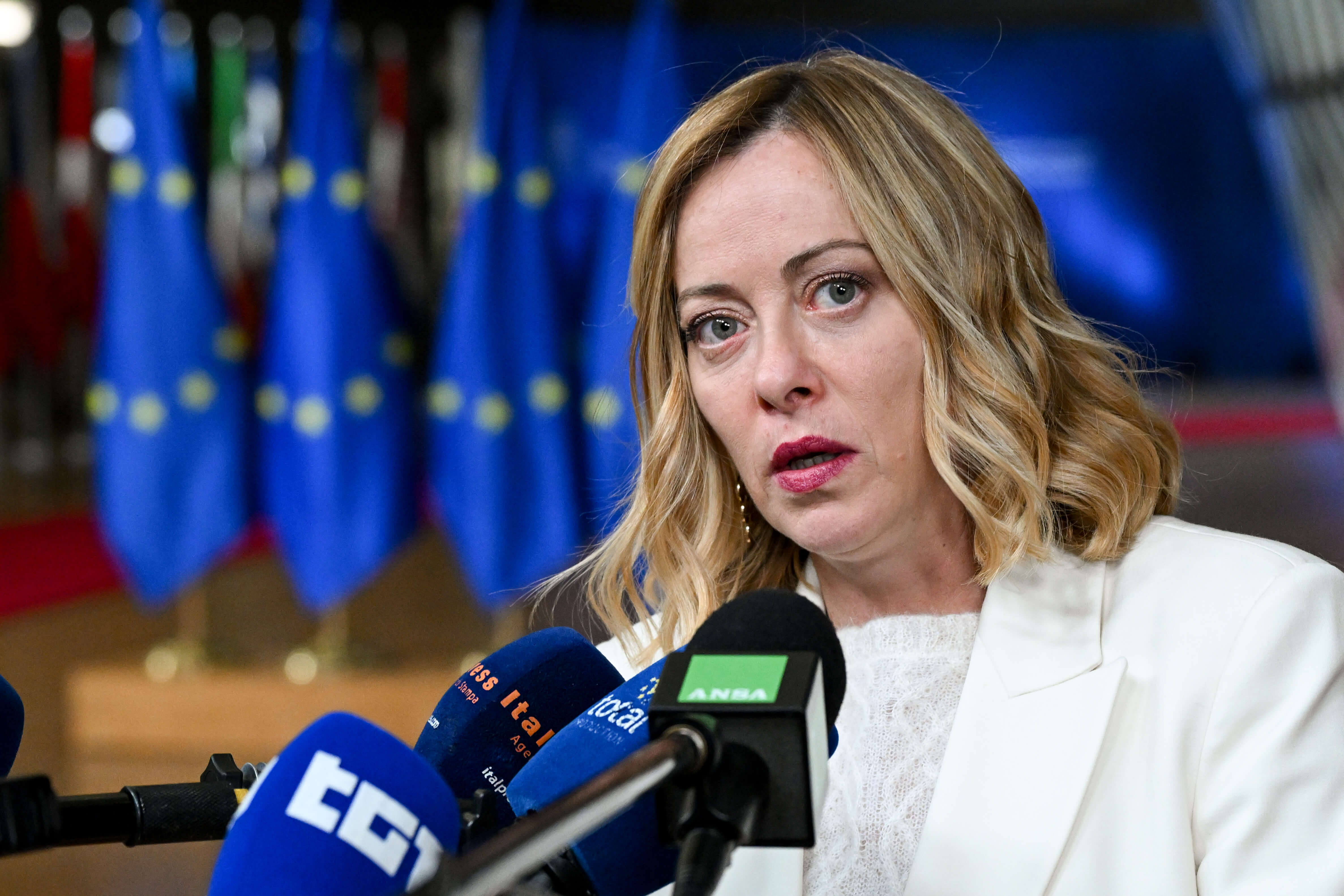 Italy’s government has announced plans to neutralize the effects of the carbon price set by the Emissions Trading System - Giorgia Meloni
The immediate impact of higher oil prices has so far been modest, with inflation increasing by half a percentage point, up to 2.5%. The ECB should be able to deal with this.
For Europe, the bigger risk lies elsewhere. Faced with higher natural-gas prices, industry is lobbying hard for subsidies and a relaxation of emission-reduction targets. And European policymakers appear to be buckling under the pressure.
At the last European Council meeting, they called for a review of the European Emissions Trading System, which forms the core of Europe’s green transition.
Italy’s government has already announced plans to neutralize the effects of the carbon price set by the ETS.
That is an alarming turn. Given the rapidly escalating costs of global warming, Europe will regret allowing its climate ambitions to become yet another casualty of the Iran war.
Daniel Gros is Director of the Institute for European Policymaking at Bocconi University.
