If there is one key takeaway from the just-concluded Munich Security Conference, it is a message of trust and confidence in Europe. The European Union is a technology, trade, and industry powerhouse.
Around Europe, the signs of this strength abound: off the northern coast of Poland, just beyond the horizon, 233 giant turbines – each almost as tall as the Eiffel Tower – are about to rise from the sea floor.
With German rotors, foundations designed in Denmark, and cables from Poland and Greece, they will be towering symbols of European manufacturing excellence and industrial might.
As the latest additions to an already vast Baltic fleet, they are creating thousands of jobs across the supply chain; and when they are operational, they will supply an additional 5.5 million households with clean energy.
Producing energy made in Europe, by Europe, for Europe, Poland’s offshore wind farms are as important strategically as they are economically.
They add to a buildout of clean power that is happening across the continent from Italy in the South to Ireland and Lithuania in the North.
Cables and interconnectors – enough to wrap the Earth many times over – are being laid to link the windy northern seas with the sunlit Mediterranean coastline, creating a superhighway for the age of electrons.
Meanwhile, cutting-edge fiber-optic sensors pioneered by Dutch innovators will be watching over the seabed to protect Europe’s critical infrastructure.
New constellations of satellites developed in Belgium will offer enhanced surveillance capabilities from space, alongside cutting-edge radar systems from France and Spain.
And all these systems will be connected by AI-powered 6G networks developed in Finland.
The EU’s energy transition
These are just a few of the nearly 900 investment projects financed by the European Investment Bank Group last year alone.
By leveraging EU budget guarantees to mobilize private investment, the EIB Group is powering the unfolding energy and technological revolutions.
The transition into tomorrow’s world is already in full swing in Europe – a major development that remains overlooked amid rapid geopolitical change.
The overall investment in the EU’s energy transition reached a new record in 2025, approaching €400 billion
In fact, the overall investment in the EU’s energy transition reached a new record in 2025, approaching €400 billion ($455 billion) – from hydropower in Austria to new railways in Czechia, and from energy efficiency upgrades by small businesses in Croatia to clean technologies deployed by heavy industries in Portugal.
Just in the past year, the combined market capitalization of European renewables companies has risen by over 50%.
Something that many thought impossible in the near term is already happening – Europe is irreversibly weaning itself off Russian gas.
European investments in defense
European investments in defense are increasing even more rapidly. European defense stocks have tripled in value in the past three years.
Europe’s industrial production capacity now exceeds even that of the United States in critical areas, including artillery shells.
Europe is moving by leaps and bounds into strategic sectors and technologies such as drones. A new venture-capital ecosystem geared toward pioneering security and defense enterprises has emerged almost overnight and essentially from scratch.
In 2020, no one expected that a European biotech company would pioneer a vaccine against an unknown virus in a matter of months
We have seen a similar mobilization before. In 2020, no one expected that a European biotech company would pioneer a vaccine against an unknown virus in a matter of months, helping the world put down a once-in-a-century pandemic.
Nor did anyone think that European leaders would launch a massive recovery and resilience program financed by joint debt – an unprecedented show of solidarity and unity.
When Russia’s full-scale invasion of Ukraine caused a massive spike in energy prices, everyone assumed that the European economy would buckle. Instead, the eurozone’s GDP grew faster than China and the US that year.
Europe has emerged as a beacon of stability in an uncertain world
In the face of trade warfare, intense market volatility, and shifting traditional partnerships and alliances, European companies have proven resilient, not only diversifying their trade flows but also maintaining strong growth and investment.
European stock markets ended up outperforming US exchanges in 2025, rewarding investors who put their trust in our economy.
Unemployment is hovering near record lows, and growth is picking up – thanks to high-performing countries such as Spain and Poland. Europe has emerged as a beacon of stability in an uncertain world.
Time and again, the EU has adapted and reinvented itself in the face of crises, leaving it well prepared to navigate a tempestuous geopolitical environment.
An export powerhouse, the EU is home to world-class universities and research centers, as well as a vibrant start-up ecosystem.
Europe may be a different kind of superpower, one that prizes values, rules, and multilateralism over sheer might
Opinion polls show record levels of public support for the EU and the euro, and global surveys indicate that majorities around the world see the EU as a great power on an equal footing with the US and China.
They are right to do so. With a $22 trillion economy, a vast single market of nearly a half-billion people, and plans for another wave of enlargement, Europe’s weight in the world is undeniable.
It may be a different kind of superpower, one that prizes values, rules, and multilateralism over sheer might.
But its power lies in its commitment to principles and willingness to back its partners and allies, as demonstrated by its status as the biggest source of financial and military assistance to Ukraine.
We need even deeper integration
Europe continues to build bridges in a world of walls. It is the world’s leading trade power, residing at the center of a vast, ever-expanding network of free-trade agreements.
It is also an investment superpower that promotes shared prosperity around the world.
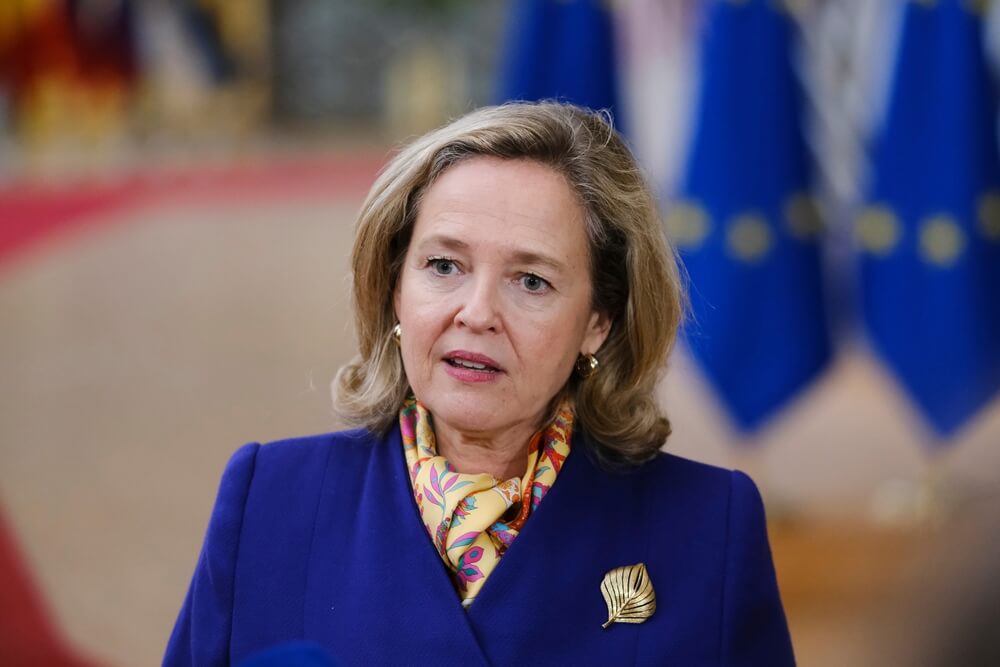 We are determined to capitalize on Europe’s strengths as the world’s underappreciated superpower - Nadia Calviño
As the biggest source of humanitarian aid and development finance, Europe funds everything from global vaccination campaigns to projects to improve water supplies in Amman and Karachi.
We do so because we remain committed to the same values that brought us this far. European unification started nearly eight decades ago from the ashes of two world wars.
Our parents and grandparents learned from the tragedies and mistakes of that dark era, and we can draw inspiration from their example to shape a better future for ourselves and others around the world.
Ours is a society based on inclusion, equality of opportunity, intellectual freedom, peace, and the rule of law.
We know what needs to be done to preserve this way of life. We need even deeper integration, including our capital markets.
We need even more large-scale investment in critical infrastructure and strategic capabilities. We need simplification to make the EU more agile and efficient.
And we need more win-win partnerships and alliances to diversify our supply chains and open new markets for our goods.
Momentum is building in all these areas. European leaders’ minds are focused, and we are determined to capitalize on Europe’s strengths as the world’s underappreciated superpower.
Nadia Calviño is President of the European Investment Bank.
