A year ago, many Europeans regarded JD Vance’s speech at the Munich Security Conference as an outpouring of arrogance from this ultra-conservative Republican.
Some in the audience saw the speech as the expectedly rude debut not only of JD Vance himself but also of the then-new Trump administration on the main international political stage, particularly the European one.
Astonishment at Vance’s disparagement of Europe and his announcement that Washington would abandon its European partners was mixed with considerable confidence that there would ultimately be no transatlantic ruptures.
However, over the past year, it has become clear that the US Vice President’s 2025 speech in Munich was the expression of a carefully developed foreign policy strategy, not a moment of personal sovereigntist inspiration.
The Trump administration has since provided ample evidence that it is serious about distancing itself from Europe.
This is clear in Defence Secretary Pete Hegseth’s statement that “safeguarding European security must be an imperative for European members of NATO.”
Indeed, US military aid to Ukraine has dropped sharply since January 2025, leaving European nations and selected partners to shoulder the bulk of the burden, as concluded in this year’s Security Report prepared for the Munich Conference.
Response to US policy towards Ukraine
The main security challenge for Europe – the war in Ukraine, which will enter its fifth year in a few days – is no longer a priority for Washington.
In addressing this conflict, Trump employs a transactional mode of his policy, meaning he will cooperate only to the extent that he receives something in return from any deal reached, both politically and especially economically.
Even after a year, Europeans have not recovered from this shift. This remains true even after the adoption of two strategic documents at the end of last year and the beginning of this year in Washington: the National Security Strategy and the National Defense Strategy.
The upcoming Munich Security Conference should be observed primarily through the actions of European leaders
These documents confirm all indications of the new US security and foreign policy, which is isolationist in the European context.
The upcoming Munich Security Conference (13–15 February) should therefore be observed primarily through the actions of European leaders – after a year, have they understood what is happening, and more importantly, do they have a long-term response?
European reactive mode
As usual, the European team will be represented at a high level in Munich. Several German officials will participate, led by Chancellor Friedrich Merz. The President of the European Commission, Ursula von der Leyen, and the Secretary General of NATO, the Dutch politician Mark Rutte, will also attend. European speakers will be the most numerous among the approximately 50 heads of state or government from around the world, as well as leaders in business, security, and diplomacy.
Marco Rubio, the head of diplomacy and national security adviser, will lead the team from the other side of the Atlantic. It would be a mistake to expect him to announce a new American approach to Europe in Munich, or anything resembling a revision of Washington's policy over the past year.
Marco Rubio is coming to Munich as both a promoter and one of the architects of the new American security and foreign policy doctrine
The American Secretary of State is coming to Munich as both a promoter and one of the architects of the new American security and foreign policy doctrine, which many have already called the Monroe Doctrine 2.0, or the Donroe Doctrine, after the American president.
Its focus is no longer on European security. That engagement is now regarded as a significant burden for the primary American objectives, which are now centred in the Western Hemisphere, specifically Latin America.
The Europeans approach this in "reactive mode", as stated in the Munich Security Conference Report.
They are still searching for a response to the American shift, and it is unlikely they will present a clearer strategy or a common, consistent policy, even during the Munich debates.
"They have pursued a dual strategy: striving to keep Washington engaged at almost any cost while cautiously preparing for greater autonomy," state the authors of the Munich Security Report.
An opportunity for a convincing answer
Europe's shift towards relying on its own resources for continental security will not begin with this year's Munich Conference, nor did it begin with last year's sobering speech by JD Vance.
Between 2021 and 2025, European NATO members increased their defence budgets by more than 40%, and in 2025 all reached the previously agreed target of 2% of GDP for defence.
They achieved this partly in response to the Russian threat but also due to Donald Trump's insistence during his first presidential term that they increase their military spending.
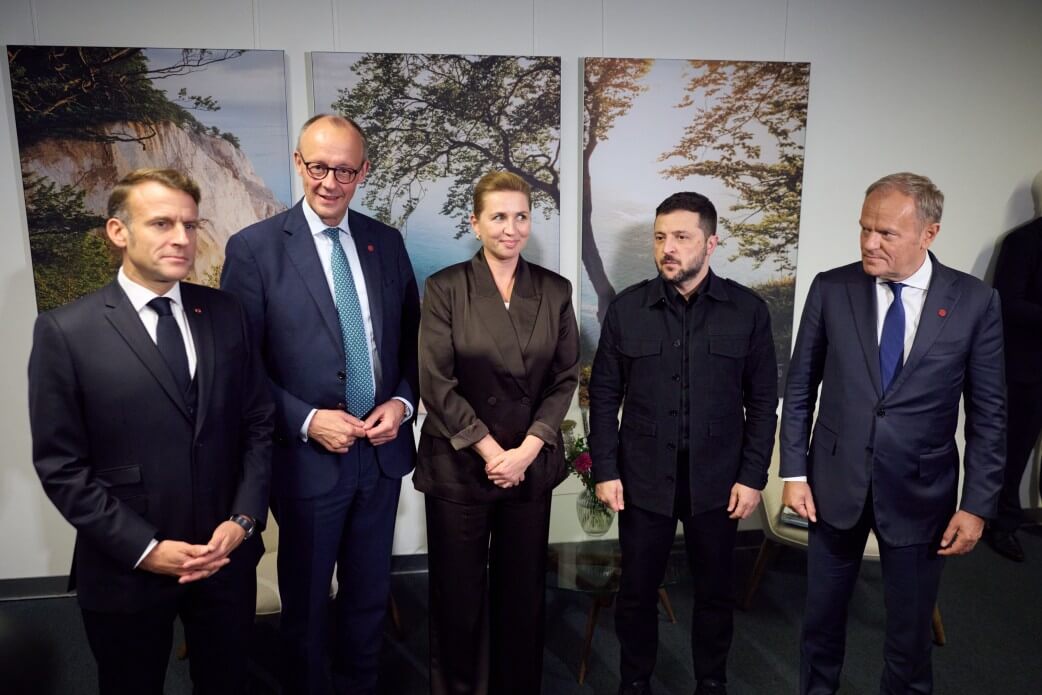 While debating in Munich, Europeans must remember that they are absent from places where some of today's biggest crises are being addressed
From this perspective, Trump's demands in his previous term that Europeans take greater responsibility for their own defence were a clear indication that, in a new term, he would likely be even tougher, not more lenient, towards European allies.
That experience can help European leaders at the upcoming talks in Munich to assess more accurately their own potential to ensure the continent's security over the next five or ten years.
The alternatives they are pursuing – successfully so far – such as forming smaller alliances like the Coalition of the Willing or the European security troika (E3: Germany, the UK, France), could prove effective in the coming years.
While debating in Munich, Europeans must remember that they are absent from places where some of today's biggest crises are being addressed – such as talks on Iran in Oman and negotiations on Ukraine in Abu Dhabi.
They have been sidelined largely because, in recent years, they could not or would not correctly interpret the signals regarding the American shift in its approach to the European alliance.
The upcoming conference in Munich offers Europeans the chance to provide a convincing response to the new, changed relationship with their most important ally.
