Narendra Modi completed 4,399 days as prime minister of India on 10 June, surpassing the record of Jawaharlal Nehru of the Congress Party as the longest-serving elected leader.
But Modi’s tight grip after 12 years in power is facing a rising challenge from young people who make up more than a quarter of the population.
India’s Generation Z is the biggest in the world, and they suffer up to 40% unemployment. They are the first generation of digital natives born between 1997 and 2012 and have known no other leader as adults.
Their growing discontent is being fuelled by economic pressure, inequality and religious divisions.
It remains to be seen if a fledgling opposition movement will gather enough momentum to bring down the Indian government in the way similar mobilisation was able to in Nepal and Sri Lanka while protests also engulfed Bangladesh, Indonesia and the Philippines in recent years.
What if all cockroaches came together?
Barely a month ago, few had heard of the Cockroach Janata Party (CJP), meaning Cockroach People’s Party and a play on Modi’s right-wing and Hindu nationalist Bharatiya Janata Party (BJP), or Indian People’s Party.
The CJP was born after India’s Chief Justice Surya Kant compared critics and unemployed youth with “cockroaches” and “parasites”.
Abhijeet Dipke, a Boston University student, was inspired by the insult and asked on X: “What if all cockroaches came together?” He started a web site, hit social media and gathered more than 22 million followers despite the government’s attempts to block CJP accounts.
Dipke, 30, returned to New Delhi last Saturday and immediately joined a thousands-strong protest, the first to be called by the CJP and held amid a tight security presence.
In recent years, the BJP government has clamped down on human rights and student activists and stamped out protests
He told the crowd, many of whom declared themselves proud to be cockroaches, that his family worried he would be arrested on arrival.
“But this is not a fear only of my mother,” he said. “Every mother in this country fears that if one talks about politics, speaks against this government, [they] will be arrested.”
In recent years, the BJP government has clamped down on human rights and student activists and stamped out protests, such as those against citizenship legislation and by farmers.
Kiren Rijiju, parliamentary affairs minister, dismissed the CJP as an “anti-India gang” and said its members came from Pakistan, India’s traditional enemy.
Education scandals and systemic crisis
For now, the CJP is demanding the resignation of Dharmendra Pradhan, education minister, after a series of scandals involving educational boards and leaks of examination paper.
India’s highly competitive and pressured educational system is often the only route out of poverty for millions of students and their families, and the saga is being nervously examined by the country.
At least four suicides have been reported among the more than 2.2 million medical university applicants who last month took the national medical entrance exam for only 130,000 places. The exam results were cancelled after it was discovered the papers were leaked.
Students will have to retake the exams on 21 June, when the government is reportedly considering deploying the air force to transport the papers amid tight security.
To avert suicide, some centres have installed “anti-hanging devices” on ceiling fans and safety nets on balconies
Many families scrimp and save to send their children to coaching centres to pass these exams, and many students study for more than 12 hours a day. To avert suicide, some centres have installed “anti-hanging devices” on ceiling fans and safety nets on balconies.
More than 1.7 million students who took the school-leaving exams set by India’s Central Board of Secondary Education (CBSE) were also hit by revelations that their results may not be correct because of mistakes in a digitised marking process.
Six months before the exams, the CBSE cut its technical requirements after failing to get any bids from private companies to implement the system.
The CBSE has acknowledged there were glitches, forcing a TV anchor from the government-run broadcaster Doordarshan to apologise after accusing one of the students who pointed out discrepancies in his answer sheets of being a “Pakistani”.
A global “decade of disasters”
Modi’s government has yet to react formally to the CJP movement’s demands, but the storm may gather pace.
The wider geo-political situation is also hard on India, and Modi is not anticipating any let-up in the pressure, including a slowing economy and increased energy insecurity created by the US-Israeli war against Iran.
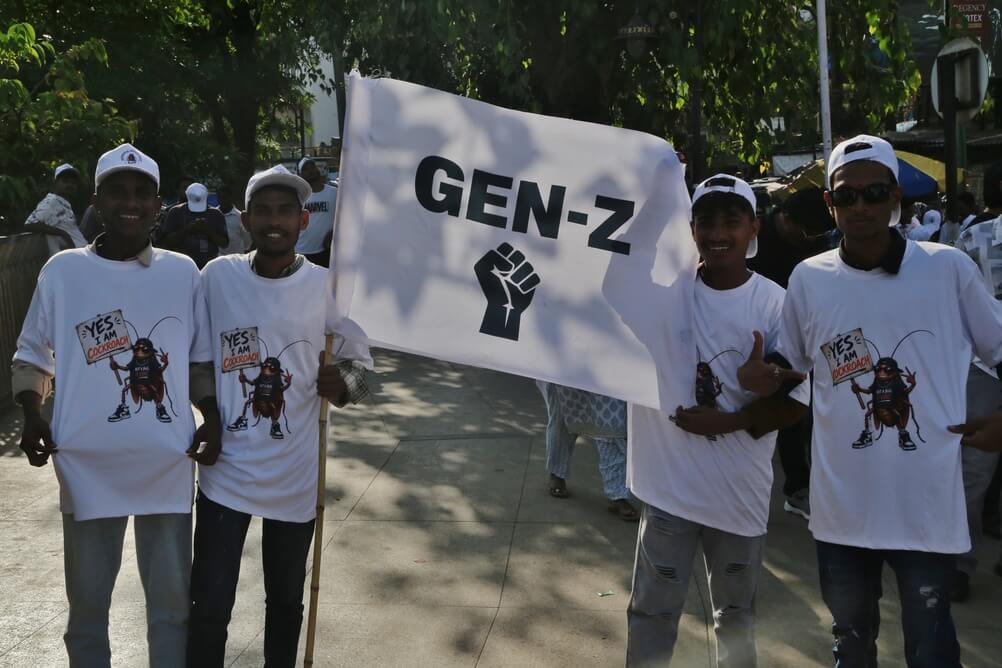 Modi’s government has yet to react formally to the CJP movement’s demands, but the storm may gather pace
After a global “decade of disasters” including the coronavirus pandemic, war and energy crisis, “achievements of the past many decades would be washed away, and a huge section of the world’s population would be pushed back into poverty,” Modi said last month.
The country is preparing for its biggest census ever this year after a delay of five years, and it will include controversial questions on caste. Critics worry the government could use the data to further its case to make Hinduism a basis for citizenship.
For now, Modi’s hold on power is secure after having made major gains in recent state elections. In 2014, seven states were under BJP control, and now it has 22 states and one of eight union territories, which are federally administered in India.
Modi, who will be 78 at the time of the next general election in 2029, will be looking for further ways to cement his legacy and must be hoping to swat away the pesky cockroach movement.
