Year after year, they arrive earlier and strike with greater intensity. Extreme heatwaves, such as the one currently underway, should no longer surprise anyone in Europe or serve as an excuse for economic losses.
The consistent trend of more frequent heatwaves in Europe due to climate change is indisputable.
While only five intense heatwaves occurred in Europe over five decades from 1950 to 1999, nearly four times as many were recorded in the next two decades (2000–2021).
Since then, heatwaves have been recorded every year, with the most recent affecting the west of the continent most severely.
We are therefore witnessing a clear pattern, not extreme or unexpected events that could be considered force majeure or isolated incidents.
However, adaptation by European economies to this long-term negative trend appears to be progressing more slowly.
Losses are increasing
Losses from extreme warming are becoming increasingly difficult for European economies, especially those in high-risk regions, each year. Unfortunately, solutions to offset these losses are still not in sight.
Almost no sector can be protected from the negative impact of drought and heatwaves.
Construction, agriculture, retail, hospitality, and manufacturing are particularly exposed
Construction, agriculture, retail, hospitality, and manufacturing are particularly exposed, as these activities cannot be shielded from high temperatures.
These sectors account for up to 35% of economic activity in Western Europe, and slightly less in the UK, so the direct negative impact of rising temperatures affects, on average, one third of economic activity in the most developed region of Europe.
They are at risk because extreme temperatures directly cause declining productivity.
According to Robert Marks, lead climate economist at Oxford Economics, a four-day heatwave (such as the one currently underway) reduces productivity by up to 2% quarterly in Western Europe, or 1.5% in the UK.
A study last year by the World Meteorological Organization confirmed that the decline in productivity is directly related to the increase in temperature. According to the study, productivity decreases by 2–3% for every degree above 20°C, with larger losses the higher temperatures get.
Household budgets decreasing
Thousands of European workers, who work shorter hours and with reduced intensity due to extreme heat, also experience a decrease in household budgets as a result of broader economic disruption.
Moreover, all Europeans, whether or not they work in vulnerable sectors, have lower household incomes due to temperature shocks.
Because of the combined negative effects of drought and heatwaves, household incomes across Europe have already fallen by almost 3%
Because of the combined negative effects of drought and heatwaves, household incomes across Europe have already fallen by almost 3% on average, with greater declines in regions most exposed to temperature changes, according to a Climate Analytics study.
The study projects that the average income of European households could fall by up to 27% if global warming reaches 2.7°C by 2100, a realistic scenario given the current, largely ineffective climate policies and actions being implemented worldwide.
Structural economic risk
The current heatwave affecting the most developed part of Europe should not be regarded as merely another natural and unpredictable event, but rather as a "structural economic risk", as described by the European insurer Allianz.
Allianz presents a bleak outlook for the coming years, predicting that the most exposed economies will experience a 5 to 7% decline in GDP by the end of the decade due to heat-related disruptions.
As a result, tax revenues are expected to fall, with France – the most exposed to temperature shocks – seeing a decrease of 1.8%, followed by 1.3% in Italy and Spain, and 0.7% in Germany.
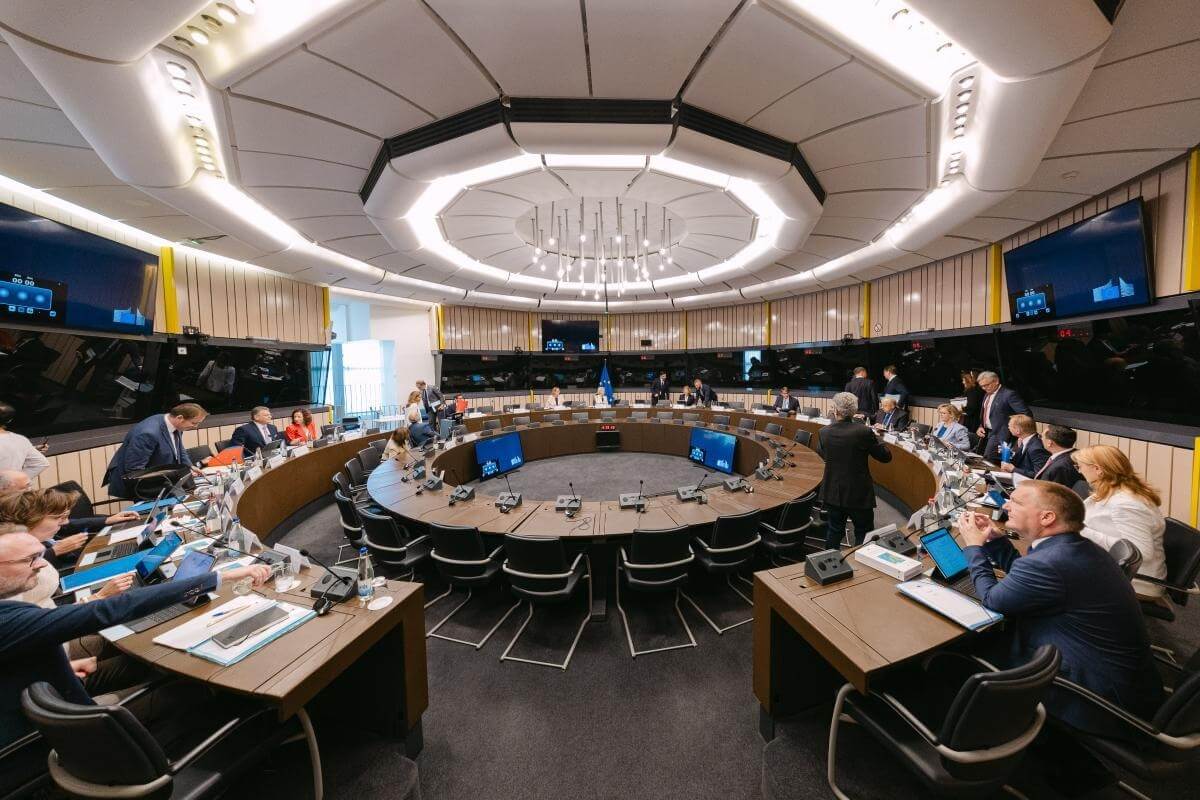 Europe urgently needs to develop measures to mitigate the acute pressure on its economies caused by sudden temperature fluctuations
Another issue is that losses occur in sectors that are generally not insured, so damage from droughts or heatwaves remains largely uncovered.
"In 2022, total climatological losses in Europe reached EUR46bn, while the insured share rose only marginally. Most heat damage accumulates through excess mortality, lost working hours, healthcare-system pressure, and infrastructure stress," states the Allianz study.
This hot summer is another warning for European economies to take action to protect themselves from the disastrous effects of global warming, which are increasingly evident through more frequent and severe temperature shocks.
Achieving climate goals and attaining climate-neutral (net-zero) status by 2050 remains the EU's strategic policy, despite delays and obstacles.
However, alongside this long-term goal, Europe urgently needs to develop measures to mitigate the acute pressure on its economies caused by sudden temperature fluctuations.
There is already sufficient evidence that this is not a one-off heat shock, but a recurring and increasingly intense disruption to key economic sectors.
