On 13 August, the White House released the report The Great Transshipment Scam and accused more than 40 countries of allowing Chinese goods to reach the US market through states with more favourable customs treatment.
The Office of Trade and Manufacturing Policy, led by Peter Navarro, uses several methodologies to estimate the extent of such trade.
Estimates range from approximately 34 billion to 303 billion dollars per year, with 75 billion taken as the central scenario. On that basis, the administration calculates the potential annual loss of customs revenues as between 19 and 26 billion dollars.
The document itself acknowledges that these are modelled assessments, drawing an important distinction between suspicion based on trade patterns and customs fraud proven in specific shipments.
With this document, Washington has raised an issue that will shape the next phase of American trade policy. Customs duties are only as effective as the government’s ability to determine reliably the origin of the products to which they apply.
After years of tariff pressure on China, much trade has changed direction and production has dispersed across new factories, suppliers and transit points.
The US administration is now trying to determine how much of that change reflects the actual relocation of production, and how much is due to the diversion of Chinese goods through third countries.
US imports already look different
Data for 2025 show how quickly the structure of US imports has changed. Imports of goods from China fell to about 308.7 billion dollars, more than 130 billion less than a year earlier.
At the same time, US imports from Vietnam rose from about 136.5 billion dollars in 2024 to 193.8 billion in 2025, while imports from Taiwan jumped from approximately 116.2 billion to 201.4 billion dollars.
The US trade deficit with China narrowed sharply, while deficits with Vietnam, Taiwan and Mexico increased.
This shift raises a key question: how much of the new flows represents genuinely relocated production, and how much reflects changes in the route and customs origin of the goods?
Western companies have been building additional capacity in Vietnam, India and Mexico for years, while Chinese companies have opened factories in the same countries and invested in local suppliers.
An overly broad interpretation of Chinese origin would also affect legitimate production that has relocated from China in recent years
Some products go through a substantial production process there, others arrive with a large share of Chinese components, and some goods undergo repackaging, re-declaration or minimal processing before entering the US market.
It is crucial for US Customs to distinguish between these cases. An overly broad interpretation of Chinese origin would also affect legitimate production that has relocated from China in recent years. Weak controls would leave ample scope for traders who use differences in customs rates as a business model.
The greater the difference between the US tariff on Chinese goods and the tariff on the same product from a third country, the greater the financial incentive to declare a false origin.
Where the product is actually created
American customs practice has long used the substantial transformation standard. The origin of goods can change when processing in another country creates a product with a new character, function or economic value.
Repackaging, relabelling or a simple finish is usually not enough. With modern industrial goods, the boundary is much harder to define.
A single device may contain Chinese components, Korean semiconductors, Japanese equipment, American software and final assembly in Vietnam.
A car assembled in Mexico may include parts manufactured in several countries. A battery can be manufactured in one country from materials processed in another, while capital and technology come from a third.
The US aims to keep trade benefits tied to actual production in the partner’s territory
The rule of origin in such a chain directly determines the customs duty, the price of the product and the profitability of the factory.
The Office of the US Trade Representative is already working on more detailed rules of origin, and the same issue is weighing heavily in talks with Mexico during the review of the United States–Mexico–Canada Agreement, known as the USMCA.
The US aims to keep trade benefits tied to actual production in the partner’s territory. For companies, this means that the location of the final factory will no longer automatically determine the origin. The value created at each stage of production will become increasingly important.
Customs moves deeper into the supply chain
On 3 June, Trump signed Executive Order 14411 to strengthen customs controls. It requires more detailed data on importers, ownership, business relationships and supply chains, as well as increased checks on misclassification, undervaluation and illegal transshipment.
It is particularly important to be able to compare the documentation that the foreign exporter submits to the American authorities with the data submitted to the customs administration in its own country.
Such comparisons can reveal discrepancies that traditional container controls struggle to detect. The administration is simultaneously developing a system called Detective Border, which uses artificial intelligence to identify discrepancies between declared origin, shipment movement, and component data.
The importer will need to show how the product was created, who produced it, and where the key components came from
Its real value will depend on access to reliable data, the quality of customs records, and the ability of US Customs and Border Protection (CBP) to turn the algorithm’s findings into evidence that can withstand administrative or judicial proceedings.
If the system operates on a large scale, US customs control will extend far beyond the port of entry. The importer will need to show how the product was created, who produced it, where the key components came from, and what happened at each significant point in the chain.
For large manufacturers and distributors, this means more costly documentation, stricter checks on suppliers, and a greater risk of retroactive obligations when the authorities determine that the origin has been wrongly declared.
Allies under American pressure
Navarro’s report is politically sensitive because it lists the most important American partners among the jurisdictions at risk. Canada, the European Union, India, Japan, Mexico, South Korea and Taiwan are in the highest category. The next group includes, among others, Brazil, Indonesia, Malaysia, Thailand, Türkiye and Vietnam.
This classification changes Washington's attitude towards countries that have benefited from the China+1 strategy, which involves moving part of production from China to other countries so that companies can reduce their dependence on the Chinese market and the risk of US tariffs and other trade restrictions.
American demands are already shaping trade talks with partners. In negotiations with Mexico, rules of origin and the use of USMCA benefits by third countries have been given high priority. Illegal transshipment and concealment of origin are being discussed with Vietnam.
Pressure will shift from border services to trade ministries, industrial zones, local suppliers and manufacturers themselves
For governments that want both Chinese investment and unhindered access to the American market, the room for manoeuvre will narrow.
This will particularly affect countries that have built a development model based on importing Chinese parts, local assembly and exporting the finished product. US customs will seek a more precise answer to the question of how much the local economy actually contributed to production.
Pressure will shift from border services to trade ministries, industrial zones, local suppliers and manufacturers themselves.
US Supreme Court’s decision increases the importance of existing customs controls
On 20 February, the US Supreme Court ruled that the International Emergency Economic Powers Act does not give the president authority to impose tariffs.
The administration has thereby lost the legal basis it had used for some of the broader tariff measures and must now rely on other legal instruments, including Section 301, Section 232, existing customs authority, and agreements with individual states.
In such a framework, origin control acquires greater practical significance. The state can tighten enforcement of existing tariffs, widen investigations and demand more detailed evidence from importers, without attempting to reintroduce blanket tariffs through extraordinary presidential powers.
The more detailed the US rules become, the more they will influence the investment decisions of companies that plan their supply chains years in advance
Prosecuting misdeclared goods offers a narrower and more robust legal path than defending a brand-new universal customs duty in court.
This is where the potential for conflict with allies begins. The straightforward relabelling of a Chinese product is a relatively clear-cut case. A product made in a Vietnamese or Mexican factory, financed with Chinese capital and containing significant Chinese components, raises far more difficult questions.
The more detailed the US rules become, the more they will influence the investment decisions of companies that plan their supply chains years in advance.
The Chinese response will be more manufacturing outside China
The most logical response of Chinese companies will be to deepen their presence in third countries. When repackaging and minimal processing carry a high customs risk, investing in genuine local production becomes a safer route to the US market.
This means more local suppliers, more workers, more processing and a higher proportion of value created in the country of export.
American pressure can therefore accelerate the international expansion of Chinese industry. Factories in Vietnam, Mexico, Malaysia and India will gain greater importance, while Chinese companies adapt ownership structures, procurement, and production processes to US rules of origin.
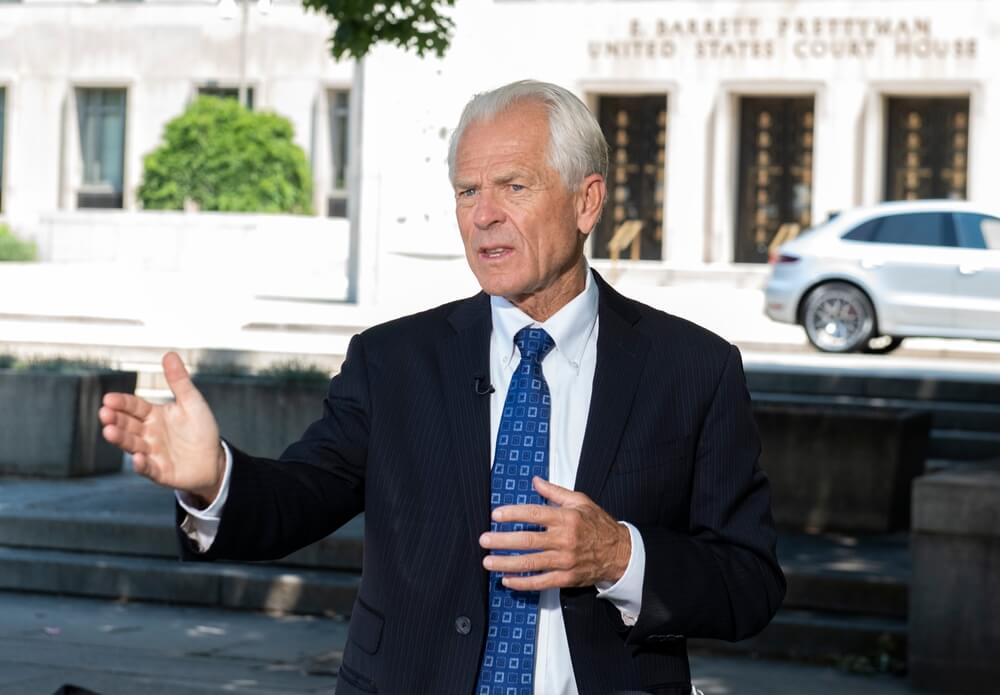 Cars, batteries, solar equipment, electronics and industrial machinery are likely to be the first products subject to stricter rules on the origin - Peter Navarro
Washington will then have to decide where it draws the line between Chinese goods and legally produced goods from Chinese-owned companies.
Cars, batteries, solar equipment, electronics and industrial machinery are likely to be the first products subject to stricter rules on the origin of components and on the proportion of production that must actually take place in the country of export.
In these industries, value is created across a large number of countries and suppliers, so the country of final assembly provides less and less information about the product’s true economic origin.
The next dispute will be over local value
In the coming months, rules of origin are likely to become one of the thorniest issues in US trade relations with Mexico and leading Asian exporters. The USMCA revision will be the first major test.
After that, similar requirements will be extended through bilateral agreements and sectoral rules with other partners. Companies selling to the US market will need to trace the origins of key product components in much greater detail than today.
Precise rules can close the space for obvious fraud and encourage genuine local production
US tariffs have already diverted much of the trade. Washington’s new task is to determine how much Chinese production has remained within these new flows and under what conditions a product from a third country truly deserves its customs treatment.
Precise rules can close the space for obvious fraud and encourage genuine local production. Overly broad rules can harm companies and countries that have been led by US tariffs to invest in alternative production centres.
For Vietnam, Mexico, India and other countries that have benefited from shifting production from China, the next competitive advantage will be the ability to prove what was actually made there.
“Made in Vietnam”, “Made in Mexico” or “Made in India” labels will no longer end the conversation with US customs. More often than not, they will be the start of a thorough check.
