Wealth taxes remain a political live wire in many countries, as inequality or the perception thereof rises, the generational wealth gap is weaponised, lower earners are hit by a cost-of-living squeeze, budgets are under pressure and government debt increases.
In both Belgium and the Netherlands, two very well-off northwest European countries with relatively low inequality, wealth taxes on high-net-worth individuals (HNWIs) have in recent weeks pushed governing coalitions to the breaking point.
In Belgium, a lone left-wing party in the mostly centre-right federal government is sticking to its demand for higher taxes on capital and equities, to the tune of an extra €1.5 billion on top of what has already been proposed.
The negotiations are part of an effort to shave €10 billion off Belgium’s budget deficit, which the EU has just warned could otherwise become the highest in the Eurozone by 2028.
Belgium’s right-wing, Flemish nationalist prime minister, Bart De Wever, offered his resignation to the country’s monarch some two weeks ago, in what was widely seen as a ploy to put pressure on his recalcitrant coalition partners.
Indeed, this Tuesday the king gave De Wever another week to come up with a solution, but early elections remain a distinct possibility.
His centrist Dutch colleague, Rob Jetten, this week narrowly escaped that fate, for now, after part of his minority coalition joined with centre-left parties in parliament to push through slightly higher wealth taxes, against the wishes of the centre-right Liberal coalition partner.
Following five days of coalition crisis talks, the tax plan is expected to pass in the Dutch upper house.
Even so, it contains placeholders and unrealistic clauses that will necessitate renewed negotiations in the future and still pose a high risk of bringing down the government.
Direct access to the halls of power
In both Belgium and the Netherlands, corporate and small business lobbies vehemently oppose any increase in the tax burden for what they characterise as entrepreneurs.
This is accompanied by much talk about the ‘investment climate’, making explicit the linkage between even slight increases in personal wealth taxes for HNWIs and business choices.
While both the Netherlands and Belgium have a long tradition of consensus-building on labour market and social issues, in Dutch known as the ‘poldermodel’, this has been eroded by the waning power of the trade unions and the rise of the gig economy.
But this is where the comparison ends, as Belgian trade unions, while declining, are still much more powerful and combative than their Dutch counterparts.
And politically, Belgium has had a more balanced left-right governing mix than the Netherlands, which has seen a decade and a half of virtual Liberal dominance.
De Wever is a hard-right Flemish nationalist and business lobbies now have much more direct access to the halls of power
One indication of the different sociopolitical circumstances is that Belgium’s youth is participating in the wave of Gen Z protests roiling Europe, while Dutch streets have stayed mostly quiet.
Another major point of difference is the countries’ financial positions. Unlike Belgium, the Netherlands is the EU’s star pupil, a major ‘frugal’ country that could, if so inclined, increase borrowing and run higher deficits.
Even so, both countries now face a similar discussion and political hazard over taxing individual wealth.
In Belgium, this is in part due to the rare defeat of the French-speaking Parti Socialiste in the 2024 elections. Over much of the past few decades, Wallonia, the French-speaking part of the country, has been decidedly more left-wing than Flanders, keeping the federal government more centrist.
De Wever is a hard-right Flemish nationalist and, as with the ever more right-leaning Dutch Liberals, business lobbies now have much more direct access to the halls of power.
Skewed towards the ultra-rich
In the final analysis, despite the deep social, political and financial differences between the Dutch and the Belgian situations, the wealth tax issue is about what many see as correcting a system that is out of kilter and increasingly skewed towards the ultra-rich.
This is why, even though the measures might not yield huge new injections of cash, and will not by themselves solve a country’s budget issues, they are seen as symbolically desirable by all but the decidedly right-of-centre parties.
In Belgium, the centrist government parties initially supported the smaller socialist partner’s demand for higher wealth taxes, before changing their position after De Wever’s threat of resignation.
The issue of wealth taxes and thus also of the business or investment climate, needs an EU-wide approach
In the Netherlands, all the centrist parties, both in government and in opposition, came together to push through a higher wealth tax amendment.
That the issue is at least to a certain degree symbolic can be seen from one highly unrealistic clause in the Dutch wealth tax amendment, which would impose an exit tax on individual wealth, as opposed to existing exit taxes on business equity.
This is almost certain to come into conflict with EU regulations on freedom of movement and was probably included more as a statement of intent for later renegotiation than as an actual measure.
It also highlights that the issue of wealth taxes and thus also of the business or investment climate, needs an EU-wide approach.
Not a uniquely European problem
This is not a uniquely European problem. One of the clearest examples of how concern over capital and business flight affects the wealth tax debate was the defeat of Proposition 40 in California, during the recent election cycle.
In the US, there’s very little chance of wealth taxes gaining traction on a federal level. But the Democratic gains in most of the large states, especially Texas, are likely to shift the debate over the next few years, as HNWIs and their businesses might run out of attractive places to flee to.
The EU and adjacent countries currently also have widely varying approaches to taxing wealth, ranging from a steep net wealth tax in Spain and lower ones in Norway and Switzerland, to favourable tax structures to attract HNWIs in Greece and Italy.
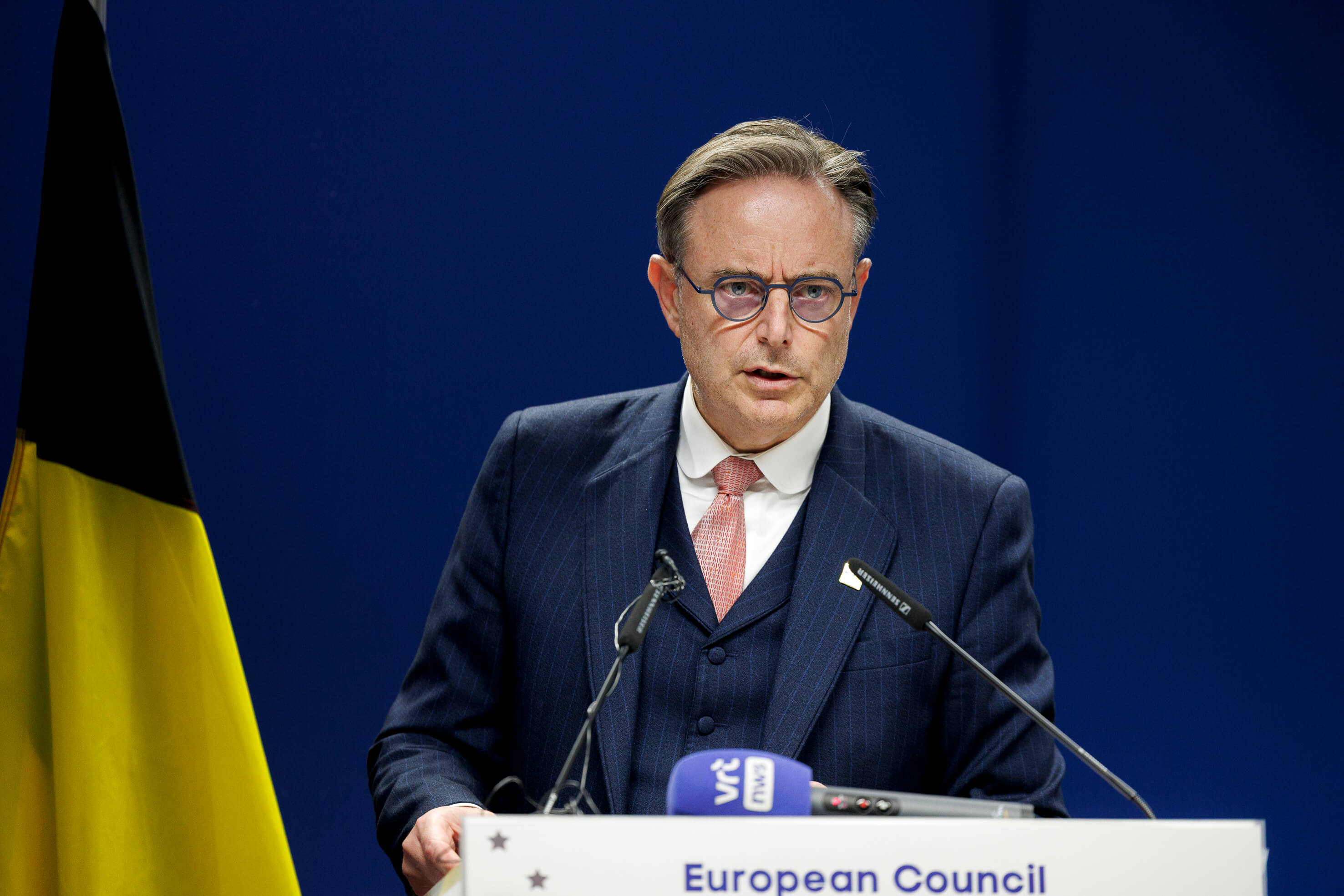 An issue that cries out for a joint approach, EU-wide and even worldwide, is left to individual governments, such as those of Belgium and the Netherlands - Bart De Wever
A report published by the European Commission earlier this year, Wealth Taxation, Including Net Wealth, Capital and Exit Taxes, noted both the ‘heterogeneity’ of European wealth tax approaches and the likelihood that wealth taxes will become more important in the near future.
“Wealth inequality is high and has been increasing in a number of Member States during the last decades,” the report remarked.
Significantly, it pushed back against the notion that wealth taxes would adversely affect savings and the investment and business climate, saying: “The extent of such effects is likely limited overall.”
In fact, a well-designed wealth tax combined with an overall efficient tax system could actually, “provide incentives for a more productive use of assets”.
As the EU is struggling with how to turn savings, albeit mostly belonging to bulk ‘retail’ savers, into investments, this could become especially relevant.
But the report oddly failed to recommend joint EU action, or even a study into an EU-wide minimum tax burden on wealth, even though it urged more international cooperation.
Possibly, the reason can be found in its other conclusions: “Political resistance and negative public perception remain major obstacles to wealth-related taxes. While tax policy is more responsive to the preferences of the wealthy, public (mis)conceptions about the burden of taxes and actual levels of wealth inequality also play an important role.”
Thus, an issue that cries out for a joint approach, EU-wide and even worldwide, is left to individual governments, such as those of Belgium and the Netherlands, along with all the disruptive political consequences.
