Last week, we witnessed lively – at times shallow – debates about whether Istanbul and Turkey’s major cities could attract the capital fleeing Middle East due to the war.
Many commentators missed the nuance when they responded, “Is there democracy in the UAE?” to those insisting that the rule of law is a precondition for a financial centre.
The point was never that Gulf states claim to be liberal democracies; it was that their rules are stable and predictable.
Locals and foreigners alike understand what will happen if they comply. Their economies – built on oil, gas, real estate, tourism and trade – are supported by a strict, effective public order. Crime rates are low and, provided foreigners follow the rules, they face little risk.
Turkey, by contrast, was founded as a secular, democratic rule-of-law state, so it does not revert to religious law when some in the West object to its legal culture.
That institutional framework should appeal to international capital. However, frequent and unpredictable rule changes create uncertainty.
Combine that with an odd high-rate/weak-currency policy that even foreigners find expensive, and you get costs above European averages for everything from fuel to groceries.
Real wages are squeezed, and the low exchange rate deters euro-denominated foreigners. If the issue were only buildings, the solution would be easy.
Objectively, can Istanbul, Ankara, Izmir and Antalya fill a Gulf-shaped gap if Dubai, Doha and Bahrain become perceived as risky in the short to medium term? Short answer: Turkey can seize an opportunity, but it cannot simply replace the Gulf.
Beyond skyscrapers
Financial centres are more than skyscrapers, airports and luxury housing; they require law, tax clarity, capital market depth, communications infrastructure, exhibition ecosystems and livability.
Dubai’s scale in finance and tourism illustrates how institutionalised this business is. By late last year, Dubai hosted 1,052 financial firms, 500+ asset and wealth managers, and 1,677 AI/Fintech startups.
Dubai’s financial centre has more than doubled since 2020 to roughly 7,700 firms and about 48,000 employees.
Istanbul’s strengths are its scale and geography. Official Istanbul Financial Center (IFM) plans propose 1.3 million sqm of office space, 100k sqm of retail, a congress centre and daily capacity for 100k users.
Istanbul’s two major airports carried 132 million passengers in 2025 – about 84 million at IGA and 48 million at Sabiha Gökçen – highlighting the city’s biggest advantage versus the Gulf: it is not just a finance campus but also a natural access hub connecting Europe, Asia and Africa.
In tourism and business travel capacity, Istanbul and Antalya have reached scales that can compete with the Gulf
Yet that also exposes a gap: infrastructure exists, but it must be backed by global financial law. In tourism and livability, Turkey’s cities show stronger comparative performance.
Dubai had 19.6 million international visitors in 2025 and 95.2 million airport passengers; Qatar hosted 5.1 million visitors and over 10.8 million nights with 71% occupancy.
Turkey closed 2025 with Antalya at 17.1 million visitors and 39.16 million airport passengers; Istanbul saw about 18.97 million foreign visitors in 2025, an increase from 2024.
In tourism and business travel capacity, Istanbul and Antalya have reached scales that can compete with the Gulf. That matters: capital first seeks safe access and livability, then tax rates.
Different roles for major Turkish cities
Ankara, Izmir and Antalya play different roles. Ankara is not a financial hub but a decision centre – Esenboğa handled ~13.9 million passengers in 2025, a strong access metric.
Izmir’s Adnan Menderes reached 12.7 million passengers in 2025 and can serve as a secondary base for trade, tourism and quality of life.
Antalya is a candidate “capital-life” city: tourism volume, hotel capacity, international recognition and new airport investments make it an alternative for high-net-worth individuals wanting to move away from the Gulf.
Without legal guarantees and market transparency, “cheap” becomes a risk premium, not an attraction
Turkey’s advantage is not a single city but a multi-centred attractiveness if Istanbul, Ankara, Izmir and Antalya are packaged together. Gulf financial and decision hubs remain concentrated in a narrow geography.
In real estate Turkey’s opportunity is clearer. Dubai’s 2025 housing market set records: total sales value $137 billion and 205,400 transactions; average price roughly $5,300/sqm and villas around $6,300/sqm.
Turkey saw a strong housing recovery in 2025, but real prices remained flatter – meaning cities like Istanbul and Antalya still offer lower entry costs.
That is an investor advantage, but a warning: cheapness alone isn’t an advantage – without legal guarantees and market transparency, “cheap” becomes a risk premium, not an attraction. As Le Monde recently noted on Istanbul rents, predictability and affordability in housing are worsening.
Sizeable but incomplete
In banking and capital markets, Turkey is sizeable but incomplete. BRSA data shows that total banking sector assets reached 48.87 trillion TRY as of Feb 2026 – the scale is there. However, an international financial centre needs more than asset size: it needs free capital flows, arbitration, and product depth.
Dubai International Financial Centre offers separate law, specialist arbitration, and investor-friendly frameworks. The Qatar Financial Centre had some 3,300 registered firms by mid-2025 – proof that Gulf centres grow via legal architecture as much as tax policy.
Turkey’s weakness is precisely here: IFM can be physically ambitious, but global fund managers first ask, “If a dispute arises, which court, which law, what timetable?”
Exhibitions and events illustrate the same gap. Dubai’s financial success owes not only to regulation but also to a year-round pipeline of global fairs, congresses and investment events that create an “economy of networks.”
Turkey’s realistic offer is not “better infrastructure than the Gulf”
Istanbul has large fair infrastructure, Antalya has congress tourism capacity, and Izmir has strong trade-fair credentials – but none has built a Dubai-calibre global brand yet. That is a big opportunity.
If the war shakes Gulf confidence, Istanbul and Antalya could lead in conference and business tourism – but for permanence, you need an international calendar and brand, not just venues. Otherwise, Turkey will remain a temporary stop for Gulf capital.
In communications and digital infrastructure, the Gulf has an edge. The ITU’s 2025 ICT Development Index places Qatar among global leaders (98.4). GSMA and ITU indices show the UAE and Qatar excelling in digital infrastructure and connectivity quality.
Turkey has solid telecom networks, but not the same premium enterprise infrastructure. Istanbul’s advantage is market scale and lower cost; Dubai and Doha offer higher digital quality and smoother corporate services.
Therefore, Turkey’s realistic offer is not “better infrastructure than the Gulf” but “larger market + lower cost + acceptable quality” packaged effectively.
Strengths, weaknesses, opportunities, threats
Summing up in SWOT terms:
- Strengths: multi-city diversity, access capacity, relatively lower real estate costs, large domestic market, tourism scale, geostrategic location.
- Weaknesses: perceived rule-of-law deficits, complex tax/incentive regimes, shallowness of capital markets, predictability issues for foreign investors.
- Opportunities: perception shock in the Gulf, operational diversification needs, wealthy individuals seeking second homes.
- Threats: without reform, capital will use Turkey as a temporary transit rather than a permanent base.
In short: Dubai’s fiscal, legal and institutional superiority is not so fragile that war alone will erase it. Dubai’s attractiveness stems from low taxes, fast regulation, an international labour supply and institutional depth.
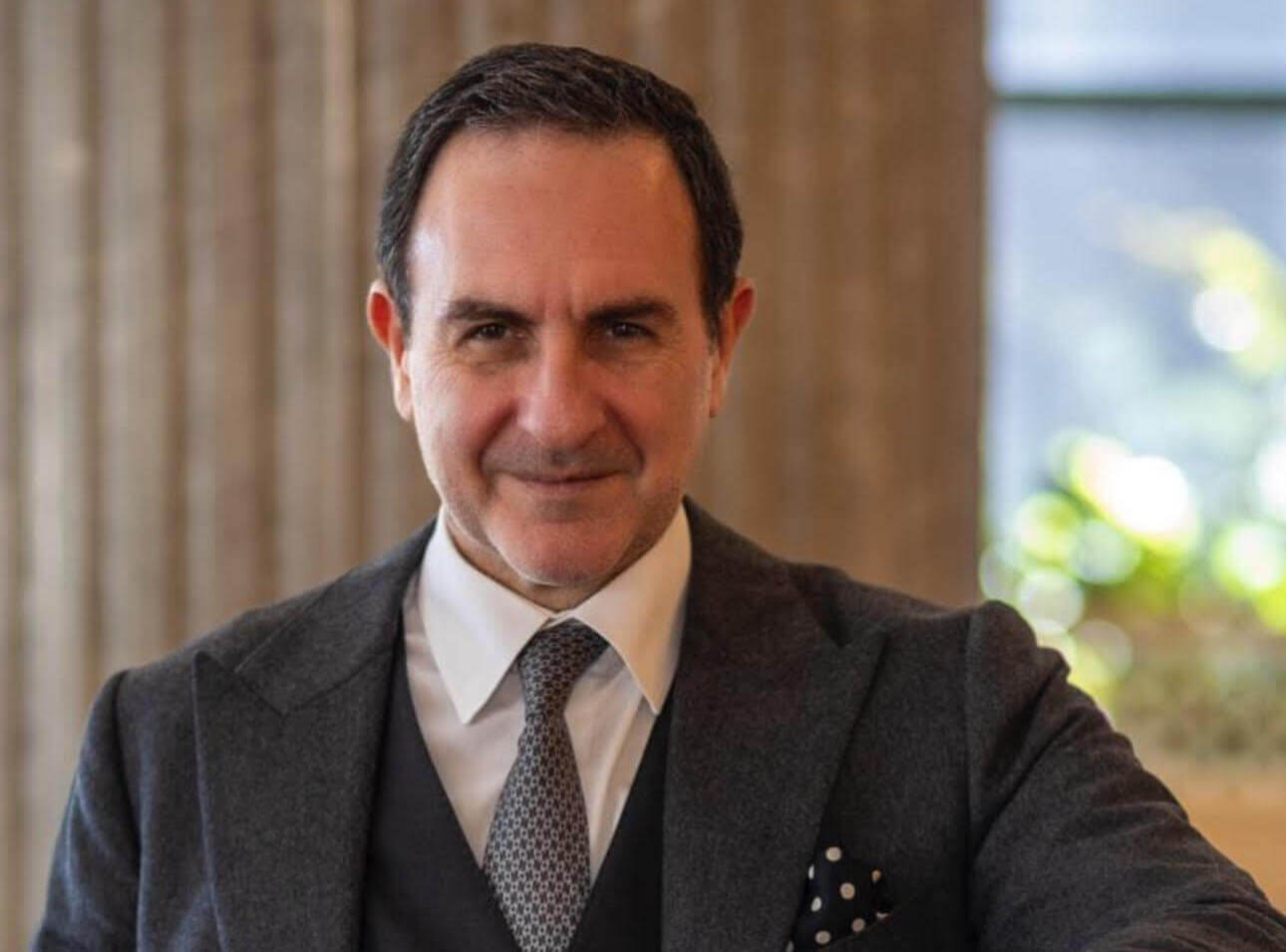 With the right steps, Turkey could be the largest beneficiary when the Gulf weakens - Emre Alkin
Final word: Istanbul, Ankara, Izmir and Antalya cannot immediately replace Dubai, Doha or Bahrain. However, with the right steps, Turkey could be the largest beneficiary when the Gulf weakens.
What to do is clear: make the Istanbul Financial Center a genuine centre for international arbitration and finance law; simplify the tax regime; guarantee predictable entry/exit and profit repatriation for foreigners; turn fairs and congress tourism into global brands; and position Istanbul as finance/management, Antalya as lifestyle/tourism, Izmir as logistics/trade and Ankara as the regulatory and public hub.
Turkey has real potential. The single-word difference between potential and magnetism is “trust.” If trust is established, capital will come and stay. If not, capital will arrive, look around – and leave.
