Bulgarians will vote in parliamentary elections on Sunday, seeking a stable government after five years.
These elections are taking place under the significant shadow of the historic change of government in Hungary and the fall of Viktor Orbán, the EU’s biggest saboteur, after 16 years.
While mainstream European political structures are still celebrating that Hungary will no longer be a brake on key decisions and a disruptive factor, a new test for European cohesion follows on Sunday – elections in Bulgaria.
Understandably, Europeans are less interested in the votes of 6.5 million Bulgarians than they were in last week’s elections in Hungary.
Bulgaria is economically the weakest EU member state, its political influence and reach do not match Hungary’s, and its political structures have so far shown no effort to undermine European cohesion, unlike Orbán’s Hungary in the past decade.
At the same time, snap parliamentary elections have become a political routine in Bulgaria, one of the youngest members of the Bloc (it joined the EU in 2007, along with Romania).
The 19 April election will be the eighth in the past five years, a period marked by political and economic instability. The exception is the introduction of the euro and the country’s entry into the eurozone on 1 January 2026.
Although this is an important sign of Bulgaria’s institutional and economic progress, the event remains disputed in Bulgaria and is certainly one of the key topics on which opinions clashed during the election campaign.
Parallels with Hungary
Parallels with the recent Hungarian elections, drawn by European politicians and observers, are inevitable, though often unfounded.
Hungary was governed by one political group and one leader for 16 years, whereas Bulgaria is the European champion in frequent changes at the top of the state.
Bulgaria has consistently expressed cooperation within the Bloc in the main directions of common policy
While Hungary under Orbán has become a European hub for nationalist, sovereigntist and Eurosceptic policies in recent years, Bulgaria has consistently expressed cooperation within the Bloc in the main directions of common policy.
Orbán's Hungary has always represented Europe's Achilles' heel regarding Russian aggression against Ukraine, while Bulgaria, as a neighbouring country, despite frequent changes of government, has managed to maintain support for Kyiv as the main political current.
What worries Europeans is the possibility that, after a five-year political blockade, in which no group has managed to form a functional majority coalition, a force may emerge that breaks the negative streak and does so in a direction resembling Orbán's policy.
Eurosceptic favourite
The former president of Bulgaria, Rumen Radev, and his newly founded Progressive Bulgaria party are seen by many Europeans as a force with the potential to create a new, disruptive Eurosceptic situation just seven days after the "calm down" in Hungary.
Radev, a former air force commander, and his party have the best chance of securing a leadership position after Sunday's vote. According to Politico polls, Radev's party has 31% support, a double-digit lead over the next competitor, the centre-right GERB of former Prime Minister Boyko Borisov (21%).
Radev’s party could win as much as 38% of the votes, or 109 seats in parliament
Local surveys estimate an even larger difference, suggesting Radev’s party could win as much as 38% of the votes, or 109 seats in parliament.
A majority requires 121 mandates (with a total of 240 members of parliament elected), which means that with this result, Progressive Bulgaria would be very close to winning a majority, something no party has achieved in the last five years and seven election cycles.
"We’ll be chasing a full majority," the former Bulgarian president told thousands of his supporters at one of the final rallies in Sofia ahead of Sunday's election.
On the one hand, such an outcome would benefit Bulgarian democracy, as frequent elections have created apathy among citizens and decreasing turnout. This trend has become very dangerous for trust in institutions and at the same time susceptible to various types of manipulation, especially from abroad.
Russian influence
However, in Bulgaria and particularly within the EU, many would perceive the victory of Radev and his party as a threat to European cohesion, especially regarding support for Ukraine.
Although neither Radev nor his candidates expressed explicitly pro-Kremlin messages during the campaign, their previous positions raise concerns.
Radev gathered followers from several small pro-Russian groups around his platform; he was previously an opponent of European support for Ukraine in the war against Russia and advocated against imposing economic sanctions on Moscow.
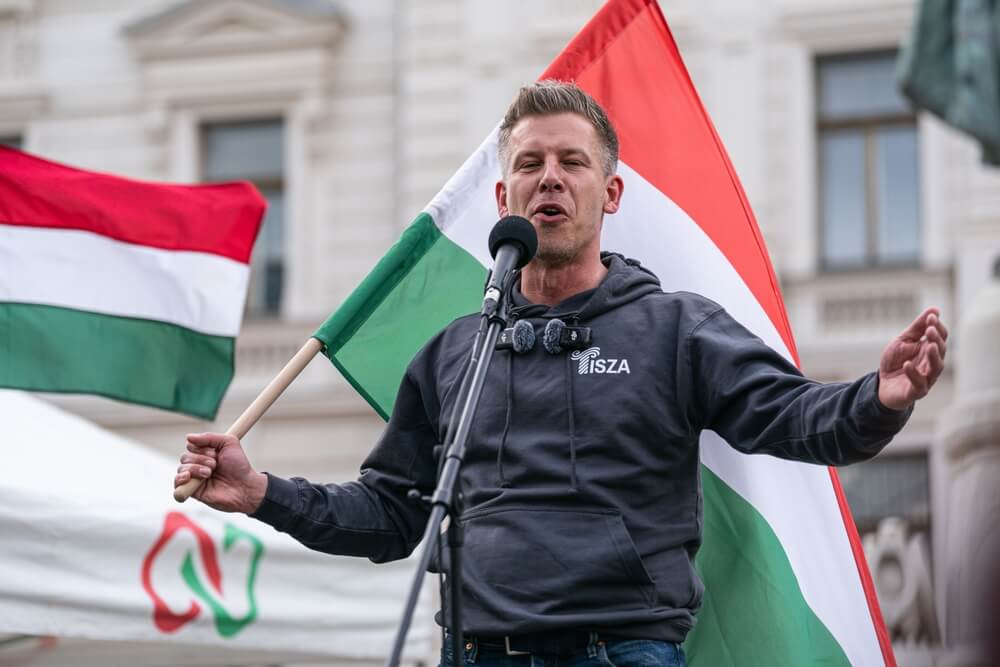 The experience from Romania, and especially the experience from Hungary, gives Bulgaria hope that it can preserve the integrity of its democracy - Peter Magyar
At the top of the party he founded before the campaign are former activists from the Bulgarian Socialist Party, individuals with military backgrounds, and politicians from several transitional cabinets in the past five years.
Most troubling are the Bulgarian government's claims that the ongoing election process is compromised by Russian interference, disinformation, illicit financing, and cyber operations in favour of the leading candidate and his party.
The Interior Ministry of Bulgaria has recorded a significant increase in election violations – from 418 in the 2024 elections to as many as 1,700 during the current campaign.
"We will break both old and new cartels – vote buyers will be in the ministry's sights even after the elections," said Interior Ministry Secretary General Georgi Kandev.
Similar, and even more intense, Russian cyber interference occurred during the presidential elections in neighbouring Romania at the end of 2024, when Moscow invested considerable effort and money in supporting the anti-NATO and anti-EU candidate Călin Georgescu. This remains fresh in the memory of many in Bulgaria and abroad.
A similar scenario is likely to repeat in Bulgaria, as Russian interference in European elections is neither new nor is its model changing.
However, the experience from Romania, where Mr Georgescu's victory was annulled by a court decision due to substantial evidence of fraud, and especially the experience from Hungary, gives Bulgaria hope that it can preserve the integrity of its democracy.
