The Polish Ministry of Foreign Affairs summoned the Israeli ambassador to Warsaw for a meeting, following the decision of the Israeli military judiciary not to initiate criminal proceedings over the attack on the World Central Kitchen aid convoy in Gaza, in which Polish humanitarian worker Damian Sobol and six of his colleagues were killed in April 2024.
Warsaw has thus turned the diplomatic dispute into a legal matter that Israel can no longer resolve unilaterally, because the Przemyśl prosecutor's office is already investigating Sobol's death and has requested the necessary materials for the proceedings from the Israeli authorities.
Australia summoned the Israeli ambassador a day earlier over the same decision and the death of its citizen, Zomi Frankcom.
Canberra is seeking accountability that does not end with internal disciplinary measures and the conclusions of the military prosecutor in Israel, so after more than two years the World Central Kitchen case has increasingly shifted from the Israeli legal system to the jurisdiction of the countries whose citizens were killed.
This development comes just two days after the Israeli military released the results of a review of five of the most notorious cases of civilian and humanitarian casualties in Gaza.
Criminal investigations were opened into the death of five-year-old Hind Rajab and members of her family in early 2024, as well as into the killing of 15 members of the medical and rescue services near Rafah in March 2025.
In three other cases, including the attack on the World Central Kitchen aid convoy and two incidents involving Médecins Sans Frontières, the military prosecution found no grounds for a criminal investigation.
The Israeli military legal system has clearly shown where it draws the line between a possible criminal offence and a serious operational error.
Poland and Australia are now demonstrating how little that boundary is worth outside Israel when foreign nationals are among the victims and when their governments consider that domestic action has not provided an adequate response.
Five cases, two different legal outcomes
The General Staff Fact-Finding and Assessment Mechanism has reviewed approximately 150 incidents since the start of the war and submits its findings to the Israeli military prosecutor's office, which decides whether there are grounds for a criminal investigation.
The system distinguishes between operational error, misjudgement and possible criminal liability, so the large number of civilian casualties or the severity of the consequences alone does not determine whether the military police will open a case.
The decisions announced on 19 August show how that standard is applied in the most sensitive cases. In the Hind Rajab case, a military review found that Israeli soldiers opened fire on the car she was in with family members, and later on the Palestinian Red Crescent ambulance sent to retrieve her.
Hind remained alive in the vehicle for hours, calling for help, and her body, the bodies of her family members, and two medics were found twelve days later.
A new internal military investigation established a different sequence of events and referred the case to the military police
The case carries particular weight because the Israeli army had previously claimed that its forces were not in a position from which the car could have been hit. A new internal military investigation established a different sequence of events and referred the case to the military police.
The criminal investigation has yet to establish whether there are grounds for indictment, and the names of the soldiers and officers whose responsibility is being examined have not been released. However, the earlier official account of the event has already been revised in the light of the findings of Israeli investigators.
A similar issue arose in the case of 15 members of emergency and humanitarian services killed on 23 March 2025 near Rafah.
The initial military explanation referred to vehicles approaching suspiciously and without proper light markings, while a video found on the phone of one of the dead showed ambulances and rescue vehicles with their lights on and clearly marked.
The Israeli army later acknowledged professional lapses, dismissed one officer, and reprimanded another. A criminal investigation must now determine whether decisions taken on the ground involved individual criminal responsibility.
World Central Kitchen case crosses the boundaries of Israeli procedure
In the case of World Central Kitchen aid convoy, the Israeli military prosecution reached a different conclusion and ruled that there were no grounds for a criminal investigation.
Seven aid workers were killed on 1 April 2024 in a series of attacks on the organisation’s vehicles, whose movements had been coordinated with the Israeli army.
An internal investigation then found serious lapses in target identification and decision-making; two officers were dismissed, and several senior officers were disciplined.
The Military Prosecutor’s Office has now concluded that the identified omissions do not provide sufficient grounds for a criminal investigation.
This decision carries greater legal weight than the disciplinary measures adopted in 2024, as it represents the final assessment by the Israeli system of whether the conduct of those involved in the attack warrants prosecution.
The Polish action now alters the practical significance of the Israeli conclusion
World Central Kitchen rejects this conclusion and has demanded an independent investigation from the outset, while the families of the dead and the governments of their countries have been seeking, for more than two years, an answer that would go beyond internal military consequences.
The Polish action now alters the practical significance of the Israeli conclusion. Shortly after Sobol’s death, the prosecutor’s office in Przemyśl opened an investigation, requested international legal assistance and materials related to the attack, and the closure of the case in Israel will not halt proceedings in Poland.
One and the same event thus produces two legal outcomes that can unfold in parallel and lead to different assessments of responsibility.
Domestic system under external control
Israel has a developed military legal system, with a special mechanism for examining incidents in war, a military police force that conducts criminal investigations, a military prosecutor’s office, and arrangements for civilian judicial oversight.
An important part of Israel’s response to calls for international criminal proceedings, and to claims that domestic institutions cannot impartially investigate the conduct of its own military, rests on the system’s ability to independently determine responsibility.
Critics highlight the long-standing problem of the very small number of indictments in cases involving Palestinian deaths, and the lengthy proceedings that often end without prosecution.
The value of the new investigations will be measured by their outcomes, the investigators’ findings, and the willingness of the military prosecutor to bring indictments when the evidence points to specific soldiers or officers.
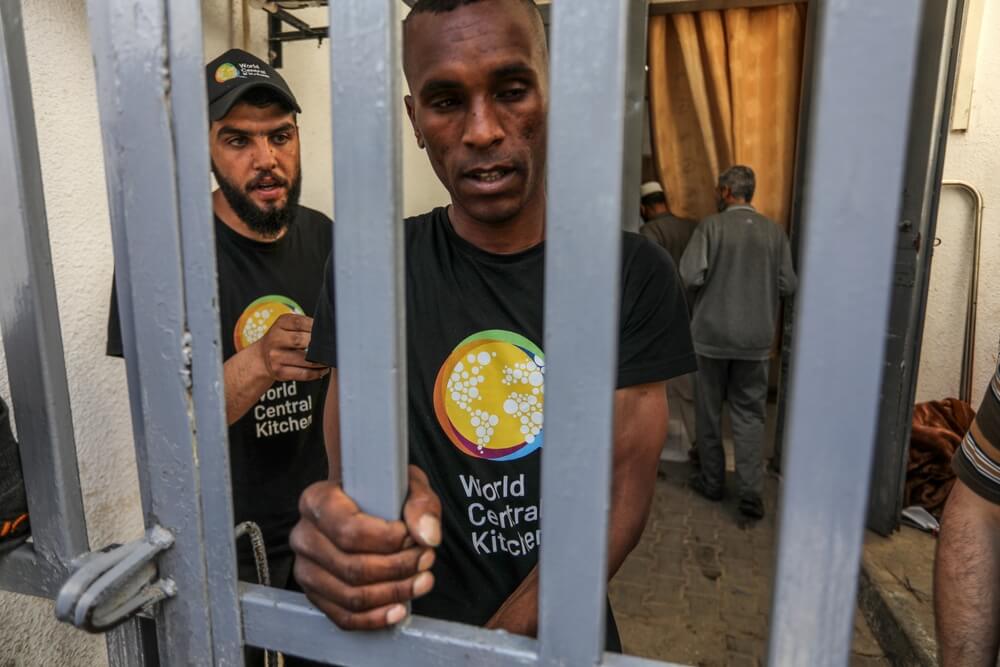 World Central Kitchen is an even more embarrassing case legally, because the Israeli process reached its conclusion without any criminal investigation
The cases of Hind Rajab and the medics in Rafah now carry additional weight because an internal review has already produced findings less favourable to the military than its initial account.
Criminal proceedings that establish individual responsibility would show that the Israeli system can go beyond command reprimands and administrative measures.
Prolonged investigations without a clear procedural outcome would create even more scope for foreign states and international institutions to consider exercising their own jurisdiction.
World Central Kitchen is an even more embarrassing case legally, because the Israeli process reached its conclusion without any criminal investigation.
Poland and Australia have already indicated that they do not consider such an outcome sufficient, so the question of responsibility shifts from discussing the quality of the Israeli system to making concrete demands for evidence, cooperation, and possible action in other countries.
The ICC is fighting a separate legal battle
The International Criminal Court further undermines Israel's legal position, although the new investigations should not be directly linked to the arrest warrants for Benjamin Netanyahu and Yoav Gallant.
The ICC issued those warrants because of alleged responsibility for war crimes and crimes against humanity involving a different set of events and a different level of political and command responsibility.
The principle of complementarity gives preference to national courts when the state is genuinely investigating the same person for essentially the same conduct.
Any proceeding that is properly pursued, with clear findings and individual accountability where proven, strengthens Israel's case for having a functioning domestic judiciary
The investigation into the death of Hind Rajab by unidentified soldiers has no immediate legal effect on the case against Netanyahu or Gallant, but the credibility of the domestic system remains important to the broader assessment of Israel's ability to investigate the most serious allegations arising from the Gaza war independently.
Any proceeding that is properly pursued, with clear findings and individual accountability where proven, strengthens Israel's case for having a functioning domestic judiciary.
Cases in which serious failures are recognised, but the legal consequences remain limited to disciplinary and administrative measures, provide the opposite argument to states and institutions that consider domestic oversight lacking sufficient scope.
The next dispute will concern evidence and jurisdiction
In the coming months, legal pressure will increase through demands from foreign prosecutors and governments for documentation, statements and explanations of decisions taken by the Israeli military judiciary.
Polish prosecutors are already seeking materials related to the death of Damian Sobol, Australia is demanding further answers regarding Zomi Frankcom, and other countries whose citizens died in the attack on World Central Kitchen aid convoy have grounds to seek access to the facts on which the Israeli military prosecutor based the decision not to open criminal proceedings.
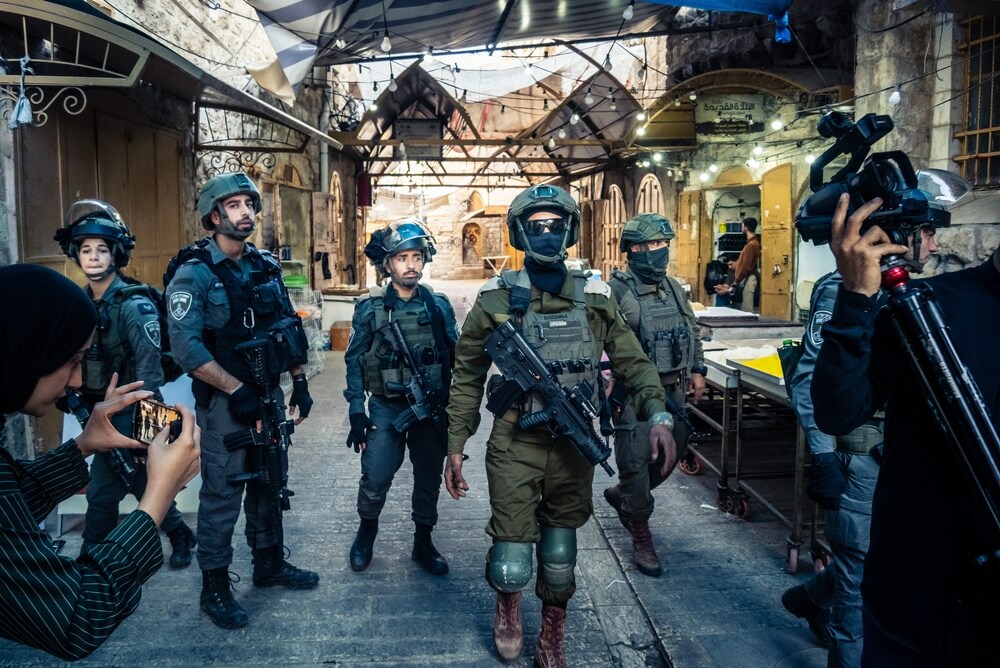 The key issue will be whether Israel provides foreign prosecutors with the documentation and evidence they are seeking
The key issue will be whether Israel provides foreign prosecutors with the documentation and evidence they are seeking.
Supplying materials and cooperating fully would allow Jerusalem to demonstrate that its conclusions can withstand scrutiny beyond the Israeli system.
Refusing to cooperate would increase the likelihood that allied countries will develop their own cases and determine responsibility for individual incidents without relying on Israeli institutions.
The criminal investigations into the deaths of Hind Rajab and the 15 rescuers now have a significance that extends beyond internal military proceedings.
Their outcome will show how far the Israeli judiciary can go when its own findings indicate the possible responsibility of soldiers or commanders, while the World Central Kitchen case will show how willing other countries are to continue from where the Israeli prosecutor left off.
Indictments in cases where the evidence justifies them would allow Jerusalem to retain much of the legal initiative.
If the Israeli proceedings conclude without prosecution, and the Polish and possibly other foreign cases continue to progress, responsibility will shift to courtrooms outside Israel.
The decisions of the Israeli military prosecutor’s office will remain important, but the final assessment will increasingly be made by others.
