Few could have predicted the consequences China’s 2001 accession to the World Trade Organization would have for the United States.
By contributing to the hollowing out of the US manufacturing sector and the decline in US manufacturing employment, China’s integration into the global economy helped prepare the ground for the right-wing economic populism that propelled Donald Trump’s political rise.
Unless Europe acts soon to protect its manufacturing sector from surging Chinese imports, it may face a similar fate.
At the heart of the threat China poses to Europe’s economy is its reliance on exports to prop up its economic growth and absorb its excess production.
While China has long recognized the need to shift from an investment-driven, export-led growth model to one built on domestic consumption, investment still accounts for around 40% of China’s GDP, and exports contribute a further 20%.
Weak domestic demand
China’s lack of progress toward economic rebalancing is partly attributable to the collapse of a property-market bubble in 2021, which undermined domestic consumption by bringing down household asset values.
This contributed to a slowdown in China’s GDP growth, which came in at just 4.3% in the second quarter of this year—the slowest pace since the COVID-19 pandemic.
Weak domestic demand has left China even more dependent on export subsidies and an undervalued renminbi to prop up its export sector
Weak domestic demand has also left China even more dependent on export subsidies and an undervalued renminbi (to the tune of 20%) to prop up its export sector.
Such interventions help to explain how Chinese exports increased by nearly 14% during the first half of this year, despite US tariffs, producing a staggering trade surplus of $1.2 trillion—the largest ever recorded by any country.
Pressure on Europe’s economy is intensifying
As China is forced to divert these rising exports away from the US, the pressure on Europe’s economy is intensifying, raising the specter of a new “China shock” hollowing out Europe’s manufacturing base in much the same way the first China shock decimated US industry in the early 2000s.
The threat is particularly pronounced in electric vehicles, wind- and solar-energy technologies, batteries, electronics, and other advanced machinery. But this is no zero-sum game.
In the long term, a Chinese economic rebalancing would benefit China and Europe alike
In the long term, a Chinese economic rebalancing would benefit China and Europe alike.
The policy prescription is well known. To reduce precautionary savings and boost consumption, China would have to raise household incomes and strengthen its social-safety net, including health care and pensions.
At the same time, it must reform local-government finances and reduce its reliance on debt-fueled investment, particularly in real estate.
Beyond putting China’s economy on a sound footing, such measures would enable China to repair its broken trade relations with the US and avoid a trade war with Europe.
Unfortunately, Chinese President Xi Jinping’s government has given no indication that it is moving decisively in this direction. This leaves Europe with little choice but to embrace protectionism.
A trade war is not in China’s long-term interest
To be sure, if Europe follows in America’s footsteps, using tariff and non-tariff measures to protect its industrial base from Chinese imports, it will almost certainly face retaliation.
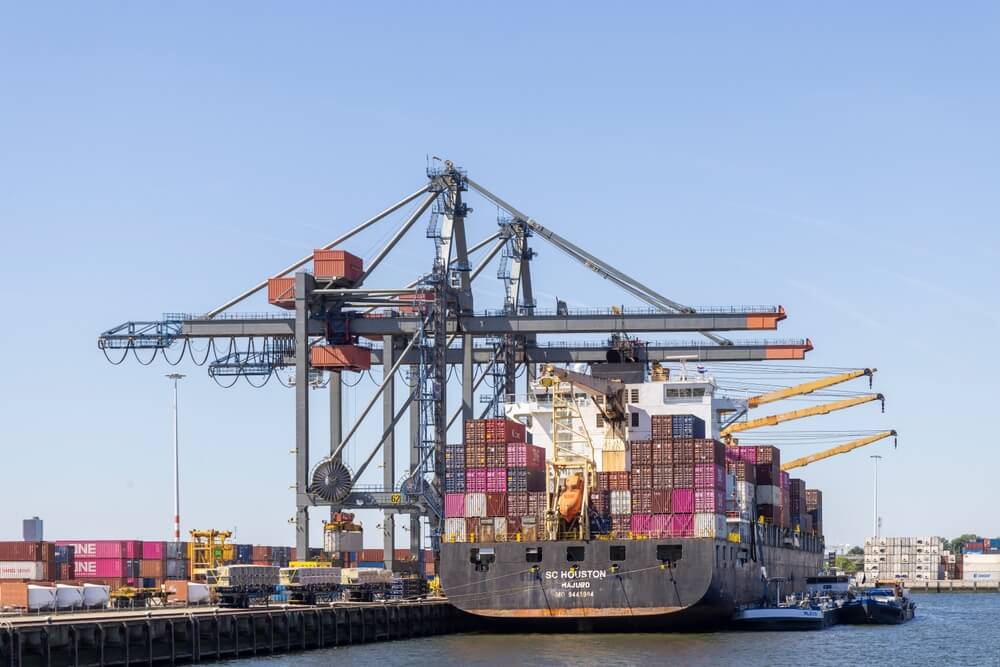 If Europe follows in America’s footsteps, using tariff and non-tariff measures to protect its industrial base from Chinese imports, it will almost certainly face retaliation
China would probably start by restricting Europe’s access to rare-earth minerals, batteries, and fuel cells—vital to advanced industries, from cars to wind turbines. This is how China got Trump to back down from a 145% tariff last year.
But as painful as such retaliation would be, the erosion of Europe’s industrial base would be far worse.
Beyond dragging down economic growth and destroying jobs, this outcome would complicate efforts by highly indebted countries, such as France and Italy, to pay down their liabilities. And, of course, it would add fuel to the populist fire.
In any case, a trade war is not in China’s long-term interest. Another major market resorting to protectionist measures—perhaps joined by other countries—might be just the wake-up call Xi’s government needs: China cannot flood global markets with ever-increasing exports forever.
Rather than try to prop up an obsolete growth model, China must pursue rebalancing in earnest.
Desmond Lachman, a senior fellow at the American Enterprise Institute, is a former deputy director of the International Monetary Fund’s Policy Development and Review Department and a former chief emerging-market economic strategist at Salomon Smith Barney.
