Since Israel and the United States launched their war on Iran in February, global energy prices have skyrocketed, with crude oil reaching nearly $115 per barrel at the beginning of this month.
While this shock has hit low-income countries the hardest, it also places significant strain on high-income Europe.
But it also presents an opportunity for Europe to reinvigorate its green transition—and European governments are failing to seize it.
By highlighting the risks associated with dependence on foreign oil and making fossil fuels less competitive vis-à-vis renewables, the current price shock makes the political and economic case for the green transition stronger than ever.
But governments fear the short-term political consequences of consumer anger over higher energy prices, so, rather than capitalizing on this moment to accelerate progress, they are scrambling to keep consumers’ costs low by cutting fuel taxes.
As the International Monetary Fund has noted, this approach is fundamentally flawed.
For starters, the price increase in Europe has not actually been that extreme: because fuel taxes account for up to half of what Europeans usually pay at the pump, the price rise has been far smaller than the overall surge in global crude oil prices.
Reducing fuel taxes shrinks government revenues
For example, in Germany, the price of unleaded fuel increased by less than 25%—from about €1.80 ($2.11) per liter in January to €2.20 in April—even as crude oil prices soared by over 80%, from around $60 per barrel to over $110 per barrel.
Moreover, reducing fuel taxes shrinks government revenues and is highly regressive.
Germany’s government has sought to get prices back below €2 per liter—a psychological threshold beyond which a political backlash might become more likely
Higher-income households drive more, have bigger cars, and have little incentive to save fuel even at slightly higher prices; they have even less when prices are held down.
But they are more likely to vote and to express their frustration politically, and at-the-pump costs are immediately visible, whereas other consequences of higher energy prices, such as larger heating bills, arrive much later, with the increase distributed over time.
So, Germany’s government has sought to get prices back below €2 per liter—a psychological threshold beyond which a political backlash might become more likely.
Other European countries have enacted or are contemplating similar measures.
Subsidies undermine resilience
Some European governments, such as Spain’s, are pursuing lower taxes on electricity generation, which is similarly counterproductive, as it encourages more energy use.
Since renewables still have a limited capacity, this will lead to yet more fossil-fuel imports and greenhouse-gas emissions, while doing little to limit inflation.
As usual, when faced with political pressure, European leaders are abandoning coherence for expediency.
Nowhere is this more obvious than in the fact that the same governments are continuing to subsidize renewables and electric-vehicle adoption, while sacrificing revenues in order to buffer the market forces that would naturally make such technologies more attractive.
Subsidies undermine resilience by weakening public finances
Germany has simultaneously budgeted €3 billion for EV subsidies this year and €1.6 billion in fuel-tax reductions that directly reduce the incentive to purchase EVs.
To be sure, even without the misguided fuel-tax reductions, EV subsidies are not an efficient way to reduce fuel consumption and emissions.
The same goes for certain renewable subsidies, such as for rooftop solar. Both require large outlays per unit of emissions avoided, and both are regressive, because better-off households are more likely to be able to afford EVs and own homes that can support rooftop solar.
Subsidies also undermine resilience by weakening public finances. While high public debt might appear sustainable during good times, it makes responding to shocks very difficult.
Because crises increase risk aversion, refinancing costs rise sharply, forcing governments to rein in spending exactly when it is needed most.
How to respond to crises?
A better strategy would focus on reinforcing the European Emissions Trading System, which remains the most efficient instrument for limiting harmful emissions.
Unlike regressive and expensive subsidies, the ETS effectively costs governments nothing and yields revenues that can be used to compensate poorer households for higher fuel costs.
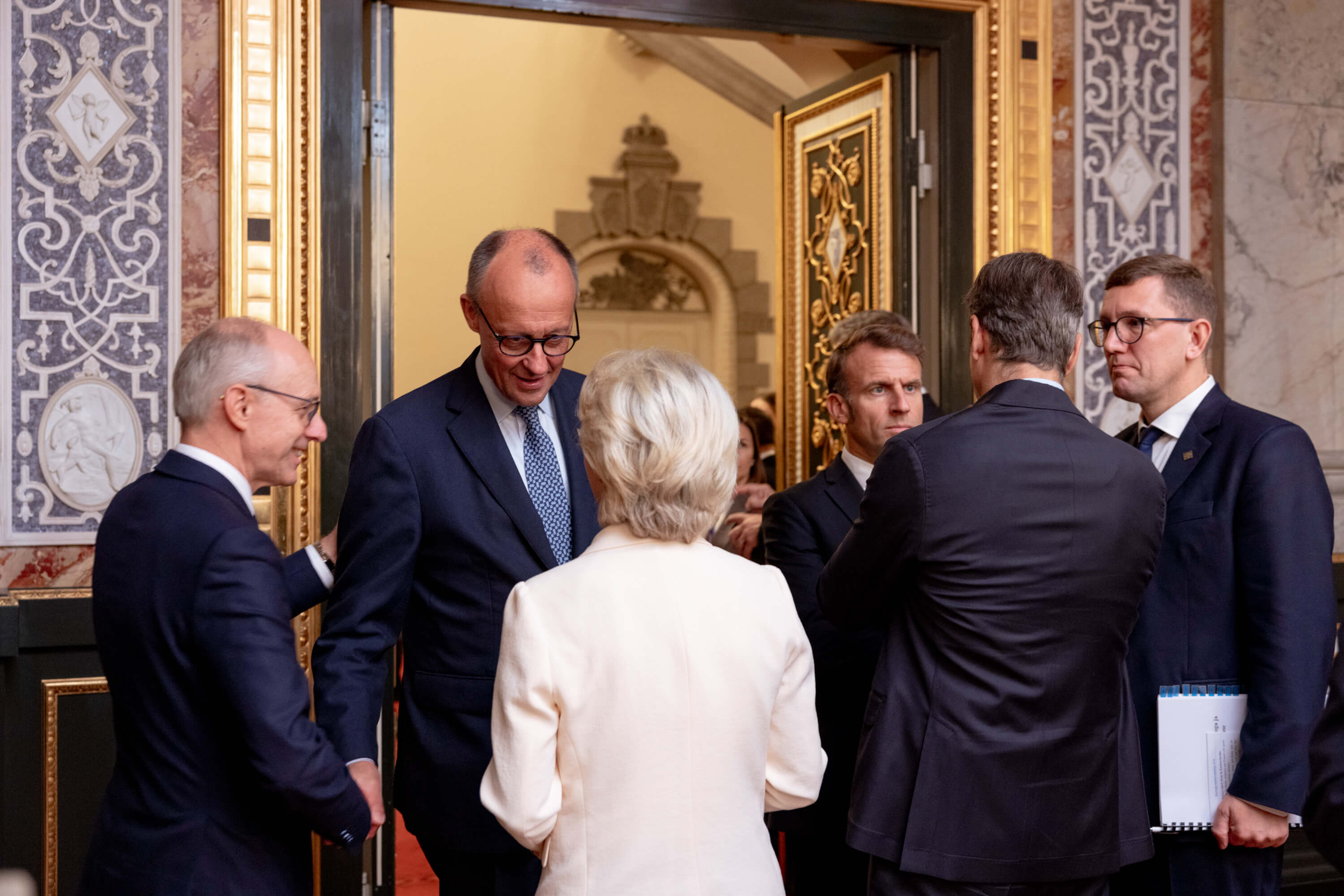 European governments should be pushing forward with a system that discourages emissions, incentivizes adoption of renewables, and generates public revenues
In other words, the ETS can both accelerate the energy transition and make it more equitable, without draining government coffers.
But the ETS has been watered down, with the European Commission bowing to lobbying pressure to keep more free emission permits available for industry.
Moreover, ETS2—an expanded version of the ETS that covers emissions from a much wider range of sources, from buildings to road transport—has been postponed. It is now scheduled to become fully operational in 2028, instead of next year.
So far, European governments’ response to the Iran energy shock has missed the mark.
Far from subsidizing energy consumption, whether through lower fuel taxes or direct appropriations, they should be pushing forward with a system that discourages emissions, incentivizes adoption of renewables, and generates public revenues.
While this approach might mean slightly higher fuel prices today, it would leave Europe less exposed to fuel-price shocks and better equipped to respond to crises.
Daniel Gros is Director of the Institute for European Policymaking at Bocconi University.
