With US President Donald Trump once again ratcheting up pressure on the Federal Reserve, this time with a criminal investigation of Fed Chair Jerome Powell, the end of central-bank independence may be at hand – at least in the United States.
And this threat comes at a time of growing risks to price stability, and has made financial markets exceptionally jittery.
Trump’s threats against Powell, and the Fed as a whole, are not to be taken lightly.
Inflation is a slow-moving disaster. Like the apocryphal frog placed in gradually heating water, it does not feel uncomfortable at first.
But just as the frog doesn’t recognize the danger of the water heating to a boil until it is too late to jump out, the pain of inflation often goes unnoticed until rising prices are firmly baked into the economy.
Inflation typically begins with a modest imbalance: too much money chasing too few goods.
Early price increases absorb the excess demand with little discomfort, but total demand from consumers, investors, exporters, and the public sector still exceeds the economy’s capacity to produce goods and services, even after accounting for imports.
As prices rise, people understandably want to protect their purchasing power. Workers demand higher nominal wages, businesses seek additional financing through loans or asset drawdowns, and governments maintain real spending by adjusting benefits or running larger fiscal deficits.
To accommodate demands for higher spending, credit expands, and the money supply increases.
Inflationary pressures
These developments provide short-term relief but fuel inflationary pressures and economic uncertainty.
As consumers try to preserve their living standards, savings fall, inflation increases, and capital shifts toward activities promising quick returns rather than long-term productivity gains.
Rising inflation punishes some groups far more than others. Pensioners and others living on fixed nominal incomes are often hit hardest, while public-sector wages lag behind rising prices.
Putting the brakes on spending growth is always unpopular
As the circle of losers widens, politicians tend to respond with short-term, distortionary measures such as frequently counterproductive price or rent controls. Consequently, public opposition grows, raising the risk of political unrest.
Putting the brakes on spending growth is always unpopular, which is why politicians often seek to postpone the reckoning until after the next election cycle, or at least until inflation’s costs become intolerable.
But the longer meaningful action is delayed, the greater the damage and the stronger the political pressure to contain price increases.
The Fed has long been independent
Interwar Germany offers the clearest example. After World War I, hyperinflation reached catastrophic levels, destroying savings, undermining social trust, and destabilizing the political system, paving the way for the rise of Nazism.
The trauma was so deep that it left a lasting imprint on German culture, which remains profoundly wary of inflation to this day.
This tension lies at the root of modern monetary policymaking: good politics favors delay, while good economics calls for immediate action.
That’s why economists have long advocated central-bank independence, which insulates policymakers from political pressures and enables them to maintain price stability – usually defined as low and steady inflation – through interest rates and other instruments.
Uncertainty about the direction of monetary policy and the underlying strength of the US economy is unusually high
In some advanced economies, central banks’ sole objective is to keep inflation low. In others, like the US, they operate under a dual mandate to ensure price stability and promote full employment.
To this end, central-bank staffers routinely assess incoming data to provide policymakers with a clear picture of economic conditions.
Like most other central banks in advanced economies, the Fed has long been independent.
But as Powell nears the end of his term in May, uncertainty about the direction of monetary policy and the underlying strength of the US economy is unusually high.
The implications extend well beyond the US
While investment is robust, especially in areas like AI, inflation is above the Fed’s 2% target, and the labor market shows signs of cooling, though the economy remains near full employment.
Managing inflation under these conditions requires careful judgment, and experts are divided over the appropriate response.
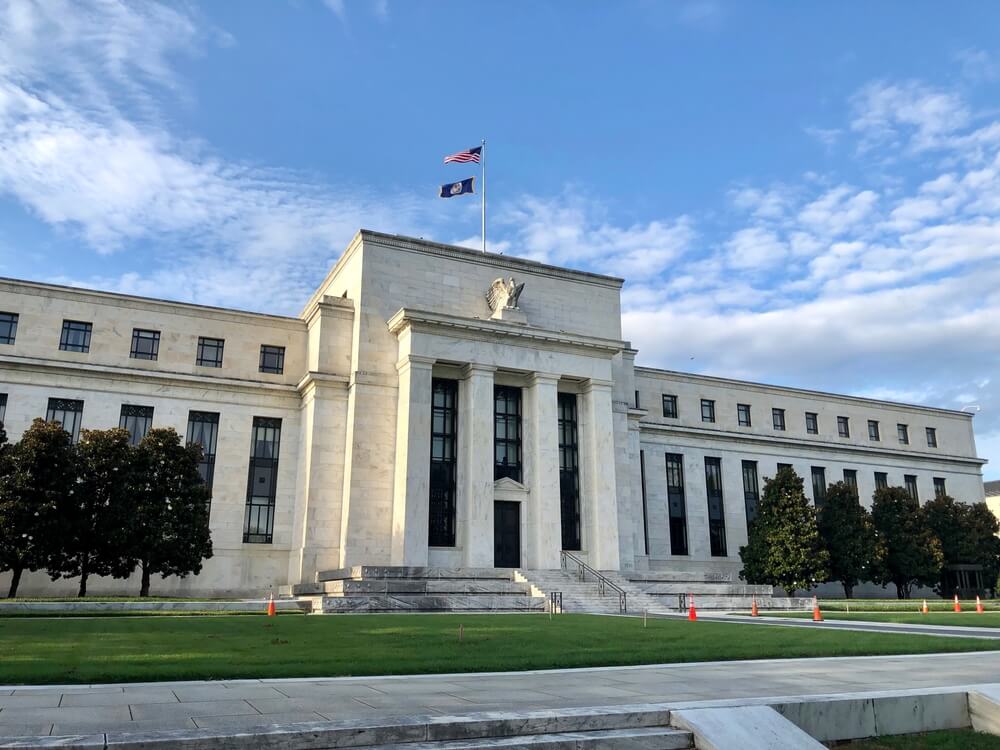 The choice of the next Fed chair should be guided by the objectives set by Congress, not by Trump’s political interests and personal whims
Although the Fed cut interest rates in December 2025, it signaled that fewer rate cuts may lie ahead – which may have triggered Trump’s latest escalation against Powell.
This debate underscores the importance of the Fed’s independence, whose purpose is to ensure that monetary policy reflects professional judgment based on economic analysis rather than short-term political pressures.
By repeatedly pressing the Fed to lower interest rates and declaring that the next Fed chair should be “someone who believes in lower interest rates, by a lot,” Trump has put that principle at risk.
The implications extend well beyond the US. If Trump selects a Fed chair on the basis of loyalty rather than competence and sound judgment, US monetary policy will likely be looser than warranted, stoking inflation, weakening the Fed’s ability to respond to a future downturn, and undermining global economic stability.
The choice of the next Fed chair should be guided by the objectives set by Congress, not by Trump’s political interests and personal whims.
If the Fed becomes entangled in partisan politics, its credibility will suffer, and inflation will become harder to control and far more costly to reverse.
Anne O. Krueger, a former World Bank chief economist and former first deputy managing director of the International Monetary Fund, is Senior Research Professor of International Economics at the Johns Hopkins University School of Advanced International Studies and Senior Fellow at the Center for International Development at Stanford University.
