Wars are fought not only on battlefields but also on the field of cost calculations and public perceptions.
A belligerent may accept the risk of escalating a conflict in the hope of winning concessions or a quick ceasefire.
This seems to be the Iranian regime’s strategy in the current war with the United States, Israel, and the wider region.
By widening the scope of the fighting and threatening the Gulf states’ economic lifelines, it wants to raise the perceived price of continuing the war.
Yet this approach may well backfire. By imposing so much economic and security pressure on the region, Iran is adding to its own long-term costs.
It has adopted a strategy whose consequences will likely extend well beyond the current war, hampering its economic recovery, its regional relations, and its diplomatic standing for years to come.
This matters, because Iran was already starting from a position of economic weakness.
The strain of international sanctions
Owing to its nuclear program, its economy has long operated under the strain of international sanctions, which have constrained its oil exports, complicated financial transactions, and isolated it from global markets and investment.
Following renewed international sanctions in late 2025, the rial fell to roughly 1.2 million to the US dollar – a near-record low in Iran’s modern history.
With inflation having climbed above 40%, the World Bank projects that Iran’s economy will shrink by 2.8% in 2026 if current pressures persist.
For a country with a young population and pressing development needs, the opportunity cost of prolonged isolation is massive
The widespread protests in January showed that Iranians are fed up with little to no economic growth, and the regime’s response to the war will place even more pressure on living standards.
The longer the war lasts, the worse the prospects for sanctions relief, economic recovery, and renewed foreign investment to modernize Iran’s infrastructure and industry.
For a country with a young population and pressing development needs, the opportunity cost of prolonged isolation is massive.
Post-conflict recovery
Moreover, wars generate their own economic liabilities. Military confrontations disrupt supply chains, damage infrastructure, and divert public resources away from social and economic priorities.
The recent US strikes against military installations on Kharg Island, from which Iran exports 90% of its oil, illustrate how quickly the regime could lose one of its most important economic lifelines.
The financial demands of post-conflict recovery could be significant
For an economy that has already experienced repeated cycles of inflation, currency volatility, and fiscal strain, the financial demands of post-conflict recovery could be significant.
Rebuilding damaged military facilities, energy and civilian infrastructure, and transport networks will require vast sums of capital that Iran does not have, and that it will not have access to as long as geopolitical tensions remain elevated.
Prolonged instability
But perhaps the most immediate economic consequence of Iran’s escalation strategy lies closer to home.
Iran had been relying on trade with neighboring Gulf states to engage economically with the wider world, but now its relationship with these dynamic global hubs is in jeopardy.
Its trade with the United Arab Emirates illustrates what could be at stake. Bilateral non-oil trade exceeded $29 billion in the year ending March 2025, making the UAE Iran’s most important commercial gateway to global markets.
But Iran’s ill-considered attacks on the UAE may have already unraveled commercial relationships that took years to build.
The same applies to Iran’s threats against shipping in the Strait of Hormuz, which occupies a central position in global energy security, accounting for close to one-quarter of the global seaborne oil trade and a significant share of the world’s liquefied natural gas shipments.
Any prolonged disruption in the Strait therefore risks constraining Iran’s own export capacity, while pushing buyers to diversify their suppliers
Iran itself exports roughly 1.5-1.7 million barrels of oil per day, much of it to Asian markets, with China alone purchasing an estimated 85-90%.
Any prolonged disruption in the Strait therefore risks constraining Iran’s own export capacity, while pushing buyers to diversify their suppliers.
To be sure, temporary spikes in energy prices often generate short-term economic advantages for oil-exporting countries. But they also accelerate long-term adjustments in global energy markets.
Importing countries will respond by diversifying supply routes, investing in alternative energy sources, and reducing their exposure to vulnerable maritime chokepoints.
Prolonged instability in the Strait risks eroding the strategic value of the coercive pressure Iran seeks to apply.
With many countries now planning naval escorts to secure the safe passage of tankers and ships through Hormuz, Iran’s grip on the strait has become a liability that no one can ignore.
Diplomatic cost
Perhaps the most enduring cost of Iranian escalation will be more diplomatic than economic.
Over the past decade, the Middle East has undergone a gradual shift toward pragmatic engagement with adversaries.
Arab states such as Saudi Arabia, the UAE, and Oman have increasingly sought economic cooperation, connectivity, and rapprochement with Iran.
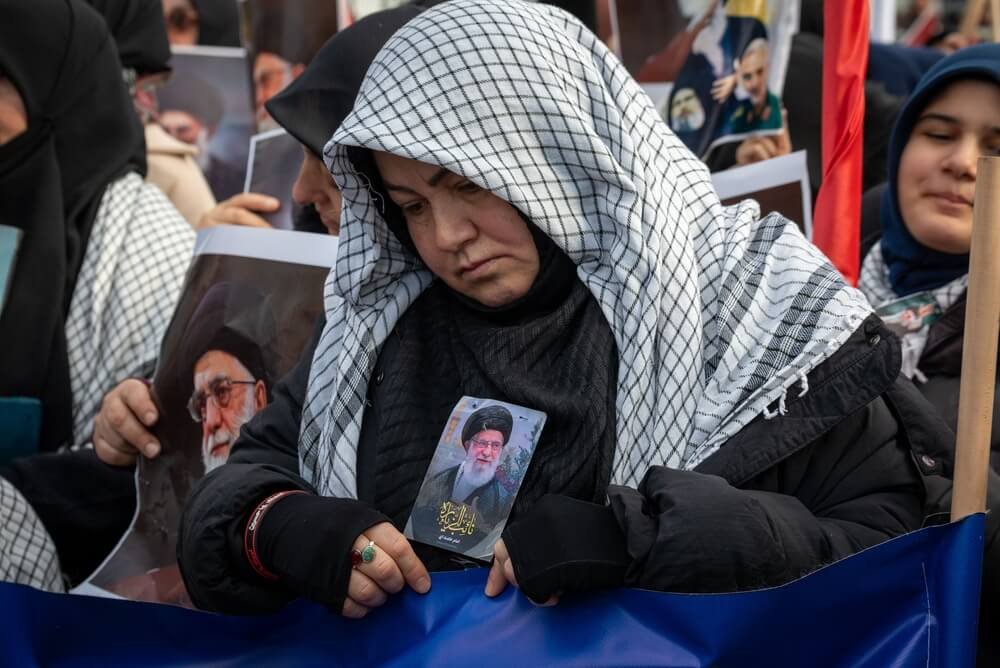 Strategies built on escalation and violence too often deliver diminishing returns
But Iran’s attacks on its neighbors have put it at odds with the rest of the region.
Deeper political isolation will mean even less access to the networks of trade, finance, and diplomacy that Iran needs to pursue its long-term national development.
For now, Iran’s strategy is to demonstrate the regime’s resilience, and to show that the region will not know peace unless it does.
But in a world of economic interdependence, regional connectivity, and global markets, pressure tactics rarely operate in only one direction, and the economic and diplomatic consequences may weigh more heavily on Iran than on the region over time.
After all, the Gulf states are not diplomatically isolated. The recent United Nations Security Council resolution (2817) condemning Iran’s “egregious attacks” on its neighbors shows that they have the world on their side.
Strategies built on escalation and violence too often deliver diminishing returns.
Greater economic integration and global connectivity elevate the value of stability and good neighborliness.
Iran would do well to remember that when the war ends and the dust settles, these factors will greatly outweigh any short-term tactical gains.
Mohammed Al Dhaheri is Deputy Director General of the Anwar Gargash Diplomatic Academy.
