When President Prabowo Subianto announced in March 2026 that Indonesia was suspending its involvement in Trump's Board of Peace, the move drew criticism from multiple directions simultaneously – from domestic audiences who felt he had gone too far towards Washington in the first place, and from Western partners who saw an ally hedging when it mattered.
Both critiques contain some truth. But taken together, they may also point to exactly the kind of difficult and pragmatic middle ground that serious independent foreign policy requires.
For a country of more than 242 million Muslims, navigating between Washington and the broader Muslim world, there was never going to be a comfortable position. It is worth remembering how much Prabowo put on the table to begin with.
While European governments were uniformly declining to put boots on the ground in Gaza, Indonesia pledged 8,000 troops for non-combat stabilisation around Rafah – the largest single national contribution to the proposed force, and a credible one, given that Indonesia provides 2,715 uniformed personnel to UN peacekeeping missions globally, ranking sixth worldwide.
This was a substantive commitment from a country with genuine peacekeeping experience, made at a time when most countries were watching from the sidelines.
The logic of engagement
The strategic rationale for joining the Board of Peace was sound. Indonesia operates in a difficult neighbourhood, Chinese maritime pressure near the Natuna Islands demands a credible Washington relationship, while Prabowo's early outreach to Beijing, his first state visit as president, and his subsequent meeting with Putin had raised questions in Western capitals about Jakarta's direction.
As LSE's China Dialogues noted, the Board of Peace offered a visible corrective, signalling that Indonesia remained open to Washington partnership. The bilateral trade deal finalised hours after the February Board of Trade summit suggested those signals were being read correctly.
Personal chemistry may have played a strong part. Trump and Prabowo see themselves as dealmakers, believe in a strong role for the military, are of a similar generation in their seventies, and both lead parties often described as populist and nationalist. Prabowo saw Trump as someone he could deal with.
The Board listed Israel as a full member, a country with which Indonesia has never had formal diplomatic relations
However, the structural problems with the Board of Peace were real and, with hindsight, underweighted. Permanent membership carried a one-billion-dollar price tag that Indonesia ultimately declined to commit to.
The exclusion of key regional nations Lebanon and Syria undermined its credibility as a comprehensive peace process for Gaza.
Most significantly, the Board listed Israel as a full member, a country with which Indonesia has never had formal diplomatic relations. Indonesia even filed a submission to the International Court of Justice against Israel due to concerns over Israel’s treatment of Palestinians.
For a country that has built its international standing through decades of UN peacekeeping, these were not abstract objections.
The Iran strikes change the equation
The US-Israeli strikes on Iran forced a reckoning that had been building for weeks. As Prabowo told Bloomberg in a rare interview, he found the strikes confusing and deeply saddening, and the absence of any coherent post-strike strategy for Iran all the more troubling.
For a former military commander, the frustration was as much professional as political – you do not commit forces, or endorse frameworks that commit forces, when there is no clear end-state.
The Board of Peace had been framed as a path to stabilisation; what followed was an escalation that made that framing very difficult to sustain.
Protests spread across Indonesian cities as public anger over the Iran strikes grew
Domestic pressure was also real, and it would be misleading to pretend otherwise. Protests spread across Indonesian cities as public anger over the Iran strikes grew, and critics argued that Board of Peace participation was being used to legitimise a US-Israeli framework that contradicted Indonesia's longstanding 'bebas-aktif' – free and active – foreign policy identity.
Prabowo was therefore navigating genuine constraints and under growing pressure. The question is whether those constraints produced the right outcome: a suspension that was diplomatically costly in Washington but preserved Indonesia's credibility as a potential honest broker across the broader Muslim world.
The case for Indonesia's next move
Indonesia did offer to mediate between Washington and Tehran, a role that, while operationally difficult given the state of US-Iran relations, is conceptually well-suited to Jakarta's position.
The model exists: Qatar has hosted Hamas's political office since 2012 while maintaining substantive US ties; Switzerland brokered direct Iranian-American diplomatic contact in Geneva as recently as February 2026; Singapore hosted the landmark 2018 Trump-Kim summit. Each bolstered its reputation through sustained, consistent neutrality.
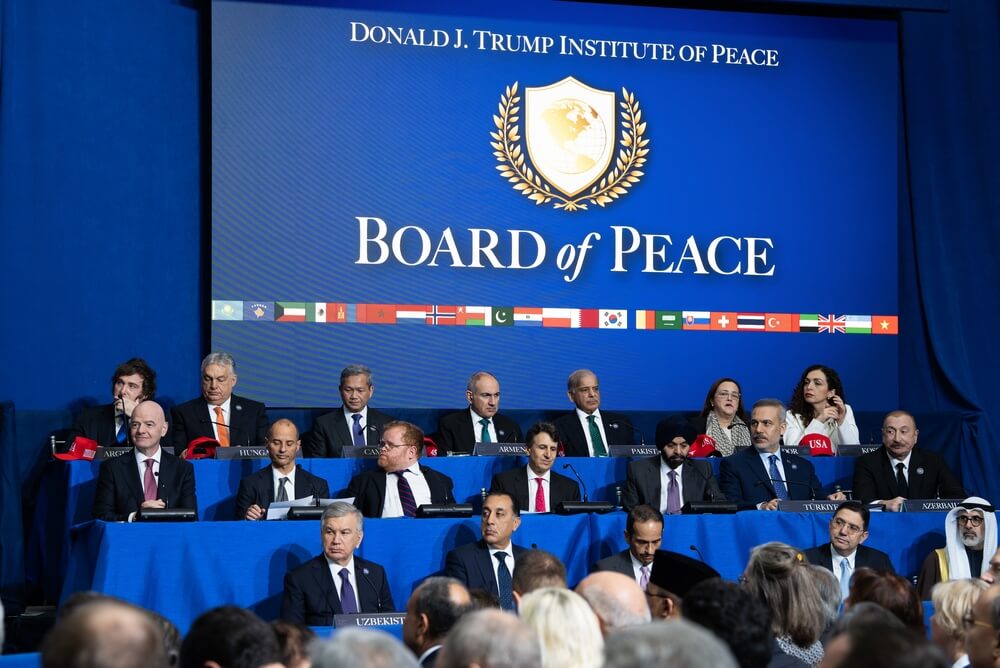 Prabowo must now demonstrate that Indonesia's pause in involvement with the Board of Peace was the beginning of a coherent diplomatic strategy, not the end of one
While Indonesia's brief association with the Board of Peace may have complicated that claim, it is not necessarily disqualifying. Countries that engage, test the limits of a proposition, and then speak plainly when those limits are reached can earn a different kind of credibility.
The harder test lies ahead. Prabowo must now demonstrate that Indonesia's pause in involvement with the Board of Peace was the beginning of a coherent diplomatic strategy, not the end of one.
Concerns about his broader foreign policy trajectory, the early China and Russia signals, and the Board of Peace gamble are not easily dismissed.
But Indonesia's fundamentals remain formidable – the world's largest Muslim-majority democracy, a serious peacekeeping record, and a geographic position that makes it impossible to ignore in any durable Indo-Pacific settlement.
If Prabowo can turn this difficult moment into a consistent, principled stance, the case for Indonesia as an indispensable voice in Middle East and regional diplomacy will be stronger than it has been in a generation. That is still an if, but it is a genuinely open one.
Johnny Luk is a strategic adviser and foreign policy expert. He was a UK parliamentary candidate in 2019 and 2024.
