In a volatile world, solitude is rarely comforting. That is the simple explanation behind Iceland’s August 29 referendum on whether to reopen its abandoned membership negotiations with the European Union. (Any final accession agreement would require a separate vote, after negotiations have been concluded.)
With around 400,000 citizens, a key position in the North Atlantic, and an economy highly integrated with the outside world, Iceland obviously is sensitive to how conditions for its development—and, more importantly, its security—are changing.
When the country applied for EU membership in 2009, it had only recently emerged from the near-death experience of the 2008 financial crash, which had triggered an economic collapse.
Many in Iceland then felt that tying the country’s currency and economy to the Union was the safest bet.
After a positive assessment of the country by the European Commission, accession talks began in 2010 and progressed rapidly until 2013.
Of the 33 negotiating chapters, 27 had been opened, and 11 had even been closed, although key issues such as fisheries control were still pending.
But the new Icelandic government that was elected in 2013 broke off negotiations. The general feeling among policymakers was that the economy’s recovery from the 2008 implosion had been smoother than expected. Iceland, many came to believe, could stand on its own feet.
Part of the EU’s single market
Since then, Iceland’s economy has performed well, driven not least by a booming tourism sector.
Moreover, it has benefited significantly from being part of the EU’s single market through the European Economic Area (EEA) agreement, to which Norway and Liechtenstein are also parties.
But uncertainty about Iceland’s volatile currency has kept interest rates—and thus many other costs—comparatively high.
With geopolitical and geoeconomic tensions rising, many are starting to worry that Iceland’s position outside the EU has become a vulnerability
Perhaps more importantly, with geopolitical and geoeconomic tensions rising, many are starting to worry that Iceland’s position outside the EU has become a vulnerability.
That is why Prime Minister Kristrún Frostadóttir’s government has sought a mandate to reopen accession talks and explore the option of membership.
For historical reasons, sovereignty figures heavily in Icelandic debates about joining the bloc.
But with the country already in an economic satellite relationship with the EU through the EEA agreement, full membership would only strengthen its sovereignty by allowing it to shape decisions that it is already required to implement.
Fisheries policy
Fisheries policy would be a core and sensitive part of any membership talks. But with the United Kingdom no longer an EU member, and with Iceland’s economic zone not bordering any other member state’s zone, there seems to be room for compromise.
Given that Sweden and Finland have already secured special arrangements on agriculture in northern regions, it should be possible for Iceland to receive similarly favorable treatment.
Despite these long-standing concerns, broader security priorities are increasingly shaping the conversation. Iceland is a member of NATO but without a military of its own.
During the Cold War, the United States operated the enormously important Keflavík airbase in the country, but left suddenly and unceremoniously in 2006.
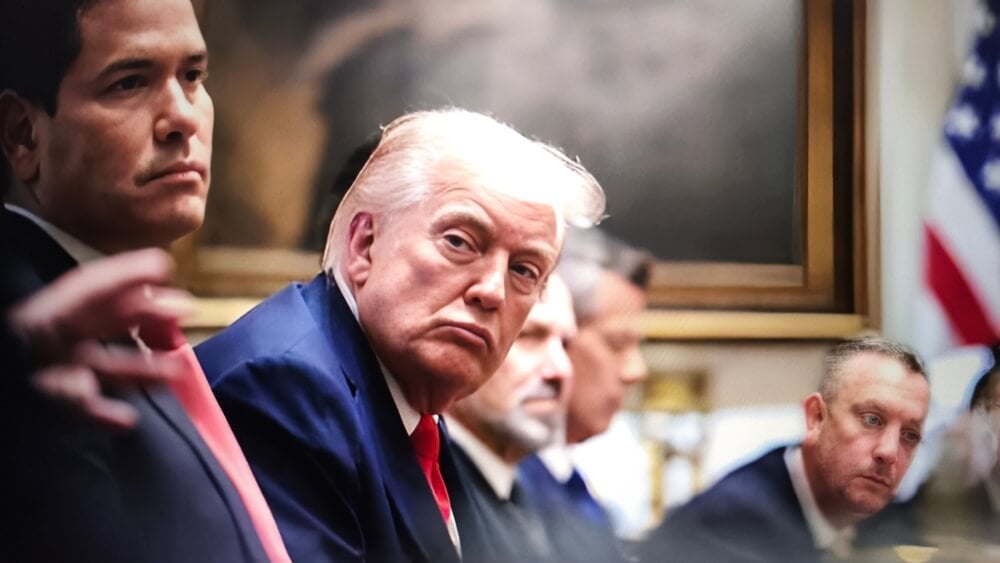 No one can predict what Donald Trump will do about neighboring Greenland, which he continues to covet
Now, European air forces mainly rotate their fighters to Keflavík to help with North Atlantic surveillance.
No one can predict what US President Donald Trump will do about neighboring Greenland, which he continues to covet.
But his administration’s volatile and unpredictable security policies have undoubtedly made Iceland more vulnerable.
In January, Trump’s pick for US ambassador to Iceland, apparently inspired by the president’s territorial ambitions, joked that the country should become the 52nd state, before rapidly backtracking. (It’s worth noting that the EU was prepared to stand up for Greenland.)
Being outside the EU’s customs union leaves Iceland exposed
Moreover, in the current era of trade wars, being outside the EU’s customs union also leaves Iceland exposed.
Large economies like the EU and China can retaliate against the Trump administration’s whims, but smaller ones lack leverage.
If Iceland votes to reopen accession talks, progress would most likely be swift, with a final decision on membership probably within two years.
There is no reason to think that the EU—particularly the Nordic and Baltic member states—would not welcome Iceland into the fold
There is no reason to think that the EU—particularly the Nordic and Baltic member states—would not welcome Iceland into the fold.
And Iceland joining the EU would probably force Norway to reconsider its position outside the bloc. An EEA agreement with only Liechtenstein means little in this climate.
But these are all possible issues for the future. For now, the question is whether Icelandic voters will decide to set the process in motion.
Carl Bildt is a former prime minister and foreign minister of Sweden.
