Elon Musk becoming the world’s first trillionaire. An entire country, Albania, being riven by protests against Jared Kushner’s mega-resort. Donald Trump signing a ceasefire with Iran, declaring “oil down, stocks up”.
Is this the dystopian conclusion of late-stage capitalism, or are we just witnessing an American system gone seriously rogue and unabashedly engaging in self-dealing, corruption and naked money-grubbing? Or both?
From time immemorial, wealth and power have been linked by a two-way system in which one reinforces the other. History is filled with cautionary tales: Croesus, the Medicis, Mobutu, Marcos and now Trump.
The web of connections between Musk, Kushner and Trump is obvious, but one might still wonder what that exactly means. At the most basic level it’s this: the balance between money and political power is clearly out of whack.
Trump’s remark, accompanied by hand gestures, at the Versailles dinner where he signed the memorandum of understanding with Iran was telling.
Rather than focus on the humanitarian or geopolitical aspects, he made it about the economy. And not in a general public interest manner, but specifically about oil and stock prices.
Anyone who has followed the markets, the dollar and the oil prices throughout the conflict with Iran will be aware that some people must have made fortunes from their mad gyrations along the way.
Where private interests stop and political interests begin
While the US and other democracies have fought wars for oil and other commodities or economic interests in the past, the general assumption – or possibly the fiction – used to be that this was not mainly to enrich a small coterie.
Right now, there appear to be no clear lines between where the individual financial interests of some powerful individuals stop and the American political interest begins.
Kushner and Steve Witkoff negotiate for the Trump administration at several crucial points around the world yet also seem to pursue their own commercial interests.
Trump himself is the main exemplar of this, with Forbes reporting him boosting his personal worth from just over $2 billion at the start of 2024 to over $6 billion today.
The fact that there are apparently no strict rules blocking such enrichment while in office, says much about the American system
The fact that he can do this, that there are apparently no strict rules blocking such enrichment while in office, says much about the American system.
Just to recap, it’s the same political, regulatory and judicial context that since at least the 2010 Citizens United decision, and arguably even before, treats the right of corporations to spend money for political purposes the same as those of an individual.
This only stops short of direct campaign contributions, but since many of the political issues can readily be identified with specific candidates, this distinction is mostly moot.
Thus, again, money buys power, and on the other hand, power begets money. It is an age-old phenomenon that modern democracies were at least partly expected to regulate.
A vehicle for Musk’s wealth creation
Regulation, though, has become a dirty word, even though financial deregulation brought us the 2008 financial crisis and campaign funding deregulation in several ways paved the way for Trump, especially for his second term.
One of those who heavily spent on Trump’s 2024 campaign, then got a quasi-government job and also profited immensely from Trump-era policies is Elon Musk.
In the process, he beggared hundreds of thousands of government employees while himself only growing richer.
SpaceX is first and foremost a vehicle for Musk’s wealth creation, not anybody else’s
Now Musk has become a trillionaire, but don’t expect him to do much for the average investor in one of his companies. After rising to dizzying heights in the wake of its IPO, SpaceX came tumbling back to earth somewhat, and long-term prospects are murky.
Take Tesla, over the past five years its share price has stood at a significant loss for prolonged periods and now is worth just over 2 per cent more than in 2021.
It’s just one indication that, beyond all the hype, wealth creation for small investors is not a priority for Musk and his ilk.
SpaceX, however capable and successful its technology and business model, likewise is first and foremost a vehicle for Musk’s wealth creation, not anybody else’s.
A billionaire – and now trillionaire – class
The unprecedented enrichment of the wealthiest – most already come from very well-to-do backgrounds – is now affecting the public mood in Western democracies.
Inequality in terms of wealth and political influence is perceived to be growing. Middle-income segments appear to be stagnating, the gains of the 20th century in the fields of access to education, housing, healthcare, old-age income security and more seem to be eroding. Basic social and economic safety nets are being cut back.
And still, national finances in almost every Western democracy are facing huge structural long-term pressures, foreshadowing more hardship in the future.
This has been accompanied by the rise of a billionaire – and now trillionaire – class that still positions itself as the solution to all these problems, rather than, if not the cause, certainly a symptom of the above-mentioned developments.
To the far-right, it’s fine, or even commendable, when authoritarian rulers assert their dominance over business, but not when democracies do so
While both the political right and the left have in many ways facilitated these processes over the past decades, it’s particularly the former that has been captured wholesale by the interests of the ultra-wealthy. This is exemplified above all by the Republicans in the US.
Populist ultra-right-wing movements fulminate about the plight of the average working man while in practice facilitating corporate giveaways, deregulation and tax breaks for the rich.
They often take Putin’s Russia or Xi’s China as an example of unfettered capitalism while ignoring that these autocrats have taken extreme measures against their own oligarchs when these didn’t toe the party line.
Apparently, to the far-right, it’s fine, or even commendable, when authoritarian rulers assert their dominance over business, but not when democracies do so.
The US plutocracy model
On parts of the left, a counter-populism has emerged that has become sceptical of all establishment-linked politics and that aims to resort to targeted measures against the ultra-rich, including wealth taxes.
While there’s no intrinsic argument against this – although the ultra-wealthy treat such proposals as heresy – the practicalities are often forbidding.
A steady structural approach including corporate and progressive taxation, regulation and the strengthening of democratic institutions might offer a more secure and realisable path.
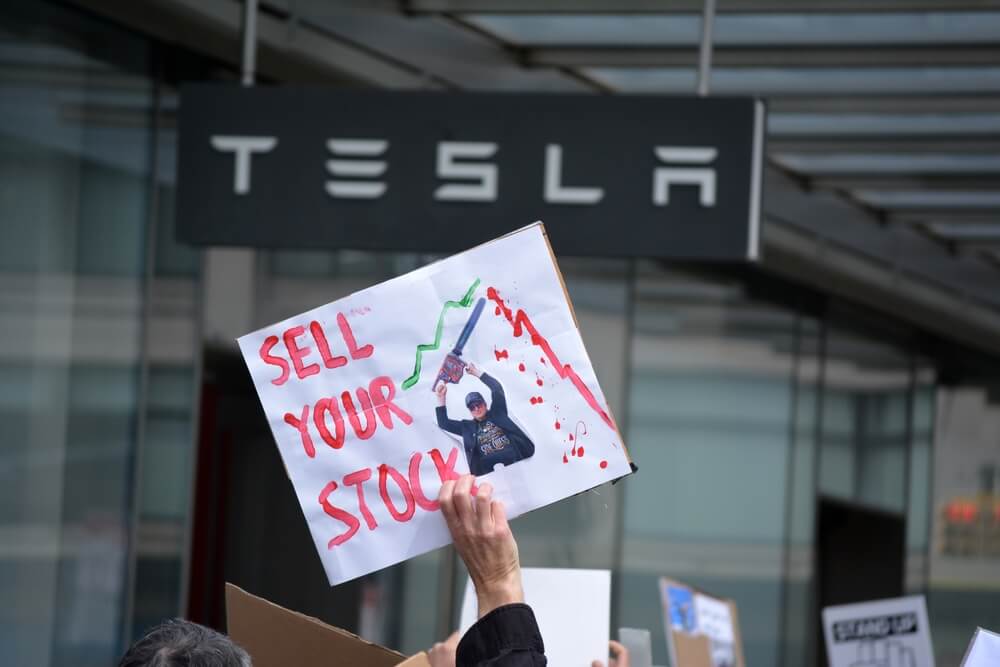 Trump and Musk own their own social media companies. Their associates are in control of Hollywood studios, legacy TV stations and newspapers
But that’s the way of incrementalism, a word that has gained almost as much opprobrium on the left as regulation has on the right.
The debate is not helped by the discourse having steadily been captured by the ultra-wealthy since the late 1970s with the help of a web of think tanks, media possessions and political donations.
Trump and Musk own their own social media companies. Their associates are in control of Hollywood studios, legacy TV stations and newspapers.
The US Supreme Court, now heavily packed with Republican appointees, has over the past half century steadily chipped away at the idea that a level playing field can be mandated by the state, in any shape or form.
This also makes a Progressive Era antitrust-type reversal less likely than it was over a century ago.
Will this be the fate only of the US, or is the whole world heading this way?
Other democracies will have to start making choices based on values that are different from the US plutocracy model.
Autocracies such as Russia and China have partly done so, but in the pursuit of pipe dreams such as nostalgic nationalism or the ghost of communism.
It’s up to Europe and like-minded allies to insulate themselves from the ravenous appetites of America’s hyper-capitalist direction, while inevitably still operating within more or less the same system.
