On 20 July 1988, Iran’s supreme leader, Ayatollah Ruhollah Khomeini, told the nation he had drunk ‘the poisoned chalice’ by accepting a ceasefire in an eight-year war with neighbouring Iraq.
The final dramas of that conflict, in which more than half a million died, played out in the Strait of Hormuz, where once again war is threatening world economies by disrupting the passage of a fifth of their oil supplies.
Iran’s attacks on commercial vessels and targets in the region’s oil-producing states have reduced crude and oil product shipments to a trickle, according to the International Energy Agency. It described the disruption as the largest in the history of the global oil market.
A frustrated Donald Trump has since tried to pressure reluctant allies to assist in opening the strait, warning Nato partners they faced a “very bad” future if they failed to step up.
Are there lessons to be learned from that earlier conflict? And who might be forced to drink the poison this time around?
The US abandons neutrality
Khomeini’s decision to abandon a war in which Iran had repulsed an Iraqi invasion and was now threatening its territory followed events in the Persian Gulf that persuaded him the US would never allow him to emerge the victor.
By the final year of the war, the US had abandoned a policy of neutrality and was actively engaged in the Gulf to prevent Iraq’s defeat.
Its intervention, nevertheless, involved elements of tragedy and farce that underlined the perils, then as now, of attempting to police the waters below the 1,500 miles of the Iranian coast.
From mid-1987, the US deployed its largest naval convoy since World War II to escort tankers belonging to Kuwait that were reflagged as US vessels
From mid-1987, the US deployed its largest naval convoy since World War II to escort tankers belonging to Kuwait that were reflagged as US vessels.
Washington had agreed to Kuwait’s reflagging request after it had learned that Iraq’s then-ally had made a similar request to the Soviet Union.
It was not all plain sailing. In the first convoy, the USS Bridgeton was damaged by an Iranian mine and had to continue its course sheltering behind the supertanker it had been meant to protect.
Two months before the reflagging operation began, another warship, the USS Stark, had been struck by two Iraqi Exocet missiles, killing 37 American sailors on board.
The Ronald Reagan administration accepted Baghdad’s explanation that it had mistaken the Stark for an Iranian vessel and instead blamed Tehran for its attacks on targets in the Gulf. For Tehran, it was a signal that Washington had now definitively taken Iraq’s side.
The dilemmas of US and Iranian leaders
For Iran, there was worse to come. On 3 July 1988, the crew onboard the USS Vincennes misidentified an Iranian airliner on a scheduled flight to Dubai as a hostile Iranian F-14.
Amid confusion on deck, the order was given to launch missiles to bring down the plane. All 290 people on board were killed, their remains scattered into the waters of the Gulf.
More sure than ever that the US was now at war with Iran, Khomeini’s closest adviser and fellow cleric, Hashemi Rafsanjani, convinced the Ayatollah it was time to accept peace. Within the month, the supreme leader drank the poisoned chalice.
The often mismanaged intervention had achieved the desired effect, but perhaps not in the way that Washington had intended.
Khomeini’s successors will have to drink their own cup of poison if the ongoing US-Israeli campaign brings about their downfall
Khomeini’s successors will have to drink their own cup of poison if the ongoing US-Israeli campaign brings about their downfall.
Or will the chalice pass to Trump, who, denied the support of his allies, finally walks away from his latest overseas adventure?
More likely he would declare victory, as Iraq’s Saddam Hussein did in 1988, whether or not Iran’s enriched uranium or the regime itself remain in place. He can always blame his unreliable allies for that.
When the fun is over
As he berates them for failing to come to his aid, other states are taking their own measures to secure the flow of oil.
India has negotiated with Iran to arrange for safe passage of its vessels through the Hormuz Strait, through which up to half its crude imports flow. Others are likely to follow suit.
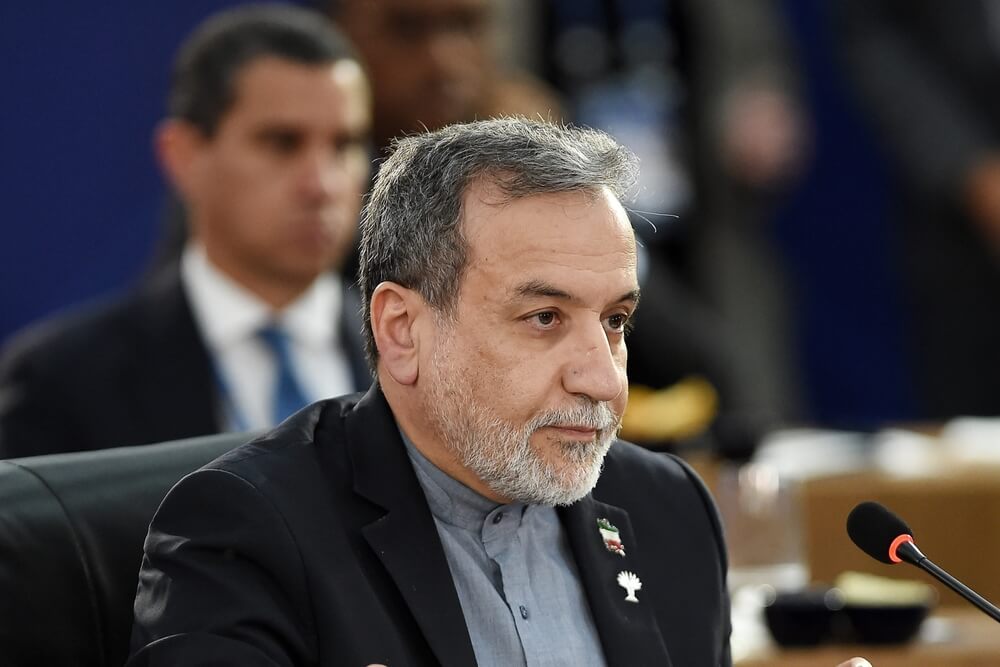 Abbas Araghchi said that Tehran had been approached by a number of countries seeking safe passage for their vessels
Iranian Foreign Minister Abbas Araghchi said at the weekend that Tehran had been approached by a number of countries seeking safe passage for their vessels. A group of vessels from different countries had been allowed to pass, he told CBS News.
“We provide them security to pass because we have not closed this strait. They are not coming themselves because of the insecurity which is there, because of the aggression by the US,” he said.
Even America’s closest friends would have to concede he has a point. Shipping through the Strait of Hormuz was safe until Trump and Israel’s Benjamin Netanyahu launched their war of choice.
Oil prices ticked up further above the $100 per barrel mark this week after Trump asserted that US strikes had totally demolished most of Iran’s Kharg Island oil hub, telling NBC News that the military might strike "a few more times just for fun”.
When the fun is over, the key war aims may remain unresolved. Already, Israel is backing away from the prospect of regime change in Iran, with Netanyahu merely boasting that: “This is no longer the same Iran, this is no longer the same Middle East.”
If there is poison to be drunk, it may be for the Iranian people to swallow. As things stand now, they face the prospect of continued rule by an ever more repressive and now more depleted and impoverished regime.
Harvey Morris is the co-author of a 1989 history of the Iran-Iraq war: The Gulf War: Its Origins, History and Consequences.
