Few areas today demonstrate such a clear Chinese advantage as the processing of critical minerals. This is precisely why the issue, once confined to mining companies and industrial lobbies, has now reached the agenda of G7 leaders.
Over the past twenty years, Beijing has established a position unmatched by any other country in modern industrial supply chains.
While the United States and Europe focused on developing technology, financial markets and the consumer economy, China systematically expanded its control over the processing of raw materials essential for much of that technology.
Therefore, today's debate about lithium, nickel, and rare earths is less about geology and more about industrial power.
China's advantage did not happen by chance
China's position did not develop overnight, nor can it be explained solely by state subsidies. For two decades, Beijing invested in parts of the industrial chain that Western economies largely left to the market.
While American and European companies sought lower costs and higher profitability, China developed capacities for processing, refining and producing components essential for batteries, electric vehicles, wind turbines, satellite technology and much of the modern defence industry.
China is reaping the benefits of a strategy developed over more than two decades
This is why the discussion about critical minerals is no longer about mines, but about control of industrial processes in which raw materials acquire economic and strategic value.
Today, China is reaping the benefits of a strategy developed over more than two decades, while its competitors are only now attempting to restore capacities they regarded as secondary or economically unviable for years.
A change that came late
Two decades of globalisation fostered the belief that the market would always find the most efficient solution. Production moved to where costs were lower, companies optimised supply chains, and governments viewed economic ties as a stabilising factor.
This model worked until security risks became more important than economic efficiency.
The intensifying rivalry between Washington and Beijing has moved from trade to technology, industry, and access to strategic resources
The pandemic demonstrated how rapidly global commodity flows can be disrupted. The European energy crisis following Russia's invasion of Ukraine revealed the cost of relying on a single supplier.
Meanwhile, the intensifying rivalry between Washington and Beijing has moved from trade to technology, industry, and access to strategic resources.
In this environment, critical minerals are no longer simply a matter of raw material procurement. They have become an issue of industrial resilience, technological competitiveness, and national security. This is precisely why they are now on the agenda of G7 leaders.
Europe faces its most difficult choice
The European Union enters this race from a far more complex position than the United States. European industry aims to reduce dependence on China but remains deeply connected to the Chinese market and supply chains.
From the automotive sector to the energy transition, much of what Brussels considers strategic depends on materials and components sourced from China or processed in Chinese facilities.
Therefore, the European response cannot be limited to opening new mines. Processing, logistics, long-term contracts, and investments amounting to tens of billions of euros represent a much greater challenge.
At the same time, any serious industrial project faces procedures, environmental disputes, and political resistance at the local level.
The capacities China uses today were built over two decades. Europe is only now entering this process.
Europe's problem does not end with Chinese supply chains. Even if it succeeds in increasing its domestic processing capacity, Europe will still need to secure stable access to raw materials, most of which are located outside Europe.
This is where another change emerges, significantly complicating the G7's plans.
 Countries with large reserves of lithium, nickel, cobalt, and other strategic minerals now negotiate from a much stronger position than ten or fifteen years ago
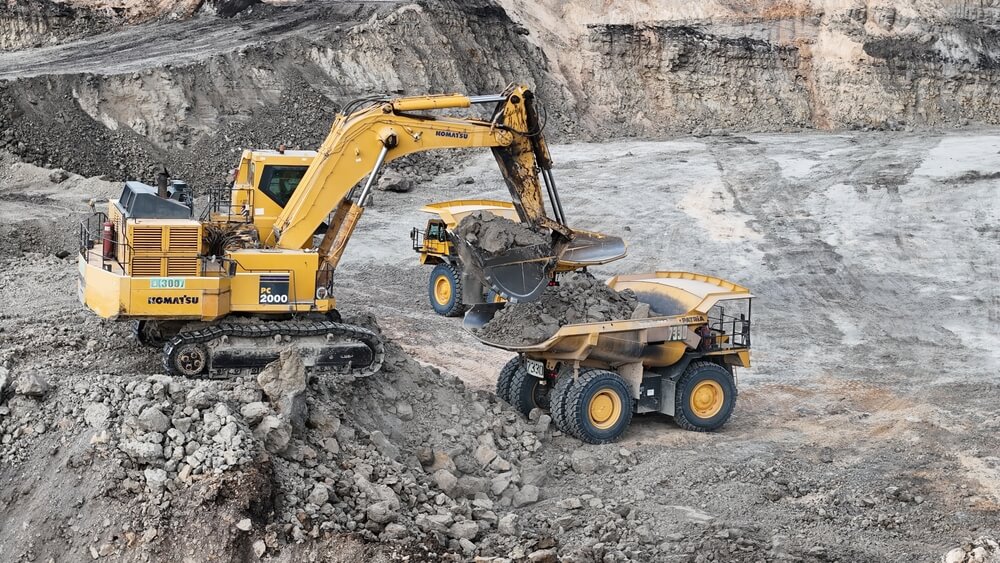
Countries with large reserves of lithium, nickel, cobalt, and other strategic minerals now negotiate from a much stronger position than ten or fifteen years ago. From Latin America to Africa, there is decreasing willingness to export raw materials while most profits, technology, and industrial production are generated elsewhere.
Governments increasingly seek domestic processing, new jobs, infrastructure, and greater participation in the value chains arising from their natural resources.
This approach alters the logic on which global supply chains have operated for years. Access to sites is no longer sufficient. Capital, technology, long-term investment, and political will are required to relocate part of industrial production closer to sources of raw materials.
China recognised this process much earlier than its competitors. Through mining projects, infrastructure, loans, and industrial partnerships, it has established a presence in parts of Africa, Asia, and Latin America, which now represents a significant advantage in the global competition for strategic resources.
Therefore, the future race for critical minerals will not be limited to China and the West. States with resources essential to both sides' plans will gain increasing influence.
A decade that will determine the outcome
In Evian, the G7 attempted to address the dependency that has increased over the years within global supply chains.
The aim to reduce it significantly by 2030 will encounter constraints that cannot be resolved by a single summit, fund, or industrial strategy.
Are leading Western economies willing to finance more expensive and complex supply chains for greater security?
New mines, processing plants, and transport infrastructure require timeframes that are largely incompatible with political calendars.
This is why the next decade will show whether the leading Western economies are willing to finance more expensive and complex supply chains in the long term for greater security.
Much more than the critical minerals market depends on the answer to this question. The West's ability to reduce its reliance on capacity outside its political and regulatory control in sectors it considers strategic depends on it.
