Macron's visit to Kenya comes as France attempts to repair the effects of the deepest decline in its African influence since the end of the colonial era.
Paris no longer holds a secure political position in much of West Africa, lacks its former military presence in the Sahel, and no longer has a monopoly on relations with African elites, which for decades formed the basis of France's presence on the continent.
The announced investment framework of approximately 27 billion dollars for projects in infrastructure, energy, transport and development should be viewed in this context.
France is trying to demonstrate that its engagement in Africa can be based on capital, technology and industry rather than troops, security arrangements and political tutelage.
Paris is changing its approach because the previous model, based on military presence and political influence, has lost its ability to maintain France's position in much of Africa.
In recent years, France has lost significant political influence in Mali, Burkina Faso and Niger.
The withdrawal of French forces from these countries was not merely an operational adaptation to new circumstances; it marked the end of a post-colonial structure in which Paris had for years combined military presence, intelligence cooperation, financial ties and political influence.
A system that consumed itself
That system functioned as long as local elites saw benefit in it and France managed to present it as a guarantee of stability.
When security crises in the Sahel became chronic and the French military presence no longer delivered visible results, the same system began to generate political resistance.
Anti-French sentiment became a useful tool for the military junta, but also reflected a broader rejection of the old attitude towards Paris.
Wagner and other Russian entities did not create anti-French sentiment; they exploited it
For too long, France viewed this change as a result of Russian propaganda, local populism, or manipulation by military regimes.
All these factors exist, but they do not explain the whole phenomenon. Russian influence was able to take hold because there was already political space to reject France.
Wagner and other Russian entities did not create anti-French sentiment; they exploited it.
Why Nairobi?
This is why Kenya is important for the new French initiative in Africa. It does not have the same colonial legacy in its relations with Paris, has a stronger institutional foundation than the Sahel states, a more developed private sector, and serves as a regional centre in East Africa.
In Nairobi, France is attempting to test a model that is much more difficult to establish in Bamako, Niamey or Ouagadougou.
Paris is now seeking countries where the French presence does not immediately carry the political baggage of the past. This is the essence of Macron's African adjustment.
France will no longer attempt to restore the direct military presence of previous years in the Sahel
The centre of gravity is shifting from former colonial areas to countries that do not view France as a former colonial authority, but as one of several possible economic partners.
This does not mean that France is abandoning West Africa. It means that it can no longer rely on its previous form of influence.
In the Sahel, France will no longer attempt to restore the direct military presence of previous years, but will maintain its influence through regional partners, intelligence cooperation, and limited security arrangements.
In East Africa, Paris sees an opportunity for a new policy, less burdened by history and more focused on investment, energy, climate infrastructure, transport, and digital projects.
The problem is that France no longer operates in Africa from a position of privilege.
China, Russia and others
Meanwhile, China has established a significant infrastructure presence on the continent. Beijing finances and builds roads, railways, ports, energy facilities, and digital infrastructure.
Many African governments view the Chinese approach as more direct and faster, with fewer political conditions and less public pressure concerning domestic politics.
Russia has taken control of another area. Moscow does not offer a development model comparable to China's, but it provides regimes under pressure with weapons, training, security services, and political support without questioning elections, human rights, or corruption.
For governments facing rebellions, coups, or internal crises, this is sometimes more attractive than European development packages, which involve lengthy procedures and political conditions.
France must compete for influence it previously often took for granted
The Gulf states are expanding their presence through ports, agriculture, energy, and logistics. Turkey combines trade, construction projects, military cooperation, and drone exports.
India is increasingly building economic and political ties with African countries. Africa now has far more foreign policy options than it did two decades ago.
In such an environment, France must compete for influence it previously often took for granted.
This is why Macron's rhetoric about partnership, investment, and joint projects represents an attempt to adapt to the new balance of power in Africa.
It is an effort to adjust French policy to a market of influence where African states have more choices and less reason to accept French dominance.
The limitation of this strategy is evident in France and in the European Union.
The European model is too slow
France lacks China’s sovereign wealth, the speed of Gulf sovereign wealth funds, and America’s technological dominance. When it acts through European instruments, it enters a slow system of procedures, conditions, and regulatory checks.
This can be advantageous in terms of standards and transparency, but in political competition it often results in wasted time.
African governments do not judge external partners solely by the values they claim to uphold. They assess them by the speed of financing, ability to deliver, and tangible impact on infrastructure, energy, jobs, and budgets. In this regard, the European model is often too slow.
Therefore, in the coming period, France will attempt to conduct its African policy along two parallel lines.
The most likely outcome will not be a French return to Africa in the old sense; that era is over
In the Sahel, it will maintain limited channels of influence through intelligence, diplomatic, and regional partnerships, but without a rapid return of military capabilities.
In East Africa, especially in Kenya, Rwanda, and Tanzania, it will seek to build a new economic position through projects that do not carry the same colonial legacy.
This will be a slow process. France cannot quickly restore trust where it is politically viewed as part of the problem. Nor can it easily match the scale of China’s infrastructure investment or the flexibility of Russia’s security packages.
Its real opportunity lies in areas where it can provide higher-quality capital, technology, energy transition, education, urban infrastructure, and access to the European market.
This is a much narrower field than France once had in Africa, but it remains significant enough for Paris to maintain a political and economic presence on the continent.
The most likely outcome will not be a French return to Africa in the old sense; that era is over. A more realistic scenario is the creation of a selective French presence in countries seeking to diversify their partners and wishing to avoid complete dependence on China, Russia, or the Gulf.
Nairobi will not reverse Bamako
Kenya is therefore a test, not a turning point. If the investment framework remains at the level of announcements, Macron’s visit will provide further evidence of European weakness in Africa.
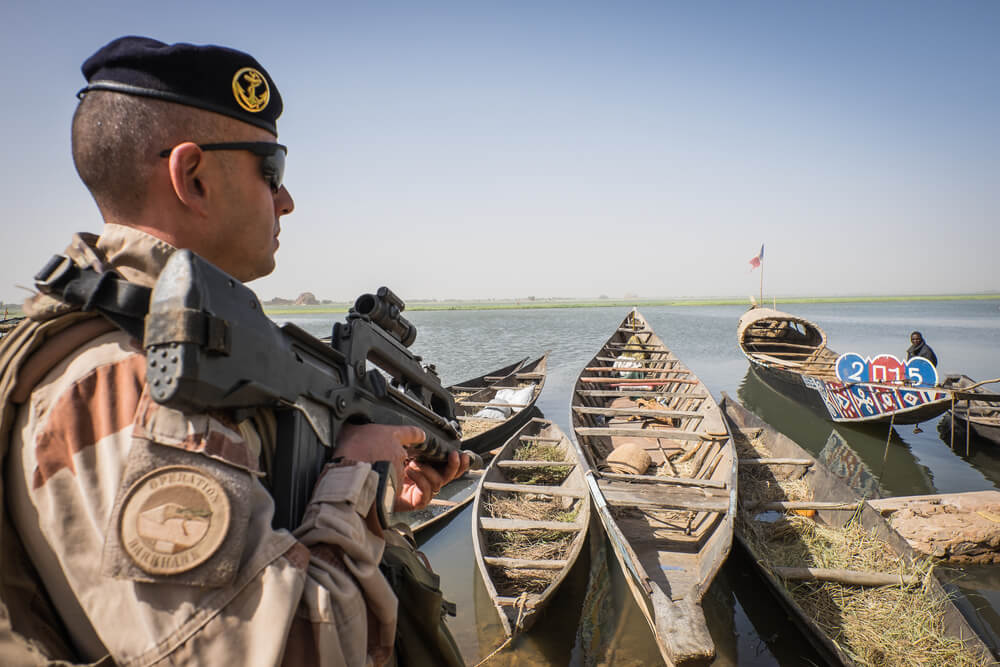 France can no longer rely on history as a source of influence. In Africa, it must now deliver results
If projects quickly become contracts, funding, and visible results, France can build a more effective, focused, and realistic impact model.
That model will not restore Françafrique. It will not return France to the role of arbiter. It will not reverse the setbacks in the Sahel. However, it can prevent complete marginalisation.
This is the real French goal in Africa today: to maintain sufficient economic and political presence for Paris to remain relevant on a continent that will play an increasingly important role in energy, migration, raw materials, technology, and global competition among major powers.
France can no longer rely on history as a source of influence. In Africa, it must now deliver results. If it does not do so soon, the space it has lost will not remain empty, as others are already filling it.
