Ambitions for a more impactful European budget are on a fast track to nowhere amid supercharged fears of anti-EU populist right-wing parties snapping at the heels of current centrist coalitions and growing economic woes in high-contributing member states.
At a meeting of European Affairs ministers in Brussels this week, Germany’s Günther Krichbaum basically asked the European Council President António Costa what he was smoking after the latter called for a substantial increase.
Germany, as the largest net contributor to the European Union’s budget, is in fact demanding hundreds of billions of euros in cuts to the European Commission’s current proposal for the new Multiannual Financial Framework (MFF) for 2028-2034.
While on the surface the immediate near-panic is driven by the recent AfD wins in Germany and the disastrous performance of Chancellor Friedrich Merz’s CDU, a raft of other elections is more likely to impact the timing of the negotiations.
Familiar battle lines in a ‘super election year’
The EU’s long-term budget battles fly directly in the face of the mantras repeated incessantly by the bloc’s leaders that highlight the need for more spending on a raft of challenges, from competitiveness to the green transition, security and more.
Negotiations over the new MFF, representing just over 1% of the EU’s gross national income (GNI), have become as fraught as over previous editions, as if the bloc were not facing a plethora of unprecedented economic and geopolitical challenges.
The political climate for any kind of deal is bound to worsen as the ‘super election year’ 2027 progresses
Familiar battle lines between the ‘frugal’, mostly northern, countries and the more solidarity- and ‘cohesion’-minded southern and eastern European members have been drawn, with the likely outcome an unsatisfactory compromise.
January 2028 might seem far off to the casual observer, and last time, the MFF was politically finalised some six months before it came into force, which would be July next year.
This time, though, negotiators are facing added pressures to wrap up well before then, the most important of which appear to be political rather than procedural.
The Brussels bureaucracy, as well as the current Irish EU presidency and others, are making haste on the premise that the political climate for any kind of deal is bound to worsen as the ‘super election year’ 2027 progresses.
To ‘Le Pen-proof’ the MFF
France is the biggest political hot potato, with elections scheduled for the spring of next year, which could well see the far-right, Eurosceptic-despite-recent-equivocation, Rassemblement National of Marine Le Pen come to power.
Le Pen has specifically said that she will cap France’s large net contribution to just €6 billion annually, a cut of up to 50% in real terms.
France, despite its high budget deficit and debt, is the second largest net contributor in cash terms to the EU budget.
But it’s not just the contribution that could break the MFF, it is also the allocation of dwindling resources away from the traditional large budget items, the Common Agricultural Policy (CAP) and ‘cohesion’ funds, often regionally disbursed, that pose a problem.
Together these account for some 62% of the EU’s budget and form the backbone of its impact across the bloc.
France is traditionally a major recipient of CAP subsidies for its farmers. New plans to effectively redistribute some of those funds towards other high-priority goals, such as defence, green transition and competitiveness, are bound to cause election campaign ructions.
Thus, while a large part of the European machinery and most national leaders are pushing for an early compromise to ‘Le Pen-proof’ the MFF, France’s centrist establishment would prefer to kick the can down the road.
Poland, another major European player but a net recipient, is facing similar but somewhat inverted pressures.
The next Polish parliamentary elections will probably take place in November next year. Donald Tusk and his centrist Civic Coalition are at risk of being squeezed out by a fractured but growing right-wing, largely Eurosceptic bloc.
Polish farmers and regions receive large EU payouts, and Tusk would be hard-pressed to sell a reduced and rebalanced EU budget to his voters.
If Poland were to make up the lost revenue from CAP and the cohesion funds through a substantial boost to its defence and border security allocations, he might have a chance. But for that narrative to be conveyed, an early conclusion to the negotiations would be preferable.
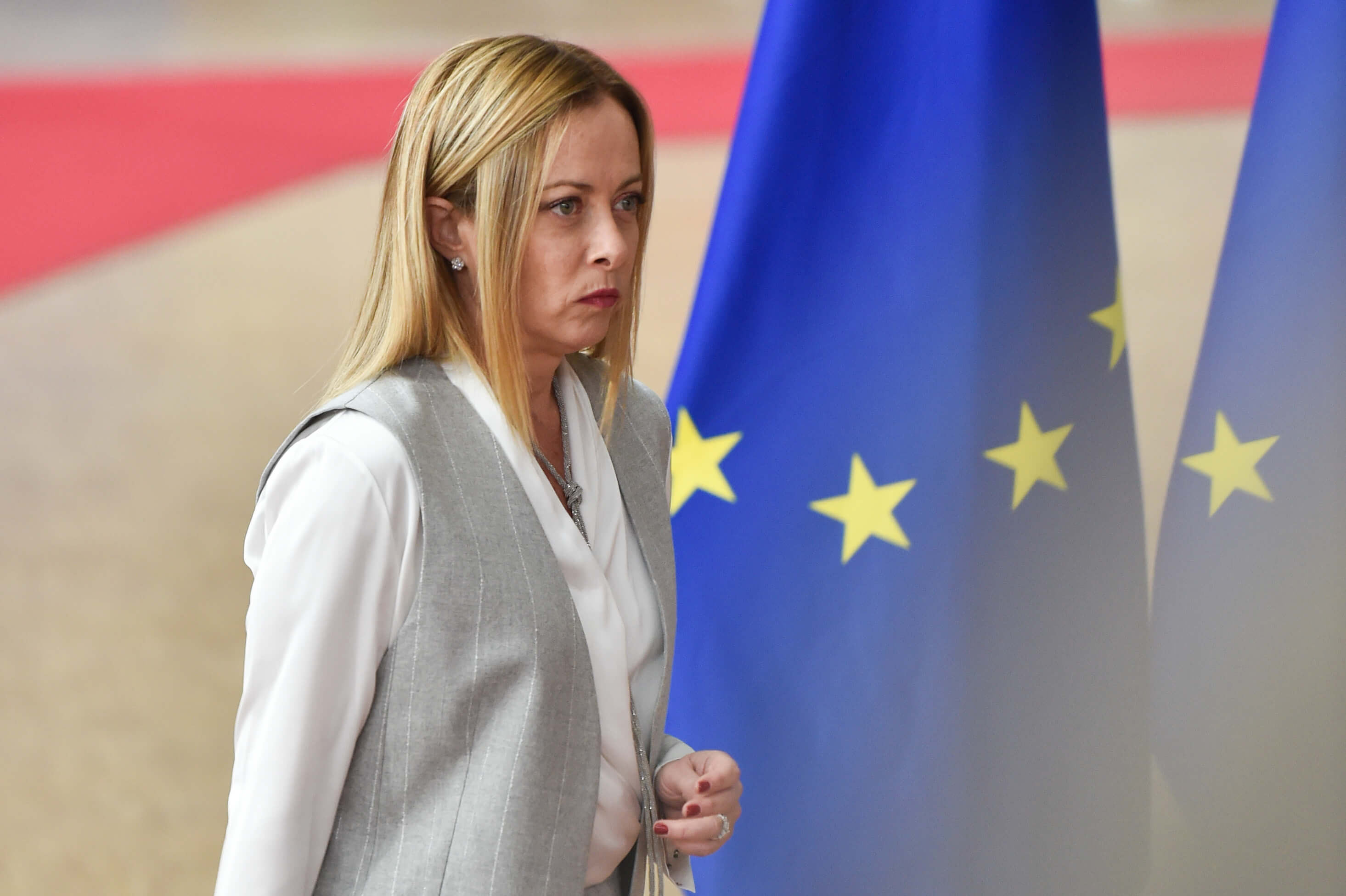 Giorgia Meloni appears to be actively trying to delay an EU MFF deal as she keeps open the option of calling early elections around April next year
Other core European countries that face elections next year are Italy and Spain, both large recipients of CAP and cohesion funds.
In Italy, the far-right but centrist-presenting Giorgia Meloni is slightly on the back foot for the first time in years after losing a national referendum and facing an upstart far-right nationalist party, Futuro Nazionale.
Meloni appears to be actively trying to delay an EU MFF deal as she keeps open the option of calling early elections around April next year. Elections must take place by December.
She just failed to achieve an early exit for Italy from the EU’s fiscal discipline measures that constrain her budget.
If she goes into elections after the MFF has been agreed, and after she has had to file her own draft budget early next year, the resulting austerity measures might well weigh her down.
The left-of-centre government of Pedro Sánchez in Madrid is facing elections by August, and Spain, unlike Poland, has no appetite for higher defence spending.
Any new long-term EU budget will hit Spain hard and, unfortunately for Sánchez, it looks as if it will be decided well before – or, in a worst-case scenario, just before – he faces the electorate.
Lofty ambitions and empty words
Italy, Poland and Spain are all part of the ‘Friends of Cohesion’ bloc of EU countries, which includes all eastern and southern European member states. This coalition opposes shifting money away from CAP and the regional cohesion funds.
The European Parliament is another defender of the CAP and cohesion funds but will in all likelihood eventually go along with whatever the leaders thrash out.
The Friends of Cohesion countries and the European Commission are trying hard to come up with ways to boost the overall available budget, which is the subject of much sleight of hand and creative accounting, as I set out in a piece at the end of May.
The EU is facing a real cliff in terms of actual money it has to spend from 2028 onward if the Frugals get their way
Just to recap some of it, the EU is facing a real cliff in terms of actual money it has to spend from 2028 onward if the Frugals get their way.
The Commission and some member countries have floated the idea of Brussels raising more of its revenue through so-called own resources, i.e. direct EU taxation and fines, for example, taxing companies EU-wide that have a turnover in the bloc of more than €100 million.
This too has met with determined resistance from the Frugals, who oppose additional taxation, even if it’s a tax that is not yet levied at the national level.
In the end, the EU is called upon to do more with less, by shifting money away from possibly outdated mechanisms such as CAP towards competitiveness, energy transition and defence.
In practice, this never works, less is simply less, and the EU’s lofty ambitions will be seen as ever more empty words that will only serve to further undermine public trust in the bloc.
Combined with the adverse effects on large groups of voters, especially in the Friends of Cohesion countries, rather than prevent a far-right, populist takeover, this will only spur it.
Along with other failures to act, for example on unified capital markets and joint borrowing, this moment is likely to go down in history as the EU being penny-wise and pound-foolish, preferring a defensive crouch over much-needed progress.
