It is becoming increasingly apparent that a viable framework for European defense and security cooperation will require establishing something like the old Western European Union (WEU), the ten-member bloc which ceased operations in 2011.
Many would counter that we already have the European Union and NATO, and that whatever one cannot do, the other can.
But this argument no longer holds water. Recent developments have made clear that neither NATO nor the EU is fully suited to meet the evolving challenges Europe faces.
Consider Ukraine. On one hand, the EU is playing a vital role in providing financial assistance to that beleaguered country.
It has rapidly improved cooperation among its defense industries and opened a pathway for eventual Ukrainian accession.
On the other hand, it ends up paralyzed whenever just one or two member states veto its decisions.
Worse, NATO has long been key to Europe’s territorial defense, but the United States’ commitment to the alliance – and especially to European security – is increasingly in doubt, as US designs on Greenland, a sovereign territory of NATO and EU member Denmark, have made clear.
As a result, dialogue among NATO member states is no longer as relevant as it once was, especially on the matter of Russia’s war in Ukraine.
The coalition of the willing
That is why new, informal frameworks have already been taking shape on the sidelines.
Over the past year, the coalition of the willing that emerged to maintain support for Ukraine has become increasingly important. Many now refer to it with capital letters: the Coalition of the Willing (CoW).
While the US unilaterally pursues incoherent frameworks to end the fighting, key European countries have been meeting under this new banner to articulate a more serious long-term policy.
Why not take the logical next step of creating a new version of the old WEU?
One of the CoW’s distinct advantages is that it includes the United Kingdom and Norway, while excluding Hungary, whose pro-Russian prime minister, Viktor Orbán, has consistently frustrated EU-level responses to the war.
Its informal leadership, an “E3” triumvirate of Britain, France, and Germany, now meets fairly regularly, demonstrating that it fulfills a need that neither the EU nor NATO can.
So why not take the logical next step of creating a new version of the old WEU?
Western European Union
By the time it was formally dissolved nearly 15 years ago, its remaining functions had been taken over by the EU, whose mandate and structures had extended to include security and defense policy.
In fact, the mutual-defense clause (Article 42.7) in the EU’s Treaty of Lisbon was copy-pasted from the WEU treaty and goes further than the collective-defense clause (Article 5) of the North Atlantic Treaty.
But then came Brexit. The UK left the EU because a narrow majority of voters believed the argument that their country would fare better alone, even in a more turbulent world.
Not only is Britain smaller and weaker, but so, too, is the EU
Ten years later, it is now abundantly obvious that this was a mistake. Not only is Britain smaller and weaker, but so, too, is the EU.
As an EU member state, the UK had played a key role in shaping the common policies of a bloc that mattered on the world stage. When it left, this major source of relevance dried up.
European security cannot wait
But given the challenge posed by Russia’s war on Ukraine, shaping an effective European response without the UK simply was not realistic.
With the makings of the CoW already present, the new E3 triumvirate emerged and quickly rose in strategic importance. NATO was too busy trying to appease “Daddy” (NATO Secretary-General Mark Rutte’s embarrassing appellation for US President Donald Trump) to develop much of a policy response, and the EU struggled with Hungarian and Slovakian obstructionism.
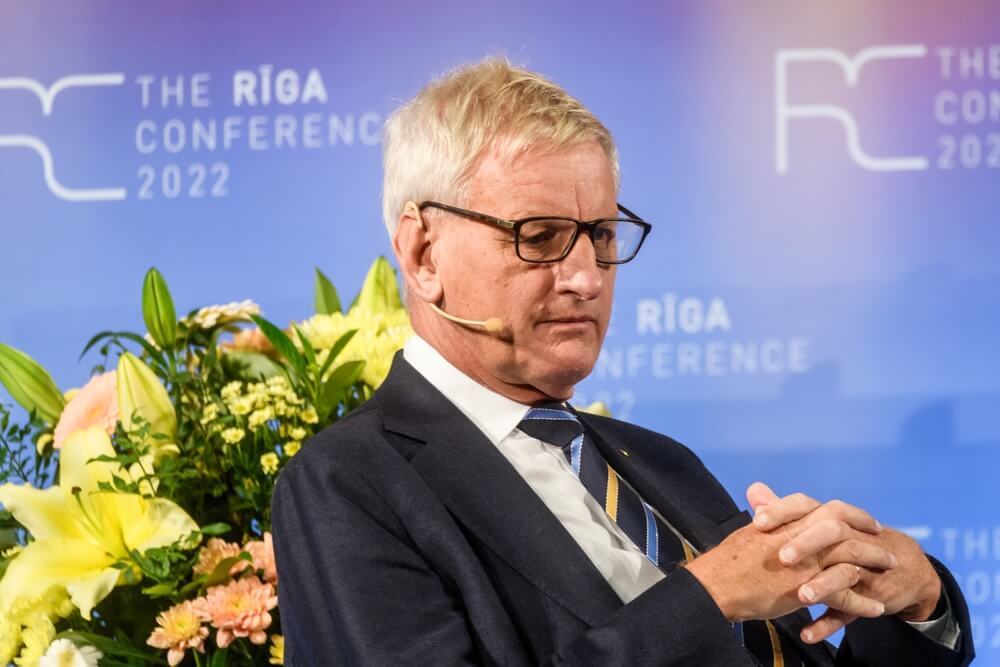 Establishing a new WEU should be high on the agenda, because European security cannot wait - Carl Bildt
Since the new WEU already exists de facto, wouldn’t it make sense to institutionalize it formally?
At a minimum, the question should be seriously considered. The key countries of Western Europe – however we want to define that term – need a firmer framework not only for coordinating policies on Russia and Ukraine.
They also need to counter American bullying, exemplified by Trump’s announcement of additional tariffs on European countries for opposing his proposed annexation of Greenland.
There are many ways to institutionalize a new WEU without building big structures and excessively complicated arrangements, and without further undermining or duplicating either the EU or NATO.
What matters is that those who are still willing to defend Western values do something.
The first year of Trump’s second administration has forced this reckoning upon Europe. With three more years to go, dithering is not an option.
Establishing a new WEU should be high on the agenda, because European security cannot wait.
Carl Bildt is a former prime minister and foreign minister of Sweden.
