In recent years, the European Union has sought to present itself as a global regulator of artificial intelligence.
Brussels speaks of ethics, transparency, citizen protection and security standards, while European officials describe the AI Act as a model for the rest of the world to follow.
However, behind this political and regulatory ambition lies a much more serious process that is likely to have a far greater impact on the future of the European AI sector than any law passed by the European Parliament.
The global race for artificial intelligence is rapidly becoming more than just a technology competition. It is turning into a contest for electricity, network infrastructure, industrial capacity, and construction speed.
This is exactly where Europe encounters a problem that can no longer be hidden by political statements about "digital sovereignty".
The race for AI is turning into a race for energy
Artificial intelligence is no longer just software. Generative AI models, cloud systems, and huge data centres are making the digital economy one of the most energy-intensive industries in the modern world.
Training large models requires enormous computing power, which in turn needs a stable and continuous power supply.
The International Energy Agency has already warned that access to reliable and affordable energy will become one of the key factors in global AI competitiveness.
In other words, the question is no longer just who has better algorithms or more talent, but who has enough energy to support the infrastructure running those algorithms. This presents a problem for the European Union.
While the US and China are aggressively expanding AI capabilities, Europe is trying to implement a green transition, maintain strict climate targets, develop its own AI sector, and reduce energy consumption simultaneously.
Europe is now attempting to develop one of the most energy-intensive industries in the world
These goals sound good politically when presented individually. The problem arises when they must all be pursued at the same time.
AI infrastructure does not run on political statements. Data centres require large amounts of energy, a stable network, and a long-term reliable supply.
The European energy system is already under pressure following the energy crisis caused by the war in Ukraine and the termination of much of its energy relations with Russia.
Industry already faces high electricity prices, slow permitting, and uncertainty about future energy capacity.
In this environment, Europe is now attempting to develop one of the most energy-intensive industries in the world. It is no longer just a technological issue; it has become a question of the industrial viability of the European model.
The green transition is in direct conflict with digital expansion
In the USA, the situation is different. American technology companies possess vast capital, access to cheaper energy, and a more flexible regulatory environment.
Microsoft, Google, and Amazon no longer view energy as a secondary infrastructure cost, but as a central element of their AI capacity development strategy.
For this reason, in recent months, they have aggressively invested in nuclear energy, long-term energy contracts, and their own power sources.
In China, the state directly oversees infrastructure development and can mobilise energy and industrial resources much faster than European democracies, which are hindered by regulatory procedures and political compromises.
Europe is attempting to play the same game with entirely different rules.
European companies wishing to develop advanced AI systems generally use American platforms, American AI chips, and American computing infrastructure
A particular problem for the European Union is that European "digital sovereignty" currently depends largely on American infrastructure. Amazon AWS, Microsoft Azure, and Google Cloud control the majority of the European cloud market.
European companies wishing to develop advanced AI systems generally use American platforms, American AI chips, and American computing infrastructure. This means Brussels is trying to regulate a market it does not control technologically or infrastructurally.
At the same time, European AI companies are increasingly warning that regulatory complexity, energy costs, and slow administration are hindering the development of domestic capacities just as the US, China, and the Gulf are rapidly increasing investments.
Some companies are already considering moving infrastructure to regions where energy and permits are more readily available. This is the moment when the European narrative of "responsible AI" begins to collide with a much simpler economic reality, as regulation alone does not create infrastructure.
France is already developing a model for the future European AI economy
France was among the first countries in Europe to respond seriously to this issue. The AION consortium, which includes EDF, Orange, Capgemini, Scaleway, and Ardian, plans to build an AI data centre with an initial capacity of around 100 megawatts and a long-term goal of reaching one gigawatt – effectively doubling France's total computing capacity.
The scale of the project demonstrates that part of the European political and business elite is beginning to realise that the future of AI will depend not only on software, but also on energy strategy and industrial infrastructure.
Nuclear energy provides Paris with a stable foundation for developing energy-intensive industries
It is no coincidence that France is seeking to position itself as the European centre for AI. Nuclear energy provides Paris with a much more stable foundation for developing energy-intensive industries than some other European countries that have more aggressively phased out traditional energy sources without a clear replacement for the grid's base load.
This will gradually create a new economic and political divide within the European Union. Countries with stable energy capacities and industrial infrastructure will be much better placed in the AI economy than those entering the energy transition without a sufficiently stable grid and production.
This is why European AI policy can no longer be guided solely by regulation and digital rights. It must become part of a much broader industrial and energy strategy.
Brussels risks repeating the mistakes of the previous digital era
This leads to perhaps the most important problem for the European Union. The European AI Act is presented politically as evidence that the EU can set global standards in artificial intelligence.
However, some European industry representatives are already warning that there is a serious risk Europe will repeat the mistakes of the previous digital era.
The European Union has previously tried to compensate for technological lag through regulatory leadership. As a result, it became the regulator of US technology platforms but did not create its own global digital giants.
Now there is a risk that the same pattern will repeat itself with AI.
While Brussels debates standards and procedures, the US, China, and the Gulf states are rapidly building the physical infrastructure for the future AI economy
The development of advanced AI infrastructure requires significant investment, access to energy, rapid construction, and regulatory flexibility.
The European system currently operates more slowly and is more administratively complex than its main competitors.
While Brussels debates standards and procedures, the US, China, and the Gulf states are rapidly building the physical infrastructure for the future AI economy.
This will create an increasingly serious conflict between European climate goals, industrial competitiveness, and digital strategy in the coming years. Industry will demand more energy, faster permits, and more stable electricity prices.
Green political groups will insist on preserving climate goals. National governments will try to prevent investment from leaving Europe, while the US, China, and the Middle East offer more favourable conditions for developing AI capacities.
Europe's problem is no longer technology, but speed
Therefore, the European Union will soon have to make a much more concrete decision than it currently acknowledges publicly.
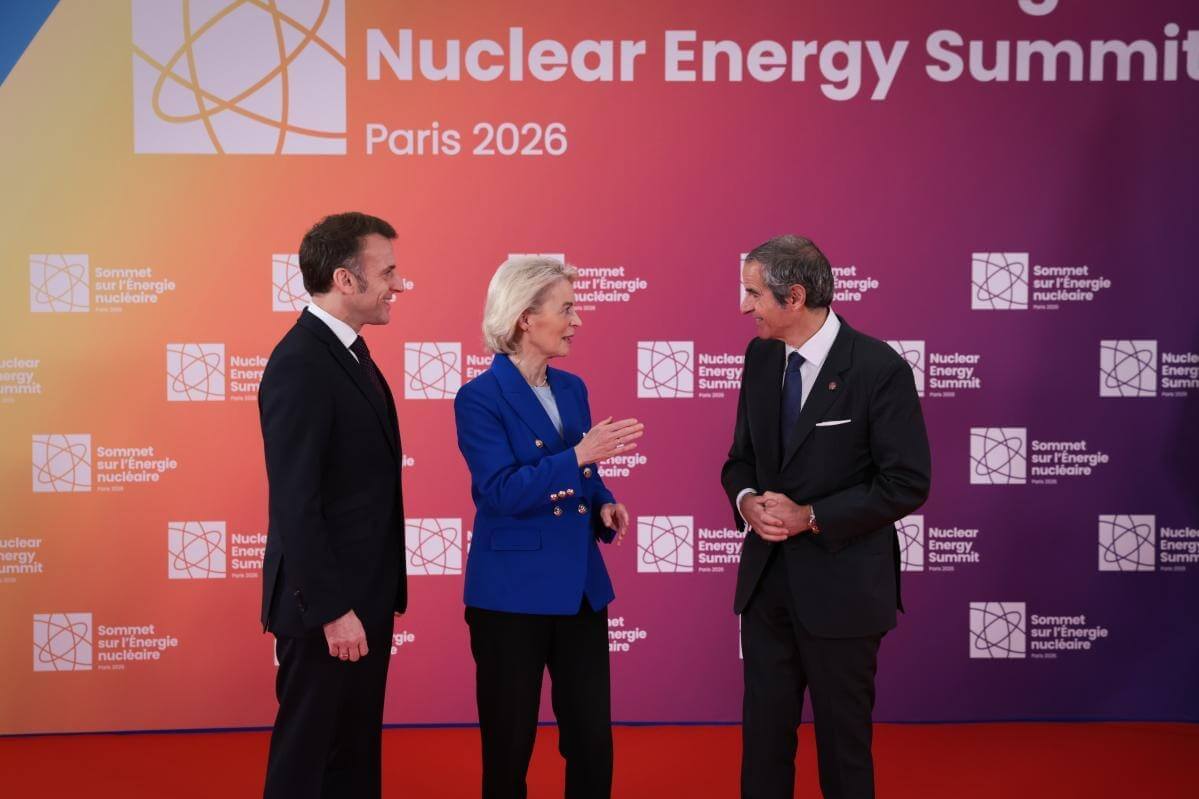 The global AI race is rapidly turning into a competition for energy, grid capacity, and industrial speed
Does it want to be primarily an AI regulator or a serious infrastructure actor in the global AI economy? These two goals can no longer be automatically aligned.
Europe's biggest weakness at present is not a lack of talent or research. European universities and research centres continue to produce leading experts.
The problem is that the global AI race is rapidly turning into a competition for energy, grid capacity, and industrial speed. In this race, Europe currently appears slower, more expensive, and more burdened by regulation than its main competitors.
That is why the future of the European AI sector will probably not be determined by political rhetoric from Brussels, but by much more concrete factors: how much stable energy Europe can provide, how quickly it can build data centres and power infrastructure, and whether its industry can withstand the costs of the green transition and aggressive AI expansion without further losing competitiveness relative to the US and China.
