Having agreed to new peace talks with Ukrainian and American representatives earlier this month, Russian negotiators suddenly wanted to discuss the European security order, too.
It was an obvious attempt to divert attention from the urgent need, after almost five years, for a ceasefire in Russian President Vladimir Putin’s brutal war against Ukraine.
While the inept US negotiating duo of Jared Kushner and Steve Witkoff seemed to go along with the Russian proposal, the Europeans saw right through it.
They pointed out that there is already an agreed European security order, to which Russia is a signatory. The only problem is that Russia is blatantly violating it. That is what must be discussed.
The European security order is basically no different from what the United Nations Charter established in 1945.
Coming after two bitter, brutal world wars, the UN Charter codified the territorial integrity of all states, and identified the crime of aggression as the ultimate violation of international law.
But the European order that gradually emerged toward the end of the Cold War went further than this.
Through the laborious negotiations leading up to the Helsinki Accords in 1975, and through the process that produced the Paris Charter of 1990, Europeans added provisions on democracy, human rights, and economic cooperation to the basic security architecture.
Series of ‘color revolutions’
Of course, there were occasional disagreements about how to implement these agreements’ requirements, and in both Georgia and Moldova in the 2000s, Russia openly violated provisions barring the presence of a country’s armed forces on the territory of another without its consent.
These moves sparked bitter debates, with Russia eventually calling for revisions to the European security order.
The Kremlin, for obvious reasons, objected to the provisions concerning human rights and elections, and demanded that they be deleted or substantially diluted.
The Kremlin understood that the color revolutions in other countries had inspired pro-democracy demonstrations on its own streets
It wasn’t difficult to see why. A series of “color revolutions” had started to sweep through the region, most notably in Georgia and Ukraine, where protesters demanded democratic reforms, the rule of law, and closer links with democratic Europe.
Upon returning to the presidency after a brief stint as prime minister to circumvent constitutional limits, Putin himself was confronted with huge demonstrations in Moscow.
With a democratic wave sweeping much of the world at the time, the Kremlin understood that the color revolutions in other countries had inspired pro-democracy demonstrations on its own streets.
More to the point, it knew that pro-democratic forces could count on moral support from the West.
Cynical cherry-picking
Russia tried to force new negotiations to suppress previously agreed commitments on democracy, but no one else would support such an effort. The order that had been established at the summits in Helsinki and Paris stood firm.
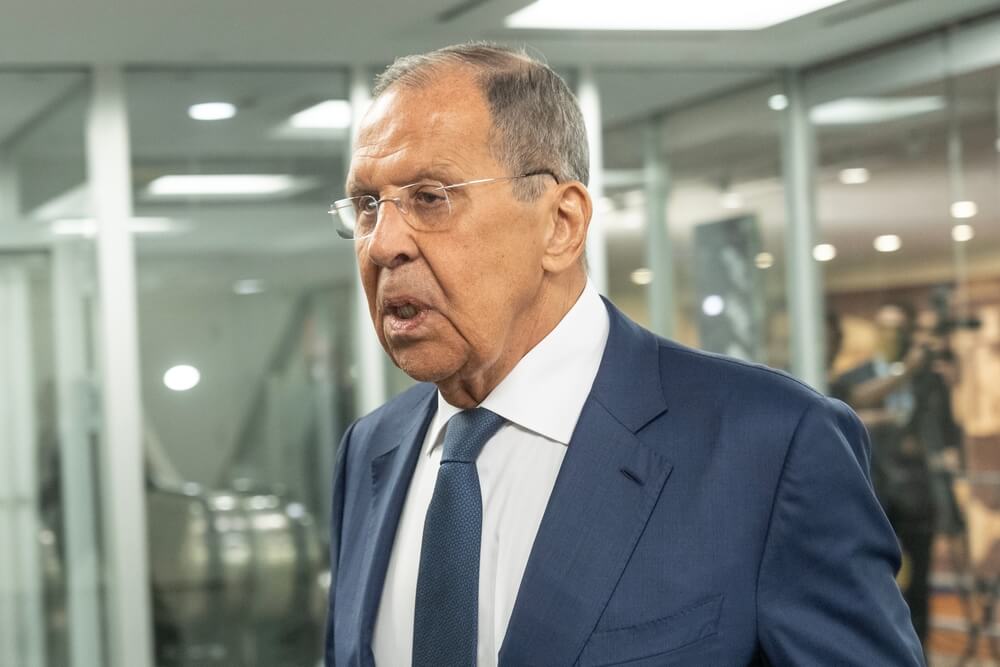 The order that had been established at the summits in Helsinki and Paris stood firm - Sergei Lavrov
More recently, Russian Foreign Minister Sergei Lavrov has called attention to a provision from a 1999 Organization for Security and Co-operation in Europe document, which holds that signatories “will not strengthen their security at the expense of the security of other states.”
Yet he completely ignores another provision from the same document, which reaffirms “the inherent right of each and every participating state to be free to choose or change its security arrangements, including treaties of alliance.”
Such cynical cherry picking is dishonest even by Lavrov’s standards. Membership in NATO or the European Union clearly preserves peace and in no way threatens Russia.
Democratization in other countries may well inspire those seeking democratic change inside Russia, but that is not the democratizing countries’ fault or problem, nor does it endanger Russia’s security.
The European security order
Putin is now left trying to roll back various European countries’ security choices, and thus their sovereignty.
This is obviously a non-starter. Finland and Sweden chose to enter NATO not to attack Russia, but because Russia had just launched a full-scale invasion of another European neighbor. No sane person is under any illusion about cause and effect.
The European security order’s foundational principle is to reject aggression and respect other countries’ territorial integrity
One hopes that at some point there will be an opening to return to confidence-building and arms-control measures.
But with Russian guns blazing and Russian bombs falling over another European country’s civilian centers, now is obviously not the time.
The European security order’s foundational principle is to reject aggression and respect other countries’ territorial integrity.
There is no need to revise that order, only to wait for a Russian regime that is willing to accept it.
In the next round of talks, European representatives will demand an immediate end to Russia’s aggression against Ukraine. Until that happens, there is nothing else to talk about.
Carl Bildt is a former prime minister and foreign minister of Sweden.
