Despite the African National Congress’s historic loss in urban municipal elections this month, the champion of black liberation in South Africa is close to a coalition deal to run Africa’s richest city Johannesburg.
In local elections on 4 November, the ANC saw a more than 15 percentage point collapse in support to around 30% while the Democratic Alliance (DA), which had been known as the “white party”, gained around 25% of votes.
A raft of anti-migrant and populist parties also took advantage of South Africans’ frustration with high joblessness and corruption. The moribund economy is estimated to need $75 billion in annual investment if it is to revive growth.
But the DA’s potential exclusion from municipalities running the country’s biggest cities, and the repercussions for the government of national unity of which the DA is a key member, are likely to complicate steps towards reform and growth.
Can the ANC forge a path forward for South Africa in time for it to secure power in the next national elections to be held by 2029 and also to allow it continue its domination since the end of apartheid in 1994?
Mounting challenges
Investor displeasure was shown in the rand’s weakening this week as news of the Johannesburg coalition talks filtered through. South Africa has suffered years of sluggish growth while only securing investment of around 15% of GDP despite a target 30% by 2030.
“Growth above all is what’s required,” Jacko Maree, former chief executive officer of Standard Bank Group, told Bloomberg.
The ANC faces daunting challenges that have mounted since it lost its parliamentary majority for the first time since 1994 in the last national election in 2024.
Talk of a broader shift in South African politics has only intensified since then, with many analysts believing the ANC’s position as the most powerful political force is ending.
In many areas, water and power cuts and sewage spills are commonplace
Anger and resentment have grown. GDP per capita has fallen from around $8,650 some 15 years ago to about $6,600 last year. The unemployment rate has risen to 33.7%, more than six times India's 5.1%, according to data released by Statistics South Africa on 10 November. Among young people aged 15-24, joblessness is as high as 60%.
In many areas, water and power cuts and sewage spills are commonplace while only 39 out of the country’s 257 municipalities won clean audits in a recent report.
Johannesburg’s administration was one of the audit’s failures and voters responded accordingly on 4 November, including those in Soweto where the ANC’s share of the vote fell by 13 percentage points.
A surge in populism
The ANC’s potential municipal partners include several unsavoury anti-migrant parties, which also did well in the local elections amid a surge in populism. Last month, anti-migrant demonstrations broke out in major cities after a court ruling allowed some migrants who had arrived in the country illegally to apply for asylum.
Anger has been directed at nationals from Asia and other countries in Africa including Zimbabwe, Mozambique, Malawi, Nigeria, Ethiopia, Somalia and Ghana.
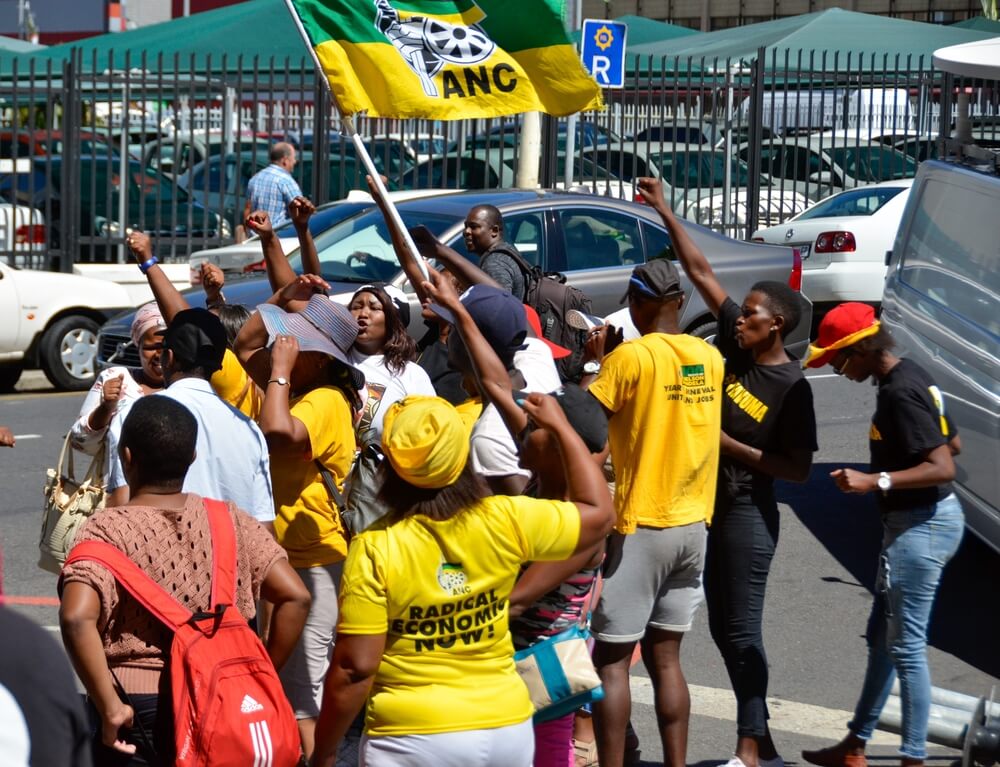 The ANC’s potential municipal partners include several unsavoury anti-migrant parties
After anti-migrant protest groups such as March on March and Put South Africa First demanded all undocumented migrants leave by 30 June, at least 100,000 people were repatriated between July and November 2026.
Aid agency MSF launched an emergency intervention in South Africa and Zimbabwe following the 30 June deadline. “MSF condemns anti-migrant violence in South Africa and across the world, and the South African government and other relevant actors need to work urgently to actively protect the right to access healthcare for all people who are in South Africa,” said MSF’s Claire Waterhouse.
In the meantime, two rightwing South African parties have seen their support surge - ActionSA, led by Herman Mashaba who is a former Johannesburg mayor, and the uMkhonto weSizwe Party (MKP) led by former president Jacob Zuma.
Mashaba has defended the protests against illegal immigrants and denied his party is xenophobic, saying stricter immigration controls and more deportations of people are needed.
Rebuilding public confidence
In Johannesburg, the ANC may form a coalition with ActionSA, which came third in the local elections, to keep out the DA, which came second. Mashaba told the FT this week that his party was “ready to sign” a written proposal it had received from the ANC.
It remained unclear what this might mean for the ANC’s relations with the DA in the national government, with local media speculating the ANC may explore a coalition partnership with the Council of the Left made up of smaller parties that together received about 20% in the local elections.
Amid all this, one upside for South Africa is that it does appear to be maturing towards a multi-party democracy
All this leaves Helen Zille, the former high-profile mayor of Cape Town who had her eye on the same job in Johannesburg, in a precarious position. The ANC hopes that by sidelining her, the DA’s appeal will diminish ahead of the next general election.
Amid all this, one upside for South Africa is that it does appear to be maturing towards a multi-party democracy.
“By 2029, the decisive question will not be which party has the strongest historical identity or the loudest electoral campaign. It will be which political formation can convince voters that it is capable of governing, delivering services and rebuilding public confidence in the state,” said an opinion piece on the independent Eyewitness News web site.
