After a geopolitically fraught World Economic Forum meeting in Davos last month, which came on the heels of US President Donald Trump’s threats against Greenland and unlawful strikes on Venezuela, European leaders are expected to reconsider their reliance on American energy at the Munich Security Conference starting on February 13.
The question of Europe’s energy security is not new. Russia’s full-scale invasion of Ukraine four years ago forced Europe to confront its dependence on Russian hydrocarbons.
But despite an initial commitment to accelerate the green transition, the continent has come to rely on imports of liquefied natural gas, much of it from the United States.
Germany, whose all-important industrial sector was long powered by Russian gas, has even built new LNG terminals to handle the increased volume.
Worse still, recent analysis suggests that Europe’s excess fossil-fuel-driven market costs represent around 40% of the investment required for the continent’s clean-energy transition.
The European Union’s handshake trade deal with the US last year – which the European Parliament has yet to approve – has deepened this new dependency by committing the bloc to purchase $750 billion worth of US energy by 2028.
Meanwhile, in 2025, the EU still sourced an estimated 13% of its gas imports from Russia, thereby funding the war against Ukraine.
Fossil-fuel insecurity
To be sure, the EU has made progress on the green transition. In 2024, the share of solar in EU electricity generation was higher than that of coal, while the share of gas power fell for the fifth consecutive year.
But conversations about energy security often rest on the assumption that controlling fossil fuels, together with increased militarization, provides more power in the international system.
The problem is that this outdated view fails to account for what I call fossil-fuel insecurity.
At the most basic level, this refers to the insecurities directly produced by fossil fuels.
Fossil-fuel production can empower authoritarians, like Vladimir Putin, who relies on oil and gas exports to finance his war machine
For example, exploiting these resources harms the environment and the health of local communities, which are unlikely to benefit financially from such activities.
In addition to driving inequality, fossil-fuel production can empower authoritarians, like Russian President Vladimir Putin, who relies on oil and gas exports to finance his war machine.
Price volatility can also contribute to spiraling costs and debt distress in economies that are highly dependent on fossil-fuel exports or imports.
Then there are the environmental vulnerabilities associated with tanker spills, pipeline leaks, and weak oversight more broadly.
The downstream consequences are more pronounced. Fossil-fuel majors tend to act with relative impunity, almost like rogue states, and their products are the primary drivers of climate breakdown, which has enormous economic costs.
In 2022, climate-related disasters caused $299 billion in damages to assets and capital, while rising sea levels could add $400-520 billion per year in losses by 2100.
Social costs
And this is to say nothing of social costs. Neither is adequately priced into fossil fuels, even though these harms have been and continue to be foreseeable.
This reflects the normalization of fossil-fuel insecurities as unpredictable volatility.
But there is nothing unpredictable here. The tumultuous weeks leading up to the Munich Security Conference were not a coincidence; we were not accidentally ushered into a new “era of insecurity.” The negative externalities of oil and gas produced it.
To create genuine energy security and secure a livable future on this planet, political leaders must be explicit about fossil-fuel insecurity
To create genuine energy security and secure a livable future on this planet, political leaders must be explicit about fossil-fuel insecurity.
That means recognizing and addressing the vulnerabilities that overreliance on hydrocarbons has already produced and disentangling future energy security from oil, gas, and coal.
A wholesale transformation of the energy system
It is no longer enough to tinker around the edges of reform, or hope that electrification, coupled with technological developments and a boost from AI, will do the job.
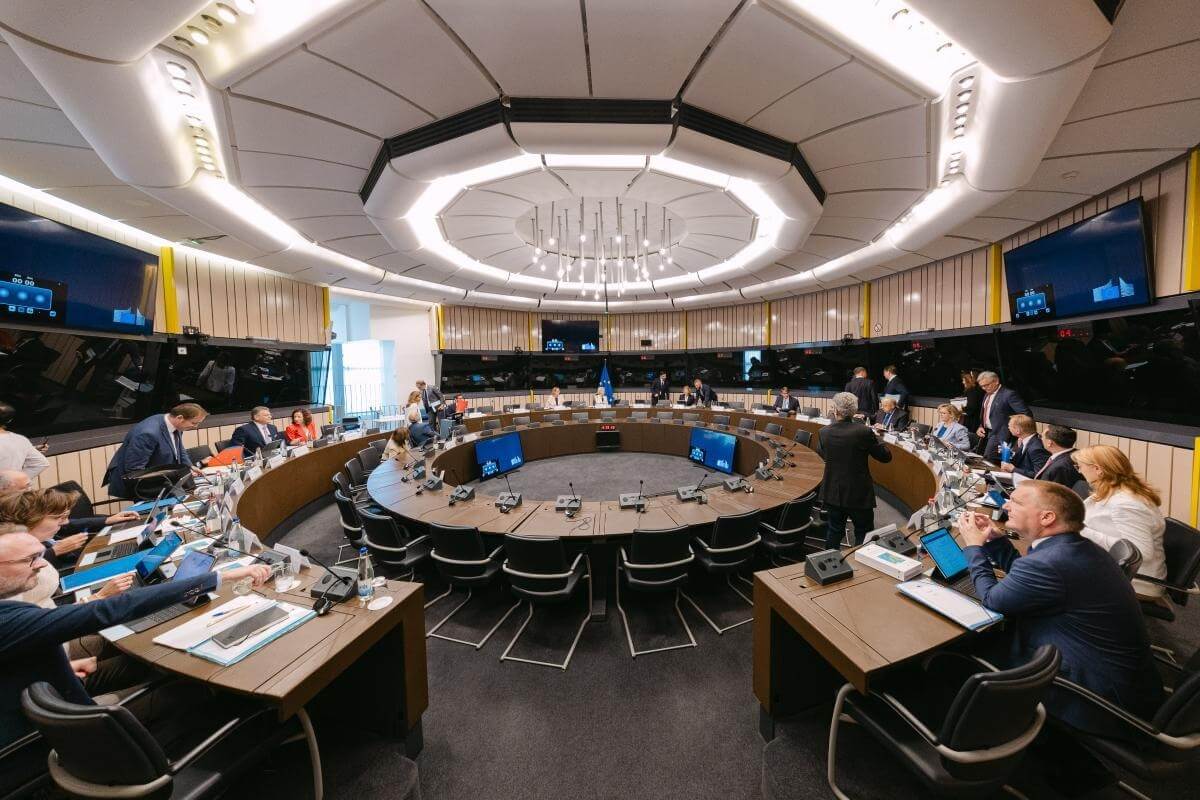 Transforming Europe’s energy system requires its leaders to accept that continued support for a fossil-fuel economy will make it much harder to achieve the long-term security they seek
Instead, we need a wholesale transformation of the energy system.
This will appear costly to taxpayers only if their leaders are dishonest about the trillions of dollars in losses caused by fossil-fuel dependence, as well as the future costs imposed by inaction.
But if leaders start thinking across existential silos, from nuclear harm to climate change, and recognize that doubling down on the fossil energy of the past will cause climate harms to increase exponentially, a future-proof energy-security strategy becomes possible.
Transforming Europe’s energy system requires its leaders to accept that, no matter how much is spent on strengthening the continent’s military capacity, continued support for a fossil-fuel economy will make it much harder to achieve the long-term security they seek.
Pauline Sophie Heinrichs is a lecturer in War Studies (Climate and Energy Security) at King’s College London.
