In terms of elections, 2026 will be much calmer in Europe than 2024. In 2024, almost half of the EU member states (13 out of 27) held either parliamentary or presidential elections, and in many cases, both.
Additionally, Europeans elected members of the European Parliament in 2024, and significant political decisions were made in regional and local elections, such as those in three German federal states and seven Italian regions.
Such a super-election year will not occur again in 2026, but the tension surrounding the outcome of certain elections will persist, as they will have major implications for future relations within the EU.
In this context, the parliamentary elections in Hungary in April stand out as the most significant, even surpassing the parliamentary elections in the Czech Republic, Denmark, and Sweden.
Each year, fundamental questions about the Union - whether to continue strengthening it or prioritise national sovereignty - increasingly divide the European political public.
This dilemma has been heightened by the return of Donald Trump to the White House, whose disregard for European unity has emboldened the most conservative Europeans on the far right of the political spectrum.
The elections in Hungary, even under this influence, will serve as a paradigm of the current European political climate, or rather its central dilemma: do Europeans want more integration, or is it better to turn back towards national interests?
A new political circumstance
On 12 April, Hungarians will face a situation they have not experienced in 15 years, as Prime Minister Viktor Orbán and his Fidesz party have not had a serious competitor during this period.
This time, the Hungarian populist faces the very real threat of being unseated by the young but growing Tisza movement, led by his former party colleague Péter Magyar.
Most surveys now give Magyar a lead, already in double digits, but Orbán has even more reason for concern as the trend of his deficit appears long-term and stable, with diminishing chances of reversal.
Orbán attempted a U-turn in November by increasing pensions for more than two million of Hungary's oldest voters
As a veteran of the political game, Orbán attempted a U-turn in November by increasing pensions for more than two million of Hungary's oldest voters, who make up as much as a quarter of the electorate.
However, this measure, which will cost the Hungarian budget almost half a billion USD next year, had little effect.
The rating of Orbán's party rose by only one per cent, while at the same time (December) the opposition Tisza party led by Magyar rose by three points.
European sovereigntists
Europeans are undoubtedly following the campaign in Hungary with keen interest, regardless of their political affiliation.
Péter Magyar's pro-EU movement enjoys broad support from mainstream forces across the continent, which, in the 2024 European elections, managed to maintain a convincing majority in the European Parliament and resisted the onslaught of both left- and right-wing populists.
His potential success in the April elections would provide a vital boost for supporters of strong intra-European ties, who have been under heavy pressure for years.
Since Brexit, the migrant crisis, and the first and now second terms of Trump's presidency, an increasing number of Europeans have questioned the validity of the Union based on the foundations laid in the last century.
In recent years, Viktor Orbán has emerged as the informal leader of the so-called sovereigntist Europe
In recent years, Viktor Orbán has emerged as the informal leader of the so-called sovereigntist Europe, which doubts the effectiveness of the shared project and, in addition, takes very specific political actions that challenge the common European construction.
He serves as the focal point for European right-wing populists who advocate for less Europe and more national policies, oppose migrants from poorer southern and eastern countries, downplay Ukraine's struggle against Russian aggression, and ultimately view Moscow and Putin as future interlocutors and partners once the war in Ukraine concludes.
The outcome in Ukraine
Orbán's potential new election victory would mean continued difficulties for the remaining 26 Union members in securing consensus on some of the most important decisions.
For years, the Hungarian leader has blackmailed the bloc with financial concessions in exchange for his support on joint decisions, especially those concerning the tightening of sanctions against Russia and the continuation of support for Ukraine.
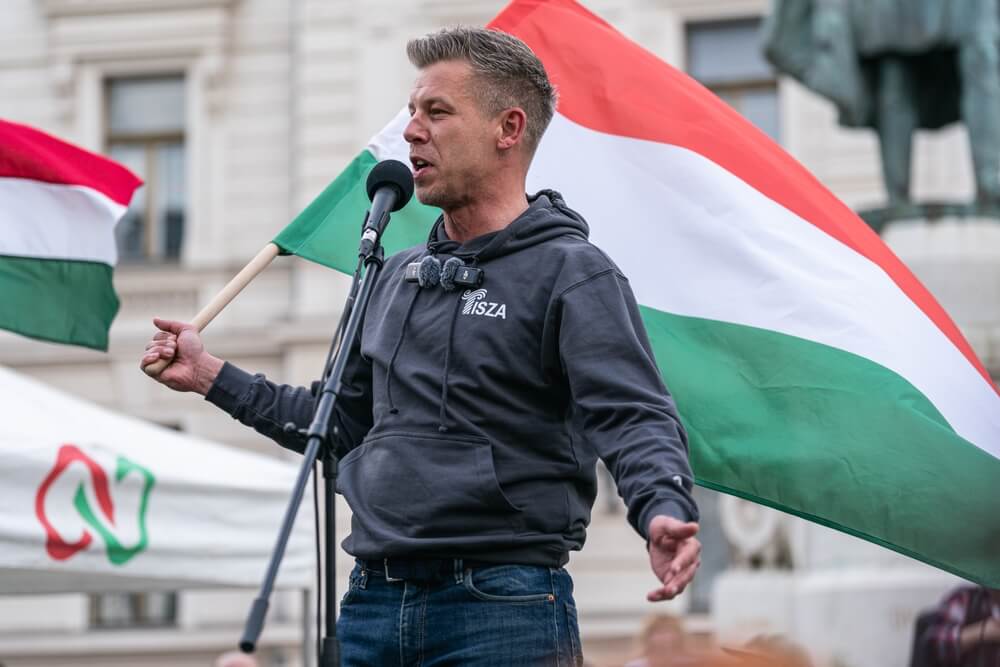 The last Soviet soldier left our country in June 1991. Now their operatives are back - Péter Magyar
Should he secure another victory, a new mandate will strengthen Orbán, making him an even more formidable opponent for the EU.
His remaining in power will also strongly encourage his partners in neighbouring Slovakia, the Czech Republic, and Austria, where Euroscepticism is gradually becoming political mainstream, and Orbán is considered an ideological leader.
The April elections in Hungary are also of great importance to Moscow, which would undoubtedly like to keep its reliable partner in power. Earlier this year, Péter Magyar warned of increased Russian influence on Hungarian voters through disinformation, threats, smear campaigns, and blackmail.
"The last Soviet soldier left our country in June 1991. Now their operatives are back," said Magyar.
The stakes go far beyond the nation of around 8 million voters, as the consequences of the April election will be felt not only in the remaining 26 EU members but also in the war in Ukraine.
The Hungarian parliamentary elections will take place at a time when Russian aggression against Ukraine will either have already ended or the peace process will be in its final phase.
In both cases, Europeans will be concerned about whether they have a partner or a rival in Budapest. The EU will only be able to play a decisive security role in post-war Ukraine and provide dominant support for the reconstruction of the devastated country if it secures Hungary's vote.
With Orbán leading the new Hungarian government, Europe will not be able to achieve this.
