As any good magician knows, big visible gestures are a reliable way to divert viewers’ attention from the hand doing the work.
Jensen Huang’s extramarital affairs seem to be playing a similar role: distracting investors from the possibility that restricted Nvidia chips were illegally diverted to China through intermediaries.
We already know that the US Department of Commerce was investigating Megaspeed—the Singapore-based compute provider where Huang’s paramour and alleged Chinese spy worked—for potential export control violations.
We also know that a contractor of Super Micro, a supplier of AI data-center infrastructure, pleaded guilty just last month to exporting about $2.5 billion worth of servers containing advanced Nvidia AI chips to China.
While there is no evidence that Nvidia committed any violations, the investigations should be a major concern for the company’s board and its shareholders.
For starters, there is an obvious economic problem. In May, Huang stated that “in China, we have now dropped to zero.”
If this was not true, Nvidia could stand to lose significant revenue and earnings now that the Commerce Department has added Megaspeed to its export blacklist.
Then there is the issue of liability, which extends to the company and its entire board.
Nvidia does not need to have knowingly violated US export restrictions on its chips to be held liable.
Simply engaging in dealings with a high probability of violating the restrictions is sufficient.
All it takes is a conscious disregard or deliberate avoidance of facts that ought to have raised red flags.
Violation of US restrictions
What did Nvidia employees or executives know, when did they know it, and what did they do when they learned about it? The wrong answer to any of these questions could lead to significant sanctions.
To be sure, Huang reassured investors that Nvidia had “repeatedly tested and sampled data centers around the world and found no diversion.” But how could he have missed a $2.5 billion diversion?
According to the short-seller Culper Research, a current Megaspeed employee saw Huang appear “personally onsite to Megaspeed-linked data centers ‘every few months,’ and that ‘every single time’ Jensen visits, he is accompanied by Alibaba representatives.”
Is Huang’s admitted extramarital affair with former Megaspeed executive Alice Huang just a convenient cover-up for a more consequential violation of US restrictions
In June, US Senator Elizabeth Warren wrote to Nvidia’s general counsel, Tim Teter, and audit committee chair, Brooke Seawell, requesting information about board scrutiny, compliance reviews, and the basis for Nvidia’s public assurances.
Given these previous inquiries, is Huang’s admitted extramarital affair with former Megaspeed executive Alice Huang just a convenient cover-up for a more consequential violation of US restrictions and misrepresentation to the financial markets?
Whatever the case, the problem is not limited to Huang; it involves the entire board, which just reinstated him.
Why did the board take Huang back?
Nvidia’s charter expressly assigns responsibility for trade-compliance policies to the Nominating and Corporate Governance Committee, and requires that committee minutes be distributed to the full board.
Thus, the board should have been regularly informed on trade compliance.
Under Delaware’s Caremark doctrine, directors breach their duty of loyalty, not just their duty of care, if they consciously ignore warning signs.
Not surprisingly, a lawsuit has already been filed, and it is one of the few cases where directors can be held personally liable.
The fact that Trump pushed for Huang’s reinstatement does not relieve Nvidia’s board of responsibility
Why did the board take Huang back? Without knowing what it knows, it is difficult to speculate.
The only justification the board shared is that it “received input from senior levels of the United States government” that Huang poses “no national security risk.”
But the fact that President Donald Trump pushed for Huang’s reinstatement does not relieve Nvidia’s board of responsibility.
If Huang knew or should have known about Nvidia’s breaches in export restrictions, doubling down on a potential offender at the helm of the company means the board is doubling down on its own liability risk.
Trump’s imprimatur is not a substitute for the board’s duty to address known misconduct or head off any claim for harm caused by its own bad-faith conduct.
Things could get complicated fast
One might think that the board’s decision to form an independent committee and retain outside counsel will protect it. But this is another magic trick.
The committee is investigating where Huang “has been the target of a foreign intelligence effort,” not any failure to comply with US trade regulations.
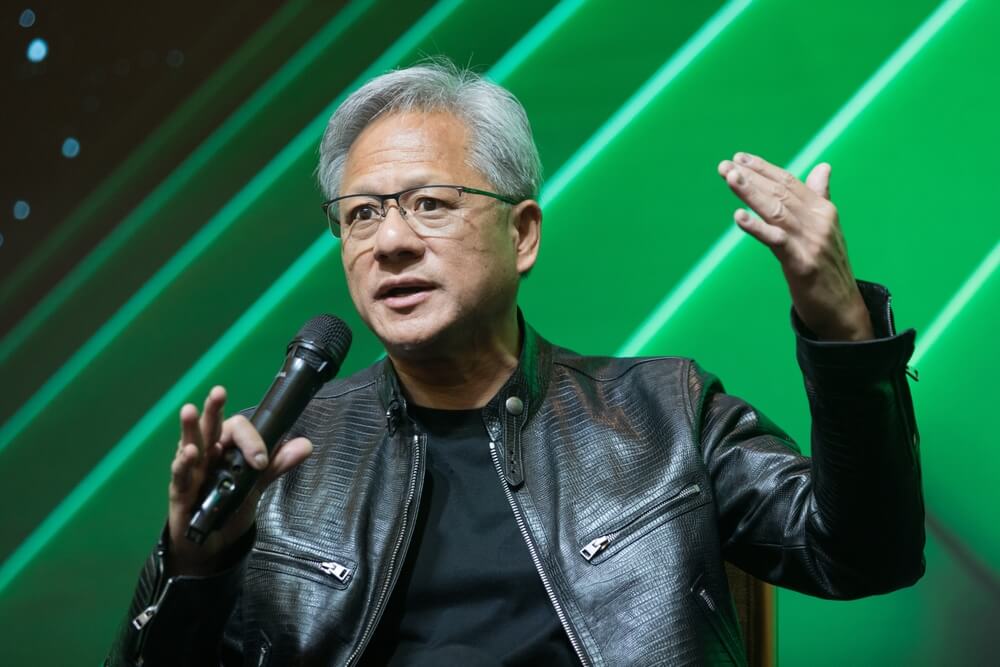 Rather than trying to expose the problems, the board seems intent on covering them up - Jensen Huang
To “oversee trade compliance and national security,” the board created a National Security and Export Control Committee.
But there is no independent investigation of where Nvidia and Huang may have gone wrong in this area.
Rather than trying to expose the problems, the board seems intent on covering them up.
In the run-up to the 2008 global financial crisis, Citigroup CEO Chuck Prince famously said: “When the music stops, in terms of liquidity, things will be complicated. But as long as the music is playing, you’ve got to get up and dance. We’re still dancing.”
Nvidia’s board has restarted the music, and the market may still feel like dancing. But with a flawed CEO calling the tune, things could get complicated fast.
Luigi Zingales is a Professor of Entrepreneurship and Finance at the University of Chicago.
