The debt of developed countries is projected to reach a record 75.8 trillion dollars by the end of 2026. This year alone, it will increase by 4.2 trillion, while its ratio to the combined GDP of developed economies will rise to 104 per cent.
Twenty years ago, the same debt amounted to 26 trillion dollars, or 68 per cent of GDP. The ten largest developed economies will carry 69 trillion dollars of that burden, with an average debt-to-GDP ratio of 114.5 per cent.
The Fitch Ratings assessment released on 21 July comes as governments on both sides of the Atlantic assume the most expensive security commitments since the end of the Cold War.
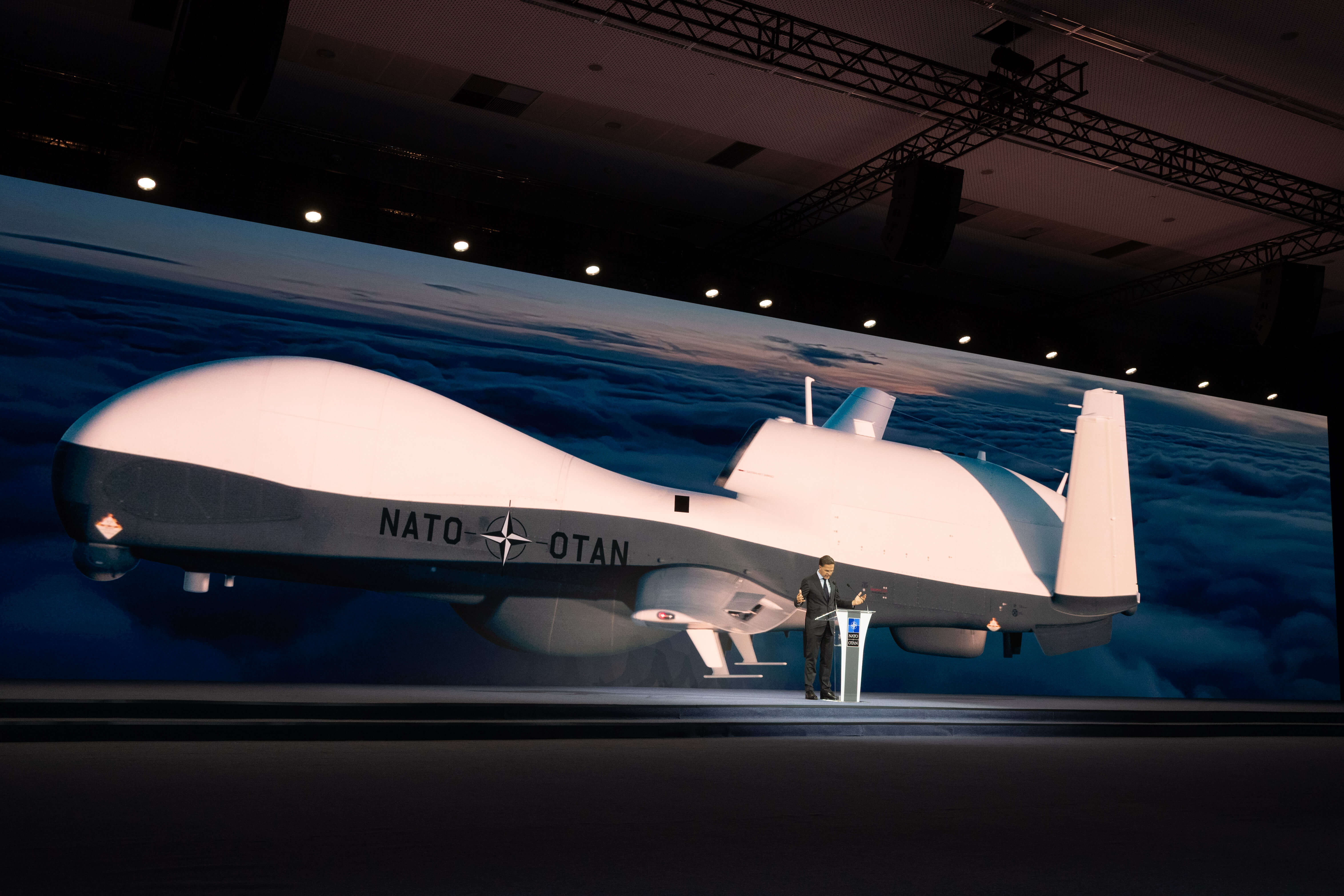
Just two weeks earlier, at the summit in Ankara, NATO confirmed the alliance’s commitment to allocate five per cent of GDP to defence and related security needs by 2035.
European allies and Canada increased investment in core defence needs by more than 139 billion dollars in 2025, while new procurement contracts worth more than 50 billion dollars were announced at the summit.
The European Union estimates that its members will allocate 454 billion euros to defence this year, 8.6 per cent more than in 2025 and 75.3 percent more than in 2021.
These two trends now intersect. States are increasing military budgets just as old debt comes up for refinancing at interest rates far higher than those they became accustomed to during a decade of cheap money.
Governments can decide how much they want to spend on defence, but the speed at which they turn those plans into contracts, factories and armaments is increasingly determined by borrowing costs and investor confidence.
Defence enters budgets with high deficits
Additional military spending is being added to budgets that already have large deficits. According to Fitch, the fiscal deficit of the United States this year is expected to reach 7.8 per cent of GDP, approximately 2.5 trillion dollars.
A deficit of 5 per cent is expected in France, 4.8 per cent in Britain, 3.7 per cent in Germany, and 3.1 per cent in Japan. US public debt could rise from about 120 per cent of GDP in 2026 to 131.5 per cent by 2030. Even after a slight reduction, Japan will remain close to 192 per cent of GDP.
High debt alone does not create the same level of risk in every country. The United States borrows in a currency that remains the foundation of the world financial system and has the deepest market for government bonds.
Defensive capability becomes as dependent on the state’s credit standing as on the assessment of the military threat
Japan owes most of its debt to domestic investors and repays it in yen, a currency over which its central bank has full control, so it is less exposed to an immediate financing crisis than countries that depend on foreign creditors or borrow in currencies they do not control.
Germany is entering a new borrowing cycle from a more favourable starting position than France, Britain or Italy. The Allies will therefore formally share the same defence objective but fund it on very different terms.
This difference is already altering the distribution of power within Europe. Countries with lower debt and greater fiscal space can sign multi-year contracts, expand ammunition factories and reserve production capacity.
Over-indebted governments are more likely to announce targets whose budgetary coverage is delayed, made conditional on future growth, or based on the reallocation of existing expenditure. Defensive capability thus becomes as dependent on the state’s credit standing as on the assessment of the military threat.
The cost of borrowing determines the scope of defence
The International Monetary Fund estimates that global public debt rose to nearly 94 per cent of GDP in 2025 and will reach 100 per cent by 2029, a year earlier than previously expected. In developed economies, gross public debt is projected to increase from 108.2 per cent of GDP this year to 114.8 per cent by 2031.
An even more significant change can be seen in servicing costs. Global interest expenditure has increased from around two to almost three per cent of GDP in just four years, as governments replace bonds issued at very low rates with new, more expensive debt.
That increase may seem slow, but it consumes a larger share of the budget without any new political decision. The Ministry of Finance can delay the purchase of an aircraft, the construction of a road or hospital, or the introduction of tax relief. It cannot postpone interest payments without consequences for the credit rating and investor confidence.
The OECD estimates that the public debt of its members will reach around 113 per cent of their total GDP by the end of 2027
Every new defence programme therefore competes with expenditure that has already been contracted and that increases automatically.
The way states borrow has also changed. Central banks are no longer buying government bonds to the same extent as they did during the years of extremely cheap money.
Governments therefore depend increasingly on private investors, who will lend money only if they receive a sufficiently high interest rate.
The OECD estimates that the public debt of its members will reach around 113 per cent of their total GDP by the end of 2027. The more market-orientated a country is, the more vulnerable it is to changes in investor sentiment.
If investors judge that risks have increased, they will demand a higher interest rate, and new borrowing and the repayment of existing debt will quickly become more expensive.
Military budgets increase both production and indebtedness
Higher military spending can open factories, create new jobs and increase investment, especially when funds are directed towards domestic production, research, infrastructure and technologies that may later have civilian applications.
That effect, however, does not mean that the additional spending will pay for itself. Higher corporate income and more employees can increase government tax revenues, but usually not enough to cover the full cost of new military programmes.
The IMF’s analysis, covering 164 countries since 1946, shows that governments generally do not finance large increases in military spending from existing revenues. About two-thirds of the additional cost ends up as a new budget deficit.
In the first three years, public debt increases by about seven per cent of GDP on average. When military spending rises during wartime, debt grows to roughly twice that level, while some of the money is often diverted from social programmes.
Investors are looking increasingly carefully at how the government spends borrowed money, and not just how much it borrows
The economic benefit depends on where the money ends up. If the state buys most of its weapons abroad, jobs and profits go to foreign factories, while the domestic economy gains very little.
Europe is further disadvantaged because its states often order small quantities of different weapons, each according to their own standards and through separate projects.
Larger joint orders, multi-year contracts and investment in new factories would lead to lower prices, more secure production and more jobs in Europe.
This, however, requires governments to cede some control to joint programmes, which they often avoid to protect their own companies and jobs.
The same amount can have completely different consequences. If it is invested in domestic factories, equipment and jobs, some of the money returns through taxes and a stronger industrial base.
If the weapons are bought abroad, the country is left with higher debt, while the benefit goes to the foreign manufacturer.
The worst outcome occurs when the money is spent without investment in production, because after a short-lived stimulus only higher debt and higher interest rates remain.
That is why investors are looking increasingly carefully at how the government spends borrowed money, and not just how much it borrows.
The advantage of the dollar, the burden of the deficit
The United States can borrow more easily and for longer than other developed countries because the dollar is the world’s main currency and US government bonds continue to attract a large number of buyers. At the same time, however, Washington is running the largest budget deficit among developed economies.
Fitch and the IMF warn that investors no longer regard US debt as completely risk-free, and that any more serious loss of confidence could quickly increase borrowing costs.
America will still be able to borrow more than others, but any new military commitment will be more expensive and leave less room for other needs
This means that an increasing share of the federal budget will be spent on interest payments. Defence, social programmes, tax breaks and state aid to industry will have to compete for the same funds.
America will still be able to borrow more than others, but any new military commitment will be more expensive and leave less room for other needs.
Europe will have to choose the way of financing
European countries are entering a new phase of defence policy without a shared fiscal stance. Some can increase debt without an immediate impact on ratings or funding costs, while others are already trying to reduce their deficits even as they promise more money for the military.
Because of this divergence, the goal of spending five per cent of GDP will not be reached uniformly, even when there is political agreement on the security threat.
The wider the gap between military needs and the capacity of national budgets, the harder it will be to avoid common European borrowing
Pressure to fund European defence jointly will therefore grow. When each country borrows on its own, the greatest burden falls on members that already have high debt and borrow heavily. Joint financing would spread the cost more widely and enable the European military industry to secure larger, longer-term orders.
This will be opposed by governments that do not wish to assume part of the responsibility for other countries’ debt. Nevertheless, the wider the gap between military needs and the capacity of national budgets, the harder it will be to avoid common European borrowing.
Who can afford the price of new armaments?
Over the next two years, Western governments will try to make the increase in military budgets more politically and financially manageable. They will use special funds, multi-year contracts and more flexible budget rules to protect defence programmes from annual cuts.
 The West has sufficient financial strength to increase military spending, but not every country has the same capacity to maintain that pace over a long period
In doing so, they can postpone some of the political conflict, but they cannot eliminate the cost. Investors will continue to judge whether governments are financing the new spending sustainably and whether that money is actually boosting industry and tax revenues.
The biggest difference between the allies will not be the level of promised expenditure, but who can sustain it over many years. Countries with stable budgets, lower borrowing costs and a developed defence industry will be able to order more, sign longer contracts and increase production more quickly.
The West therefore has sufficient financial strength to increase military spending, but not every country has the same capacity to maintain that pace over a long period.
A $75.8 trillion debt will not stop rearmament. It will determine which governments can keep their promises and which will cut back as soon as interest payments and political costs begin to put serious pressure on the budget.
States with less fiscal space will still buy weapons, but will fund them through more expensive borrowing, higher taxes and cuts in other parts of the budget.
