And another one bites the dust. The resignation of Keir Starmer this week and his imminent replacement by the UK’s seventh prime minister in ten years adds weight to the notion of an ‘ungovernable’ Britain.
But what if it is parliament and the politicians who are ungovernable rather than the nation at large? After all, it was not voters who removed Starmer but a Labour Party that lost its nerve two years into a five-year term.
There is a long-standing consensus among the public that the economy, cost of living, and the preservation of public services such as the National Health are its top priorities.
What became the most divisive issue, membership of the European Union, was largely the creation of single-minded politicians rather than the reflection of a mildly Eurosceptic electorate for whom the Europe question had not previously loomed large.
Starmer announced he was standing down one day before the 10th anniversary of the narrow referendum vote of June 23, 2016, that was to take the UK out of the EU.
That outcome marked the start of a lost decade for the UK in which successive prime ministers failed to convince the public, or more significantly their supposed political allies, that they could turn the country around.
It will now almost certainly be up to Andy Burnham, the former Manchester mayor who returned to Westminster this week, to prove that he is the one to reverse the fortunes of a country supposedly in decline.
Barring nominal challenges from other Labour figures that might provide a fig leaf of competition to the party’s expected choice, Burnham could be installed in Downing Street as early as July 17.
Where Starmer went wrong
Where did Starmer go wrong, and what will Burnham now do to try to set things on the right course?
The outgoing prime minister certainly made mistakes from the start, including a series of U-turns in response to pressure from his own side that made him look weak.
His message of gloom, delivered in a wooden and uncharismatic style, contributed to his early collapse in the opinion polls.
When Starmer announced he was stepping down, the outlook for the economy was hardly rosy but not entirely bleak
Often diverted by international crises, he nevertheless established a positive relationship with Donald Trump while such a phenomenon was still feasible, at the same time as reinforcing ties with Europe and keeping the UK out of the US president’s Iran war.
When he announced he was stepping down, the outlook for the economy was hardly rosy but not entirely bleak. For some insiders, he was not political (ie., scheming) enough, which most non-politicians would regard as a compliment.
But in the end he failed, and his lasting legacy will be that he led Labour to victory and an overwhelming parliamentary majority in 2024.
That may have contributed to his ultimate defeat, as blocs of Labour MPs felt free to challenge policies they didn’t like without the risk of bringing the government down.
Enter the 'King of the North'
Burnham is a different character, perhaps more ‘political’, and no stranger to parliamentary intrigue despite his years away from Westminster. The 56-year-old spent the post-Brexit ‘lost decade’ as Manchester mayor after previously serving as an MP and minister in the Gordon Brown years.
He used his extensive devolved powers to improve the fortunes of the northern city. In his campaign to gain extra funding for his region during the Covid pandemic, he first gained the nickname of King of the North. He remained popular locally until he stepped down this month.
Starmer argued from the start of his premiership that Labour would need two five-year parliamentary terms in order to restore the country’s fortunes
Burnham has yet to spell out the path he will take when, as expected, he takes the top job. But his political inclination appears to be towards greater devolution and state intervention to mend regional economic divides.
Starmer argued from the start of his premiership that Labour would need two five-year parliamentary terms in order to restore the country’s fortunes.
An underlying reason for his political demise was that his party no longer saw him as the leader who could secure a second term by heading off a challenge from right-wing Reform.
Confronting the insurgent right
One of Burnham’s central tasks, along with all the other challenges both foreign and domestic, is therefore to confront the insurgent party led by Nigel Farage. Reform is currently topping polls with almost a third of national support and captured a swathe of Labour seats in local elections in May.
At least on that issue, Burnham has made a good start. In this month’s Makerfield by-election, which he had to win in order to return to Westminster and stand as prime minister, he trounced Reform and its far-right rival Restore with 55 per cent of the vote.
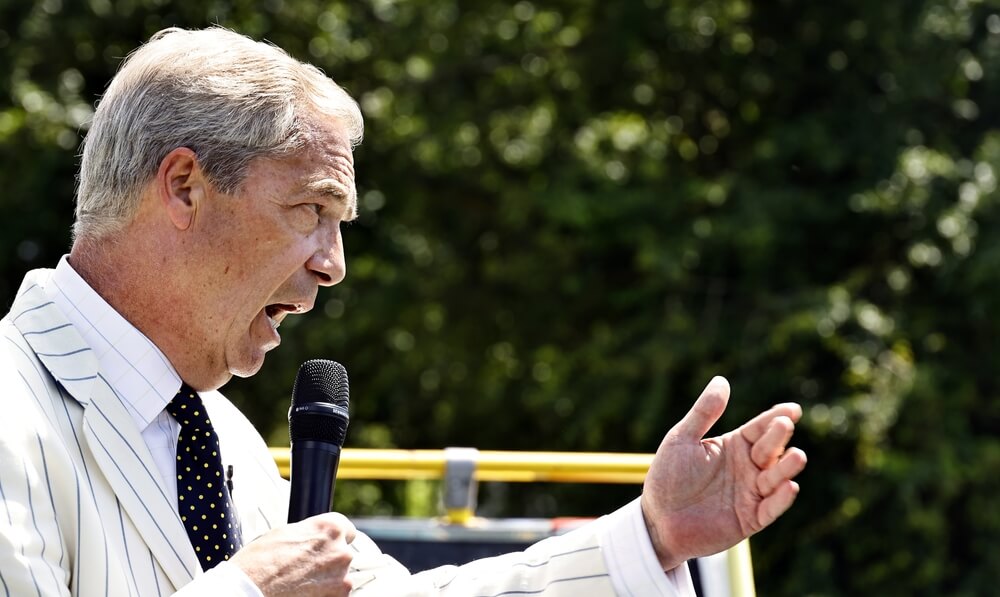 Nigel Farage called for a general election to be held after Starmer announced his decision to step down, knowing his proposal didn’t stand a chance
He had the advantage of fighting for a seat that overlaps with Manchester, and he benefitted from tactical voting by those whose main priority was to keep Reform out.
It is one of those traditional northern Labour constituencies in which traditional die-hard supporters had drifted to Reform after supporting the Brexit vote.
Reform has marked it down as a one-off loss, more an expression of the electorate’s disillusionment with Starmer rather than a renewed affection for Labour.
But perhaps the result also reflected signs that Reform’s advance has stalled as its more nativist adherents defect to Restore, its enemy on the right.
Farage called for a general election to be held after Starmer announced his decision to step down, knowing his proposal didn’t stand a chance.
The Reform leader has built his political career on dividing the nation over Europe and immigration. But it is a fair bet that all but his most zealous supporters share the aspirations of the majority of the electorate that wants better economic prospects, improved public services and secure jobs.
If Burnham can deliver any or all of that, then switching leaders in mid-term will prove to have been the sensible choice.
