The case of Louisiana v. Callais arose from a dispute over how one US state draws its electoral districts. After the census, Louisiana was the first to adopt a map that reduced the political influence of African American voters. The court ordered changes, so a new map was adopted that increased their influence.
That map was contested by a group of citizens, including Philip Callais, who argued that the state should not use race as a basis for drawing districts.
The Supreme Court accepted this argument and, in doing so, changed the rules by which such maps are evaluated in the future.
In the United States, elections do not begin on voting day; they start much earlier, when electoral district boundaries are drawn. The ruling from April 2026 shifts this process from the legal to the almost entirely political sphere.
Before a voter even goes to the polls, someone has already decided which "court" they will play on, and that court often determines the winner.
A shift in the Voting Rights Act
In a 6–3 decision, the court changed how a key part of the Voting Rights Act is applied. Previously, it was sufficient to show that an electoral map in practice harms a certain group of voters, but this is no longer enough.
Now, it must be proven that the legislator acted knowingly and intentionally. This may seem a minor difference, but in practice it means the courts can hardly prevent how constituencies are drawn.
Because political and racial lines often coincide in the US, these decisions have a clear racial effect in practice
Lawmakers do not claim to draw districts based on race. They state that they draw districts to group voters with similar voting patterns, to preserve existing political communities, or to create stable constituencies.
Because political and racial lines often coincide in the US, these decisions have a clear racial effect in practice. The court now accepts these explanations as sufficient, so without direct evidence of discrimination, lawsuits generally fail.
The new map and its challenge
The Louisiana dispute illustrates this clearly. After the census, the Republican majority produced a six-district map, but in only one district did the African American population form a majority, even though they make up about a third of the state's total population.
The court determined that this reduced their political influence and ordered changes. The new map increased the number of such districts but was later challenged for relying too heavily on racial criteria. The Supreme Court accepted this argument.
The threshold for court intervention has been raised so high that most disputes no longer have a real chance
In practice, this means the government now has a much wider scope to shape the electorate without serious risk of being stopped by the courts.
The essence of the change is simple: previously, one could challenge the result; now, one must prove the intention. As a result, the threshold for court intervention has been raised so high that most disputes no longer have a real chance.
What does this look like in practice?
A Republican government can concentrate a majority of Democratic-voting citizens into a small number of districts. The Democrats will win those districts but remain in the minority in all others.
Thus, the Republicans can win more seats, even though they do not have more votes overall. The same principle applies when Democrats are in control.
It is important to understand that this is not an isolated case. This ruling is part of a broader change that has been ongoing for years.
Previously, some states had to seek permission before changing election rules, such as district boundaries or voting methods. Today, they no longer have to do so.
Two voters can have the same vote, but not the same influence
At the same time, it is much more difficult to overturn rules that make voting harder, because the court requires proof that they were introduced with the intention of discriminating against someone. Now, the space for contesting election maps has been further narrowed.
Each of these moves may seem technical individually, but together they change the way the system operates. The result is a change in how political representation functions.
Formally, each voter has one vote, but in practice, the distribution of voters determines how much that vote is worth. This means two voters can have the same vote, but not the same influence.
Not the abolition of democracy, but its transformation
The consequences are evident in the very structure of elections. There is an increasing number of districts where the outcome is virtually predetermined, and political competition is diminishing. Elections no longer serve to change the balance of power, but merely to confirm it.
The effects of this ruling will not be fully apparent immediately, as the current electoral maps are already largely established. The real impact will emerge after the next census in 2030, when new districts are drawn according to the rules the court has now set.
Legislators will then have much greater freedom to shape maps without serious fear of legal challenge. That is when this ruling will reveal its full effect.
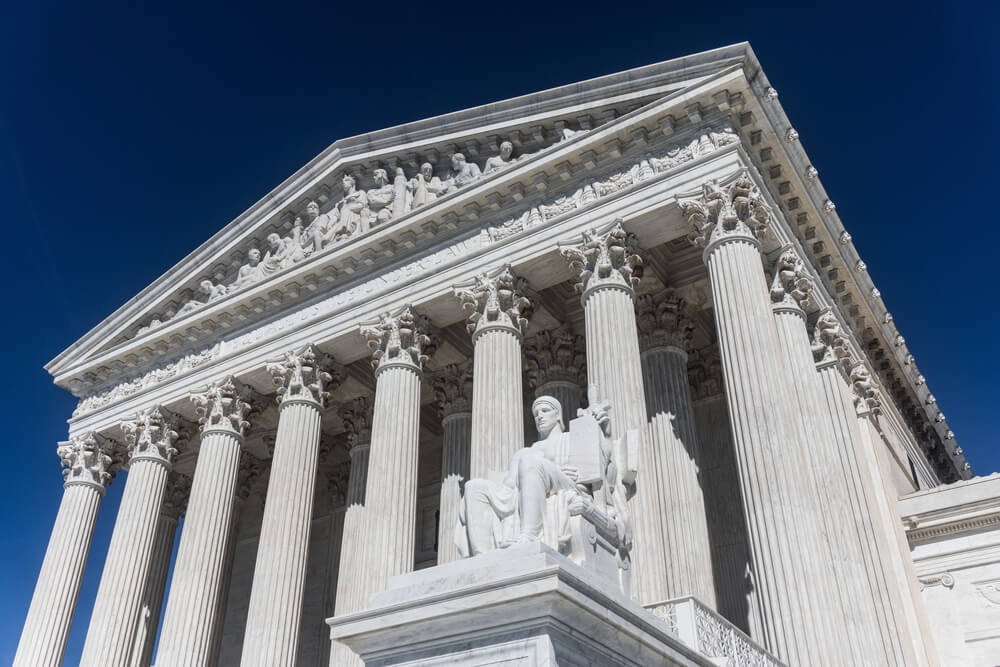 The Supreme Court is increasingly leaving key issues to the political process, even when that process is already subject to strong partisan influence
Some states are attempting to remove politics from the process of drawing districts. However, where the government controls this process, there is no incentive to do so – especially after this ruling. The court has effectively told them they can proceed without fear of legal consequences.
This also alters the role of the institution itself. For decades, the Supreme Court acted as a corrective, particularly on civil rights issues, limiting political power and protecting the balance.
Today, that role is changing. The court is increasingly leaving key issues to the political process, even when that process is already subject to strong partisan influence.
In other words, the court is withdrawing from where it was once most important.
The consequence is not the abolition of democracy, but its transformation. The rules remain the same, but their application has changed. The boundaries of the political game are increasingly determined by those who already hold power.
When the space for contesting electoral maps is narrowed, the balance between rules and political power shifts. Decisions about how voters are distributed remain without real external oversight.
This creates opportunities for one party to build and maintain an advantage over several election cycles. It is no longer a question of individual choices, but of the stability of the system itself.
If this trend continues, elections will not determine the balance of power, but only confirm it.
