In South Africa, protesters enter homes, drag out foreign nationals and hand them over to the police. Cyril Ramaphosa’s government condemns such actions but at the same time accelerates deportations, tightens controls and prepares special courts for immigration cases. Demands from the street are therefore increasingly determining the direction of state policy.
On Thursday, 9 July, in the Alexandra neighbourhood of Johannesburg, groups of protesters broke down doors, entered rooms where they believed people without proper residence documents were hiding, and took those they caught to police vans.
Among them were a woman and a small child from Malawi. Zimbabwean Total Mhlanga produced a permit that allows him to live and work legally in South Africa but was still seized by protesters and handed over to the police.
The same day, similar gatherings were held in Soweto and Durban, where the organisers went from house to house after the announced peaceful march.
Those scenes go beyond another surge of xenophobia, as private groups have taken over tasks that belong exclusively to government services.
They chose which houses to enter, decided who was a foreign national, demanded documents and removed people, while police vans became the place where their actions ended.
There is no evidence that the police agreed in advance to cooperate with the organisers, but by accepting the people brought to them by the protesters, they created the impression that the state subsequently confirms what was previously done without any legal authority.
Such a relationship does not mean that the state has lost the ability to enforce the law, but rather that it has allowed the most controversial part of the procedure to be carried out outside its institutions.
Protesters locate people, enter their homes and detain them, while the police take over subsequent action. This preserves the state's formal authority, but the choice of initial targets, and the way in which they are delivered to state services, is left to the street.
A deadline not set by the government
The March and March movement, led by former radio presenter Jacinta Ngobese-Zuma, set 30 June as the deadline for people without proper documents to leave South Africa.
The government announced that the ultimatum had no legal force, but 120 marches were held across the country that day. The police stated that 108 passed peacefully, while they had to intervene in twelve locations.
More than 900 people were arrested for violating regulations on the stay of foreign nationals, committing acts of violence and robbery, and harbouring people who did not have the necessary permits.
Accent, origin, name or appearance are enough to mark someone as a foreign national and bring them before the police
The political impact of these gatherings did not depend solely on the number of conflicts and arrests. The deadline set by the organisers provoked fear long before the protests began, so migrant shops closed, people did not go to work, families left their homes, and thousands of foreign nationals headed for the border.
The organisers then announced that they would take to the streets every Thursday until the government tightened border controls, sped up deportations and gave South Africans priority in schools and hospitals.
By 9 July, more than 38,000 Malawians and over 60,000 Zimbabweans had returned from South Africa. Several African governments began organising the return of their citizens, while humanitarian organisations warned that it is not only people without residence permits who are at risk.
Those who have proper documents, as well as refugees and people awaiting an asylum decision, also left their homes because the groups that break into houses do not carefully determine someone’s legal status. Accent, origin, name or appearance are enough to mark someone as a foreign national and bring them before the police.
The government is tightening its policy towards foreign nationals
Before the start of the protest, Ramaphosa recalled the apartheid era, when the white government restricted the movement of the black population and determined where people could live and work.
He emphasised that only authorised civil servants may request personal and residence documents and warned that taking the law into one’s own hands is now portrayed as an act of patriotism.
Such condemnation, however, comes at a time when the government is already preparing a much stricter policy on foreign nationals.
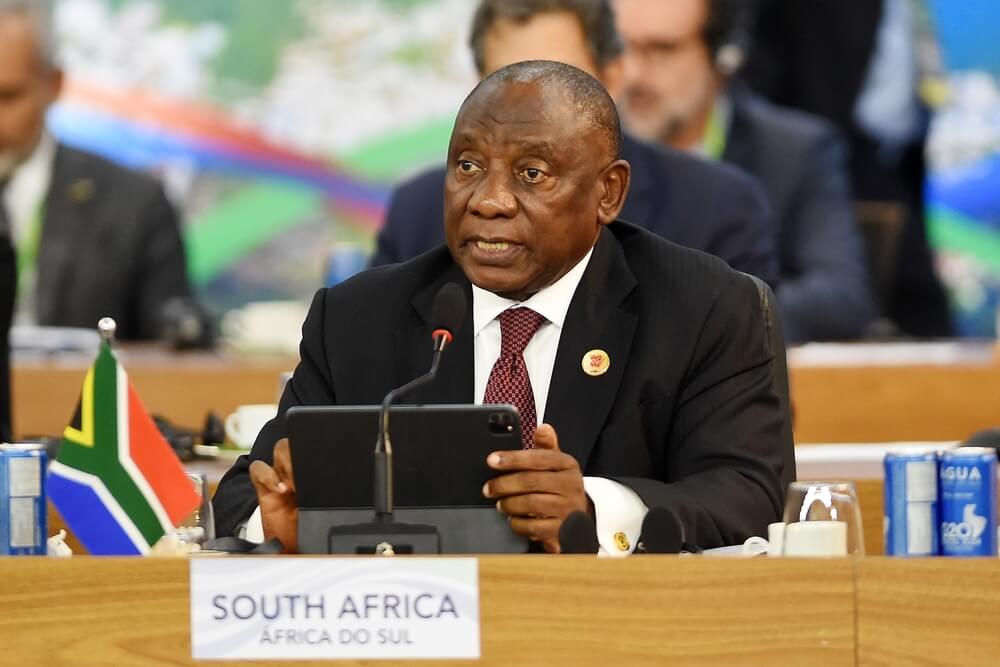 Cyril Ramaphosa emphasised that only authorised civil servants may request personal and residence documents
On 3 June, the South African government adopted a new migration management plan, which provides for faster identification and deportation of people without residence permits, special courts for immigration cases, more frequent inspections at workplaces, stricter penalties for employers, modernisation of border crossings, and the gradual recruitment of 10,000 additional labour inspectors.
The government is also preparing restrictions on the employment of foreign nationals in certain sectors.
When police accept people previously detained by protesters, organisers receive confirmation that their actions are achieving the desired result
Since the plan was adopted almost a month before the ultimatum expired, it cannot be argued that it was created as an immediate response to the protests. Nevertheless, state policy and the protesters’ demands are moving in the same direction.
While street movements demand mass checks, accelerated removal of foreign nationals from the country, and priority for the local population, the government is simultaneously increasing the number of officials, speeding up procedures, and preparing courts to enable more deportations in a shorter period.
In South Africa it is becoming increasingly difficult to distinguish lawful state action from the pressure of groups that decide for themselves who should be checked, evicted from their homes or taken to the police.
When police accept people previously detained by protesters, organisers receive confirmation that their actions are achieving the desired result. The government reserves the right to make the final decision, while the street sets the pace and indicates against whom action should be taken first.
Unemployment as an excuse
In the first quarter of 2026, unemployment in South Africa reached 32.7 per cent. Some 8.1 million people were out of work, and more than three quarters of them had been looking for work for over a year.
Among young people aged 15 to 34, almost every second person was unemployed, which shows that the country is facing not a temporary decline in employment but a long-term economic and social crisis.
In a country with such deep and persistent unemployment, it is easy to accept the claim that foreign nationals are taking jobs. It gives public anger a clear target and, at the same time, reduces pressure on the government.
However, the data do not confirm that migrants are the main cause of unemployment. About 2.6 million foreign nationals lived in South Africa in 2024, approximately five per cent of the population, while their contribution to the economy is greater than their share of the total population.
Removing foreign workers does not solve any of the fundamental problems of the labour market
Most work in agriculture, construction, catering, trade, transport and other jobs that are often carried out without permanent contracts. Many run small shops that entire neighbourhoods depend on – as well as suppliers, landlords, and employees – especially where large stores are absent.
An economy growing at about one per cent per year does not create enough new jobs even for people who have been unemployed for years, so removing foreign workers does not solve any of the fundamental problems of the labour market.
Foreign nationals have become the easiest targets in a crisis rooted in weak growth, poor education, the breakdown of local services, crime, and the country's long-standing inability to create enough jobs.
The government monitors the mood of voters
Pressure from the streets is mounting at a time when the African National Congress no longer has the political strength it enjoyed after the end of apartheid.
In the 2024 elections, it lost its parliamentary majority for the first time and won slightly more than 40 per cent of the vote. Ramaphosa had to form a multi-party government that included the Patriotic Alliance, a party that openly calls for mass deportations.
The leader of the Patriotic Alliance, Gayton McKenzie, is a member of Ramaphosa's cabinet and the Minister of Sports, Arts and Culture, so demands for the expulsion of foreign nationals no longer come only from small street movements.
The ANC does not have to support house raids in order to adopt some of the policies that those raids promote
They are also voiced by a party that participates in government, which is why views that until recently belonged to the political fringes are now being heard at the very top of the state.
The ANC does not have to support house raids in order to adopt some of the policies that those raids promote. It is enough to tighten controls, speed up deportations and show voters that it is ready to be tougher on foreign nationals, in the hope of preventing votes from going to parties that promise simple and harsh solutions.
Such a policy may help the ANC in the short term to retain some voters who demand a stricter attitude towards migrants, but at the same time it increases the political influence of parties and movements that blame foreign nationals for unemployment, crime and poverty.
When the government steps up raids and accelerates deportations, protest organisers can present this as evidence that they are the ones who pushed it to tighten its policies.
Neighbouring countries also pay the price
The consequences are already being felt beyond South Africa, which is the main destination for workers from neighbouring countries and the largest source of remittances that migrants send to their families in the southern part of the continent.
The amount sent from South Africa to other countries tripled between 2016 and 2024, exceeding 19 billion rand annually, or about $1.2 billion, with most of it going to Lesotho, Malawi, Mozambique, and Zimbabwe.
When tens of thousands of workers suddenly return home, their families are left without money for food, education, medical treatment, rent or agricultural work. The countries to which they return already have high unemployment, weak public services and limited capacity to absorb large numbers of people without income.
Some African governments are seeking explanations for the attacks and deaths of their nationals, organising their return and reassessing relations with Pretoria
At the same time, diplomatic damage is mounting. Some African governments are seeking explanations for the attacks and deaths of their nationals, organising their return and reassessing relations with Pretoria.
Ramaphosa also heads the Southern African Development Community, an organisation that brings together the countries of the region, while neighbouring states suffer the consequences of the return of tens of thousands of people who have lost their jobs and income in South Africa.
Such developments also threaten South Africa’s broader international ambitions. Pretoria chaired the G20 in 2025, is leading proceedings against Israel at the International Court of Justice, and presents itself as a state that defends equality, human dignity and the interests of poorer countries.
At the same time, citizens of other African countries living in South Africa are hiding from groups that drag them out of their homes and hand them over to the police.
During the struggle against apartheid, South Africa benefited from the help and protection of numerous African countries, so today’s attitude towards their citizens affects one of the foundations on which it built its reputation after the end of the racial segregation regime.
A court decision that no one enforces
In November 2025, the High Court in Johannesburg banned Operation Dudula from checking documents, evicting foreign nationals from their homes, preventing them from entering hospitals and schools, and intimidating them.
The events of July showed how little such a decision means when the same practices continue under a different name and the police fail to stop them immediately.
Existing laws already prohibit private groups from searching homes, demanding documents, and taking people away, but enforcement depends on the police’s willingness to act against those who claim to be acting on behalf of the local population.
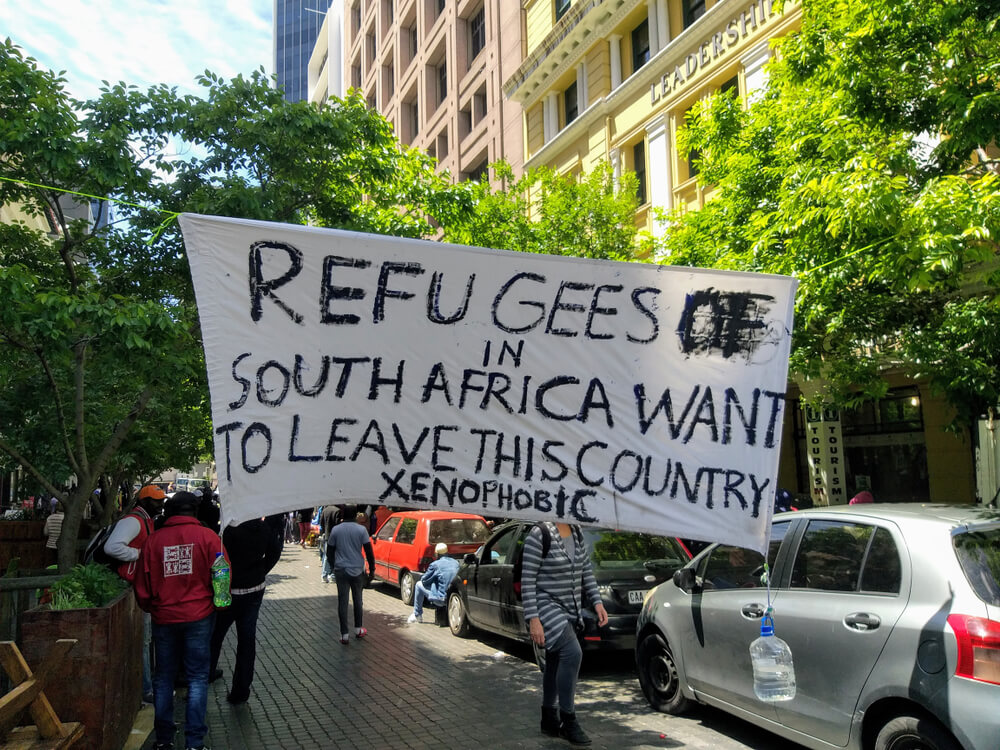 The next attack on foreign nationals will no longer be merely a failure of the state to protect them, but the consequence of a regime that has learned to use the street as its vanguard
If officers take custody of people brought in by protesters but do not investigate how they were identified and taken from their homes against their will, the court injunction has no real effect.
The special courts for immigration cases that the government is preparing will therefore show the direction in which the country is heading.
They can speed up the work of overstretched services and allow people to challenge deportation decisions before a judge, but they can also be used to expel people quickly after protesters have brought them to the police, without serious checks on how they were found, whether they were illegally detained, and whether they really have no right to remain in the country.
The crucial question is therefore not only how many people the state will deport, but how they will come before its services. If the police immediately treat the man who was dragged from his house by a group of protesters as a possible offender, rather than as a possible victim of unlawful detention, they accept the work that the street has done for them.
The next attack on foreign nationals will then no longer be merely a failure of the state to protect them, but the consequence of a regime that has learned to use the street as its vanguard.
For South Africa, this would mean more than diplomatic damage and economic loss: it would begin to dismantle the constitutional order established after apartheid and forfeit the right to teach others lessons about justice, equality and human dignity.
