On 4 October, the US Air Force withdrew all 12 B-1 bombers from RAF Fairford in Gloucestershire and returned them to their home bases in the United States.
Since the start of the war with Iran at the end of February, US bombers have flown from there on missions in the Middle East, and the US Air Force lists Fairford in its documents as the first choice when bombers are temporarily deployed in Europe.
Their departure came a week after British police arrested five men near the neighbouring village of Whelford, heading towards the base in three vans.
Only a limited amount of petrol was found in the vehicles, and all the suspects were released without charge pending completion of the investigation.
The US military nevertheless moved all 12 bombers across the Atlantic within a day, on the basis of its own threat assessment and before the British investigation had determined what the suspects were planning or who they were working for.
Open questions about the British reaction
According to a statement from British Counter Terrorism Policing, the alarm was raised in the early hours of 27 September following multiple reports, including a call from a local woman who saw suspicious vehicles near the base.
The woman, a farmer returning home from a celebration, later told the BBC that at about half past one in the morning she encountered three vans parked in an unusual formation and a group of hooded, masked men who fled as soon as they saw her.
Knowing that the base was on heightened alert, she first called the Ministry of Defence Police, but no one answered; she then dialled emergency services at 1.36am, and within ten minutes the village was flooded with armed officers.
She also said it was unclear to her why the police, who claimed to have received information about suspicious vehicles almost an hour earlier, did not know that these vehicles were in Whelford at the time of her call.
The Defence Secretary, Wes Streeting, responded that the local woman had only a partial understanding of the incident.
The case is clouded by unverified reports that the police were first called by one of the individuals later arrested
British authorities, however, have not yet explained why the Ministry of Defence Police, who are responsible for securing the base, failed to answer her call on a night when the facility was on heightened alert.
It is precisely such failures that US commanders take into account when assessing whether a base is sufficiently protected for their aircraft and crews.
The case is further clouded by unverified reports from London that the police were first called by one of the individuals later arrested.
According to the same sources, investigators are considering whether this was a test of how quickly the security forces react, or a message to the British government.
Two days after the arrests, the police announced that there were no explosive devices in the vans, but that a quantity of petrol had been found.
A release that Washington understood as a message
Five British citizens from London, aged between 23 and 25, were released the following day with strict restrictions on their movements and contacts, pending completion of the investigation.
They had been held under standard police powers, although Britain’s counter-terrorism legislation allows terrorism suspects to be detained for up to 14 days before being charged, and the head of Counter Terrorism Policing described the release as an operational decision based on experience.
The sixth suspect, a 25-year-old dual British–Iranian national, was arrested in London on 1 October on suspicion of preparing terrorist acts and was released two days later.
Such a step usually indicates that the police did not have sufficient evidence at the time to justify prolonged detention and preferred to continue their enquiries without the pressure of an immediate charging deadline.
In Washington, the decision was seen as evidence that the British authorities assess threats through a different lens from the US military, prompting President Donald Trump to state that the UK should not have released the suspects.
Unnamed US officials claimed they were aware of an Iranian-linked plan to target the bombers and kill base personnel
Unnamed US officials claimed they were aware of an Iranian-linked plan to target the bombers and kill base personnel, adding that the withdrawal had been carried out unusually quickly after fresh intelligence on the threat.
Washington is sending mixed signals. The Pentagon described the aircraft’s departure as a routine force repositioning and stressed that the bombers could strike any target worldwide directly from the United States.
Meanwhile, the US Secretary of State, Marco Rubio, said on 5 October that he remained confident about the security of American bases, noting that the British authorities had been exceptionally cooperative throughout the investigation.
While public diplomacy preserves allied relations and keeps the door open for the bombers to return, private communications to London indicate that trust has been significantly undermined.
Iran, a test run or something else?
On 30 September, Prime Minister Andy Burnham said there were strong indications that Iran had played a role in the Fairford incident, noting that the investigation was complex and ongoing, while Tehran denied any involvement.
The Israeli prime minister, Benjamin Netanyahu, claimed that Israel had given Britain advance warning of an Iranian-sponsored attack – a claim made immediately after Britain’s decision to ban trade with illegal Israeli settlements in the West Bank, turning his remarks into a political message to London.
In their statements, the police say only that they are examining all possibilities, including the potential involvement of a foreign state.
Iranian involvement would fit a pattern that British authorities have been describing for years
Iranian involvement would fit a pattern that British authorities have been describing for years.
Keir Starmer, then prime minister, said on the day the war began that Iran had been behind more than 20 potentially deadly plots on British soil in the previous year alone, and Britain's domestic intelligence agency, MI5, had previously warned that Iranian operatives were actively recruiting criminals, from international drug traffickers to petty offenders, for such tasks.
This modus operandi helps explain why young Londoners with no obvious link to Tehran might be recruited for an operation of this kind, but also why proving any connection may take months.
If this was a test run, it was exceptionally successful for the client. A handful of men in vans with some petrol were enough to provoke a diplomatic rift between the allies and drive 12 strategic bombers out of England, without a single shot fired or a single charge brought.
Washington loses a little, London a lot
For the US military, withdrawal is relatively cheap at the moment because the war with Iran, following the April truce and renewed strikes in July, has entered a phase of sporadic clashes and stalled negotiations.
B-1 bombers can take off directly from the United States, albeit with longer flight times and a heavier burden on crews.
Britain is paying a much higher price. For decades, Fairford has been the forward base to which America sends strategic bombers when crises erupt, from Kosovo and Iraq to Iran, and every US military operation launched from British soil requires approval from the British government.
That approval gives London a measure of influence over how Washington conducts military campaigns.
This was evident earlier this year, when Starmer’s government initially rejected a US request before permitting strikes solely against Iranian missile sites.
When the bombers fly from mainland America, Washington no longer needs British consent, depriving London of that leverage.
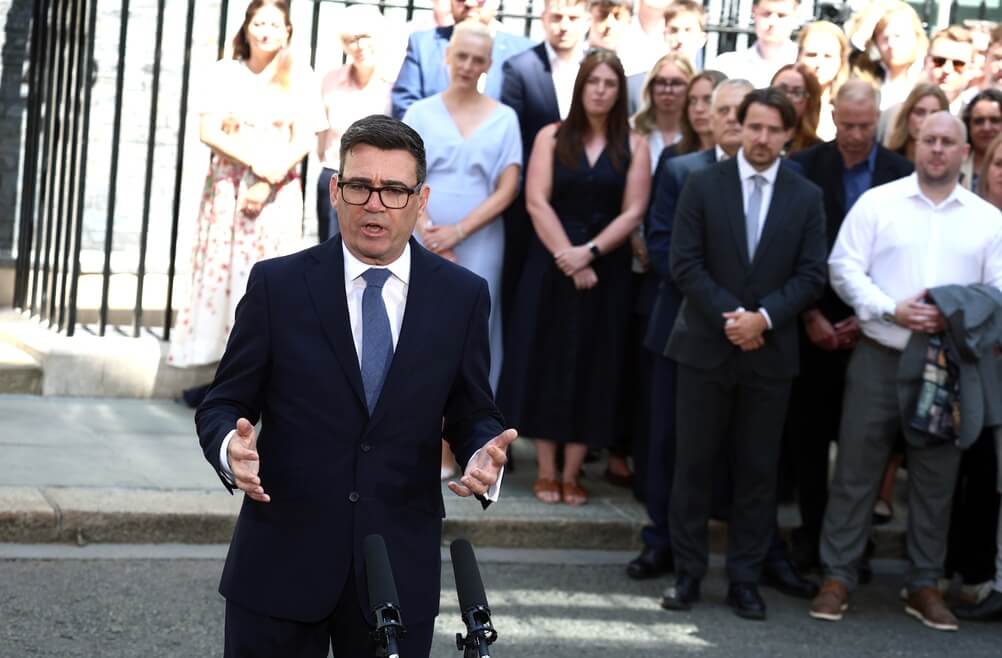 Andy Burnham’s government chose to maintain Starmer’s policy and allow the US to target Iranian missile installations from Fairford and Diego Garcia
In July, days after taking office, Andy Burnham’s government chose to maintain Starmer’s policy and allow the US to target Iranian missile installations from Fairford and Diego Garcia, despite opposition from the Green Party and the Liberal Democrats.
Burnham faced fierce domestic criticism for that decision, yet the Americans have now withdrawn the bombers on the basis of their own threat assessment, despite still holding British clearance.
For the UK, this demonstrates that political permission alone will not keep US aircraft on its soil if Washington doubts whether a base is adequately protected.
The division of responsibility is clear. Under the NATO Status of Forces Agreement, which governs foreign troops stationed in member countries, US military police maintain order inside facilities used by American personnel.
Outside these gates, they may act only with the explicit consent of the host nation's authorities; the outer perimeter of Fairford and the neighbouring villages remains under the protection of British police and the armed forces.
The British state is therefore responsible for the specific links in the security chain where cracks appeared – from the unanswered emergency telephone call that night to the rapid release of the suspects.
After 3 November, Fairford becomes a test
According to US officials, Trump rejected Iran’s proposal for a seven-day truce in late September and told aides that he expected the bombing to continue after the 3 November congressional elections.
If that happens, the Pentagon will have to decide whether to return the bombers to Fairford or continue to dispatch them from US soil.
Returning them would be the clearest sign that confidence has been restored, while continuing flights from America would confirm that one unexplained night in Gloucestershire has altered the deployment of US forces in Europe.
The decision to return will depend on whether London succeeds in demonstrating concrete changes to the Americans
The decision to return will depend less on the outcome of the British investigation, which could take months, and more on whether London succeeds in demonstrating concrete changes to the Americans – above all, a reliable intelligence-sharing chain between the police and the military, and an agreed joint threat assessment.
Washington is very likely to make any return conditional on precisely such an arrangement.
The initial tasks after any resumption of the bombing campaign against Iran will probably be launched by the Pentagon from the United States or from Diego Garcia, the joint UK–US base on a remote, unpopulated island in the Indian Ocean, whose use has also been approved by London.
For Prime Minister Burnham, it is therefore crucial that the investigation establishes as soon as possible who was behind the incident at Whelford; without a clear answer to that question, Britain cannot convince the Americans that it has understood and neutralised the threat.
Until that answer comes, the most realistic expectation is that Fairford will remain without American bombers during the next phase of the war with Iran.
