I stated last week that the wildfires in Europe should make us reconsider how technology can help save the environment. The key takeaway was that we want technology that lets us anticipate future events, react faster, and build resilience before the next catastrophe.
This week, we look at a few companies building those tools. Many of these companies operate far from the public spotlight. They don't always produce consumer products or dominate technology headlines. Instead, they build satellites, sensors, AI platforms, acoustic monitoring systems, and carbon removal infrastructure.
This week, I've selected OroraTech, Pano AI, Dryad Networks, Rainforest Connection, and Climeworks. They tackle very different challenges.
From wildfire detection to planetary intelligence
The first technology priority involves seeing environmental threats earlier. OroraTech focuses on thermal intelligence from space. Its technology uses thermal infrared sensors and satellite data to identify heat signatures and support wildfire detection and monitoring.
OroraTech deployed four satellites specifically for the Hellenic Fire System in Greece in 2026. According to the company, the system is the first national satellite constellation in the world created especially for tracking and detecting wildfires. The system's goal is to continuously give wildfire intelligence throughout Greece.
OroraTech has also expanded its satellite network. It now operates 14 satellites and combines its own data with information from more than 35 satellite and ground sources. Its platform uses AI-driven analytics to detect fires and analyse their development.
A government needs an alert, a location, an assessment of the fire's intensity, and information about how the situation could evolve
Companies like OroraTech are turning space-based observation into an operational intelligence layer.
A government doesn't need another striking image of a forest fire; this summer, we already have too many of those. It needs an alert, a location, an assessment of the fire's intensity, and information about how the situation could evolve.
Pano AI takes a ground-based approach to the same issue. The company employs AI-powered video systems to identify wildfires and give communities, utilities, and emergency services with situational awareness.
Pano's platform supports response choices by integrating real-time visual intelligence with early detection.
Pano has increased deployments in areas of Australia and the United States vulnerable to wildfires, including collaborations with fire departments and utilities.
OroraTech and Pano are complementary examples of the same broader movement. One observes from orbit, the other from the ground. Both turn observation into action.
Protecting forests requires technology that can hear, sense and predict
Wildfire detection represents only one part of environmental protection.
The next challenge involves protecting forests before environmental damage reaches a critical point.
This is where Dryad Networks has built an interesting proposition. The company develops solar-powered wildfire sensors designed to detect fires during the smouldering phase.
Its Silvanet sensors monitor gases including hydrogen and carbon monoxide alongside environmental conditions such as temperature, humidity, and air pressure. AI-supported analysis helps distinguish fire events from false alarms.
Dryad creates an electronic sensing layer within the forest itself, which is a highlight because forests create difficult monitoring environments. Smoke, terrain, darkness, cloud cover, and vegetation can all complicate visual detection. A sensor within the environment can provide another source of intelligence.
The company also uses LoRaWAN connectivity and designs its sensors for long operating periods with low maintenance requirements.
Sometimes, the forest can tell us what is happening if we know how to listen
Then there is Rainforest Connection. I met founder and Executive Chair Topher White a few years back and have been following their work ever since.
It has one of the most fascinating applications of AI for conservation because it uses sound. Rainforest Connection deploys bioacoustic devices that listen for chainsaws, forest fires, poaching activity, and other environmental threats.
Its AI and machine learning systems analyse sound in real time and can alert people on the ground when they detect a potential threat. It reports more than 726,000 hectares of rainforest under protection.
Environmental intelligence doesn't always require sophisticated cameras or massive satellite constellations. Sometimes, the forest can tell us what is happening if we know how to listen.
Rainforest Connection also applies AI to biodiversity monitoring. Its systems can identify species from audio recordings and help researchers understand changes in ecosystem health. Projects in Colombia, for example, have used AI-powered acoustic analysis to identify more than 150 species across monitored sites.
It connects technology with nature rather than trying to replace it. The forest generates the data, sensors collect it, AI interprets it, and people act on it.
We need technology that helps remove the damage
The fifth company takes us into a different part of the climate technology ecosystem.
Climeworks focuses on direct air capture and carbon removal. I want to include this company because protecting the planet requires more than preventing future emissions. We also need technologies that address some of the carbon already in the atmosphere.
In order to directly extract carbon dioxide from ambient air, Climeworks develops direct air capture technology. Climeworks Solutions, which creates portfolios integrating manufactured and natural carbon removal techniques, is another pillar of its company.
We don't lack individual technologies; we lack enough integration
Climeworks Solutions announced 14 new carbon removal agreements in June, totalling about 450,000 tonnes of carbon dioxide removal using a variety of technologies, including increased rock weathering, BECCS, biochar, direct air capture, and nature-based methods.
Last month, Climeworks launched a compliance-ready carbon removal offering designed to help organisations navigate emerging regulatory frameworks, including the EU Carbon Removal and Carbon Farming Certification Framework.
Carbon removal needs markets as much as it needs technology. A company can build an impressive machine that removes carbon from the atmosphere, but it still needs customers, financing, regulation, infrastructure, energy, measurement, and verification.
That leads to what, in my opinion, represents the biggest gap in climate technology today. We don't lack individual technologies; we lack enough integration.
What we still need from climate technology
We can't keep thinking in separate categories. We need artificial intelligence connected to reliable environmental data, satellite intelligence connected to local authorities, wildfire detection connected to emergency response, and forest sensors connected to conservation teams.
We need connectivity that connects everything. Renewable energy connected to storage and intelligent grids, and carbon removal connected to trustworthy markets.
A satellite can detect a fire, but it will never be able to evacuate a village. An AI model can predict risk, but it can't fix broken infrastructure. A carbon removal facility can capture CO2, but it cannot counteract an endless rise in emissions.
The next phase therefore requires systems thinking.
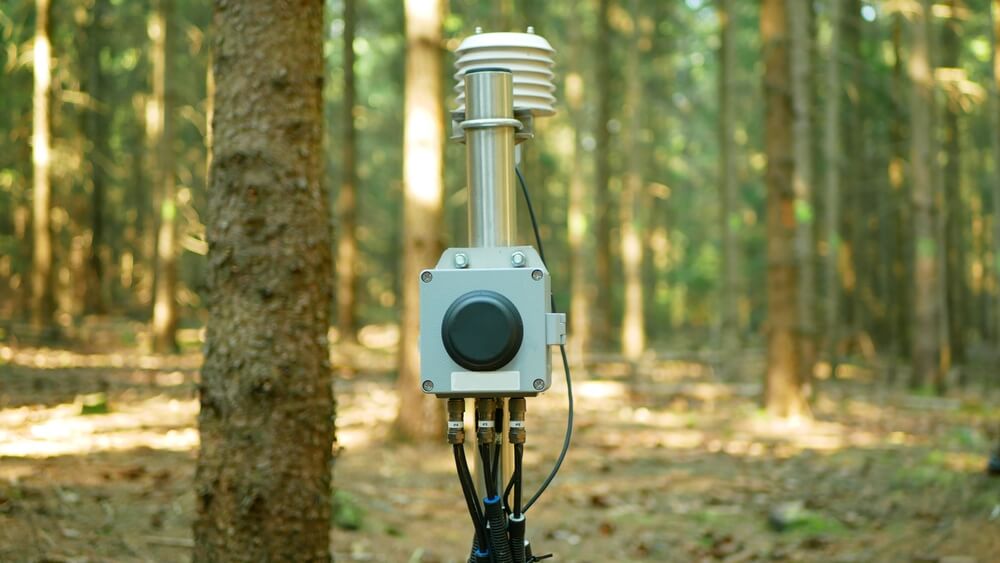 We are building a more intelligent layer around the planet. The opportunity now involves connecting it - Wildfire sensor
Last week, I wrote that we need to move from measurement to prediction, from prediction to prevention, and from prevention to resilience.
These five companies show what that progression looks like in practice.
We can see heat from space thanks to OroraTech. Communities can identify fires earlier because of Pano AI. Dryad introduces perception to woodlands. Rainforest Connection uses AI and sound to safeguard habitats, and Climeworks addresses the removal of carbon from the atmosphere.
Different technologies, but one objective. A more resilient planet.
The tools available continue to improve. Google and the Earth Fire Alliance, for example, launched three additional FireSat satellites in July 2026. The programme aims to create continuous global wildfire coverage, while Google's research team says the system can detect early-stage fires as small as 5 by 5 metres.
We are building a more intelligent layer around the planet. The opportunity now involves connecting it. Climate technology should become environmental infrastructure.
The companies I have highlighted here give me confidence because they demonstrate something important. Innovation doesn't need to exist separately from nature. The best climate technologies can work with forests, ecosystems, energy systems, satellites, communities, and human expertise.
The planet has already given us the warning; I can't stress it enough. Do we have the ambition to deploy the technology we already have at the scale our planet needs?
