“We are bound to one another by a single fate. If we go down, we go down together; if we are to reach the heights, we do so not by conflict but by common effort.”
Those words were spoken a century ago, by a German foreign minister, standing in the British Foreign Office, having just signed a pact that sought to guarantee peace between the nations of Europe and avoid a descent into another world war.
For Gustav Stresemann and the other foreign ministers who signed the Locarno Treaties, that moment of hope was short-lived: a decade and a half later, worldwide conflict erupted once more.
But the vision Stresemann and the others set out at that time has endured as a brave experiment in putting cooperation before division.
At the Nobel Peace Prize ceremony in 1926, the Norwegian humanitarian Fridtjof Nansen described the “Locarno spirit” as “the almost unprecedented attempt to base politics on the principle of mutual friendship and trust.”
That is why the British government recently chose to mark the centenary of the pact in the Foreign Office, with representatives of several countries involved in the original negotiations gathering in the same historic rooms where the treaties were signed.
But as we commemorated the events of a hundred years ago, it was impossible to ignore the acute conflicts that haunt our world today, the humanitarian crises they are causing, and the wider regional and global risks to security and stability they pose.
And in so many of those cases, from the Middle East and Sudan to Ukraine, we know it will take that same Locarno spirit – of countries working together in partnership – to overcome our shared challenges, rather than letting them divide and defeat us.
The challenge of creating lasting peace in the Middle East
First in mind is the challenge of creating lasting peace and security in the Middle East. The United States-led peace plan unveiled in September came after two years of the most unimaginable suffering for the civilian population in Gaza, and two years of torment for Israeli hostages and their families, following the horrific terror attacks on October 7, 2023.
The international community united to support that ceasefire agreement, and we need to continue working together to advance every part of US President Donald Trump’s 20-point plan and turn the ceasefire into a just and lasting peace.
November’s United Nations Security Council resolution in support of the plan was widely backed, including by the Arab and Muslim-majority states in the region.
It provided the UN mandate needed for the International Stabilization Force to help implement the plan, support the ceasefire, and avoid leaving a vacuum which Hamas could exploit.
The resolution also emphasized the importance of increased humanitarian aid, which is still desperately needed in Gaza.
As long as children are going hungry, and young mothers cannot get basic care, the most urgent priority must be to open all the crossings, lift restrictions, and flood Gaza with aid.
In supporting that UN resolution, the United Kingdom reiterated the importance of implementing the proposed transitional arrangements in accordance with international law.
A two-state solution remains the only way to achieve a just and lasting peace, with Israelis and Palestinians living securely side by side
Implementation must respect Palestinian sovereignty and self-determination, strengthen the unity of Gaza and the West Bank, and empower Palestinian institutions in order to enable a reformed Palestinian Authority to resume governance in Gaza.
This is essential to maintain progress toward a two-state solution, which remains the only way to achieve a just and lasting peace, with Israelis and Palestinians living securely side by side.
The challenges of the next stage will be even harder than achieving a ceasefire, and it would be easy at this point for individuals, governments, and the global community to start to pull back or to walk away, because they think it is too difficult, or will take too long.
So, it is more important than ever to maintain our international cooperation, to redouble our shared commitment to peace, and to enable the fragile hope of recent months to grow.
The tasks ahead
Just as international cooperation and support secured the ceasefire in Gaza, we need the same determination and commitment to end the brutal war in Sudan and relieve the terrible suffering of the Sudanese people.
Over 30 million people need lifesaving aid. Twelve million have been forced from their homes. Famine is spreading. Cholera and other diseases are rampant.
Wherever the war rages, there are appalling atrocities – mass executions of civilians and systematic rape as a weapon of war.
This cannot be allowed to continue. It is not just a vast human-rights and humanitarian emergency, but a vital test of international resolve.
Impunity will not be tolerated; the suffering of the Sudanese people cannot go on, and this war must end
In November, the UK called a special session of the UN Human Rights Council, where a UK-drafted resolution was unanimously passed, demanding an immediate ceasefire, unimpeded humanitarian access, and an end to the external support that is prolonging the conflict.
Crucially, the resolution also mandated urgent new investigations of atrocities by the UN Fact-Finding Mission, to document the truth and help us ensure that those responsible for the mass rape and murder of civilians will one day face justice.
The message from the international community was clear: impunity will not be tolerated; the suffering of the Sudanese people cannot go on, and this war must end.
Ukraine’s security is Europe’s security
We also need to bring that same collective effort to bear to end Russia’s war of aggression against Ukraine.
Nearly four years after the Kremlin launched its full-scale invasion, it is clear that Russian President Vladimir Putin’s war aims have failed.
But even after a million Russian casualties, his economy ailing, and 40% of Russian federal spending going to the war, he is still refusing to pursue peace.
Although Ukrainian President Volodymyr Zelensky has emphasized that he is ready for a ceasefire and serious talks, Putin’s only instinct is to escalate the conflict further – launching some of the largest attacks in Europe since the height of World War II.
But the Ukrainian people are standing strong, and we continue to stand with them.
The UK will continue to support Ukraine, now and for decades to come
Together with our allies in the “coalition of the willing,” the UK is ensuring that there is a strong flow of weapons, air-defense systems, and infrastructure support to sustain Ukraine in its fight.
And in concert with the US and the European Union, we have also introduced new sanctions packages to target Russian oil and gas revenues and Russia’s suppliers of defense equipment.
Ukraine’s security is Europe’s security. That is why the UK will continue to support Ukraine, now and for decades to come. We are determined not just to help a brave people defend themselves but also to defend principles that matter for the whole world: aggression will not pay and will be resisted.
Apathy is no option
As we work for peace in the Middle East, Sudan, and Ukraine in 2026, we must not forget other conflicts that have also gone on for too long, from Myanmar to the Sahel, and the terrible humanitarian crises they have caused.
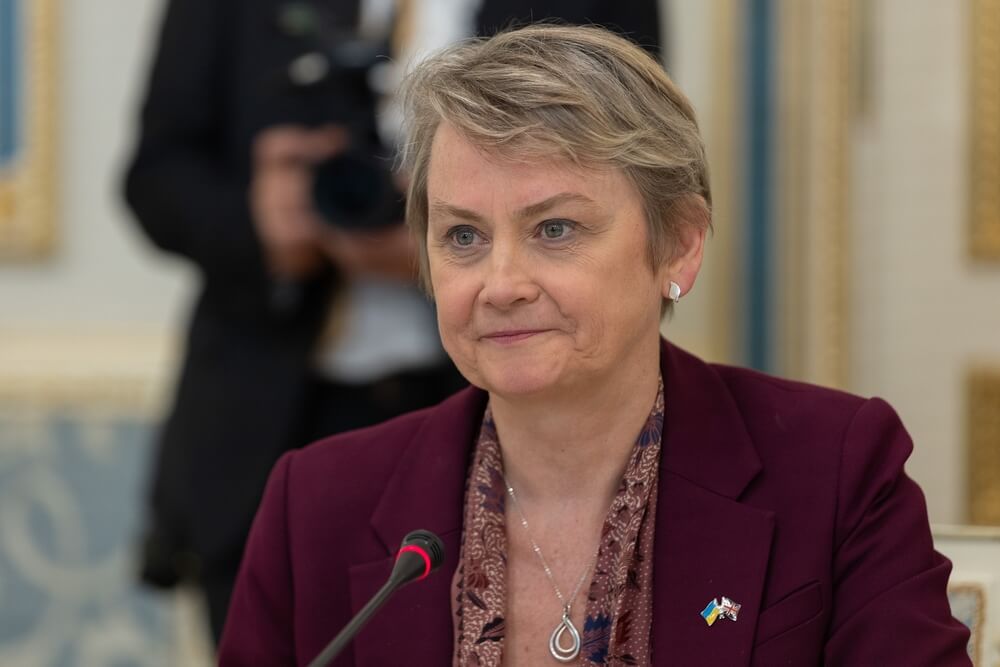 A retreat into isolationism will not help any country, let alone the world as a whole, deal with these challenges - Yvette Cooper
It is all too easy to turn away from conflicts where there is no simple solution, or crises where there is no quick fix, but the spirit of international cooperation demands that we work together to find answers and provide hope.
The same is true of many other great challenges we face in today’s world: helping every child around the world to realize their full potential; enabling women and girls to live their lives free from violence; avoiding the point of no return on climate change; restoring sustainable growth and prosperity to all our economies; ensuring that the incredible power of AI becomes a force for good; protecting our countries against terrorism and state threats, and our democracies against interference; dealing with the mass migration caused by famine, conflict, and economic insecurity; and ensuring that we are better prepared for the next major pandemic than we were for COVID-19.
One thing is certain: a retreat into isolationism will not help any country, let alone the world as a whole, deal with these challenges.
It is only through international cooperation and the power of joint action that we will succeed.
As Nansen put it at that Nobel Peace Prize ceremony in 1926, “the only chance of creating a real future for mankind is to stand united in a sincere desire to work together.”
That was true a century ago, and it remains true today. It is high time we acted accordingly.
Yvette Cooper is Foreign Secretary of the United Kingdom.
