Whatever happens with the US-Iran peace process and global energy prices, the strategic implications of this year’s supply disruptions are already clear.
The crisis is further confirmation of the need to phase out fossil fuels, both to mitigate climate change and to strengthen energy security.
But for Europe, which remains heavily dependent on imported energy, some less obvious implications may ultimately prove more consequential.
To address the precipitous decline in its share of global GDP this century, Europe must lower its energy costs.
European de-industrialization stems not just from the decline of energy-intensive output such as chemicals, fertilizers, and steel, but also from the fact that European industries pay twice as much for electricity as their US and Chinese competitors.
As long as that remains true, the continent will fall behind in the industries of the future, not least AI, which depends on power-guzzling computing power.
We have all heard the optimistic pitch for a transition from imported fossil fuels to domestically produced, price-competitive renewable energy.
But like the energy crisis triggered by Russia’s 2022 invasion of Ukraine, the latest shock has helped to expose the wishful thinking behind this vision.
Europe needs massive investment in transmission networks
Solar and wind power may be generated domestically, but the industry is far from indigenous.
Renewables depend on far-flung supply chains dominated by China. Though the cost of the equipment is constantly falling, the drop is but a fraction of the full cost of keeping the lights on amid the transition to renewables.
Europe still needs massive investment in transmission networks
For example, Europe still needs massive investment in transmission networks, owing to the growing share of electricity in total energy consumption and the distance that many renewables facilities are from existing grids.
The burden of recovering these costs will ultimately fall on electricity consumers.
Moreover, electricity prices have been inflated by the intermittency of renewable power—implying a need for battery storage or alternative energy sources when the sun isn’t shining, and the wind isn’t blowing—and by the EU’s two-decade drive to create frontier-free wholesale power markets.
This combination calls attention to the divide between national and “federal” (EU-wide) energy agendas—an issue that is poised to come to a head in next year’s French presidential election.
Marginal pricing model
The EU’s internal electricity market uses a marginal pricing model, whereby the most expensive megawatt hour needed to meet all demand sets the price for the entire market.
Since the marginal supply source (to plug gaps when the sun does not shine or the wind does not blow) is electricity generated by gas turbines, the price recently spiked when the closure of the Strait of Hormuz disrupted Qatari gas exports.
Textbook microeconomics shows why this model is efficient for Europe as a whole.
The same logic underpins former European Central Bank President Mario Draghi’s recommendation to remove as many internal barriers as possible across European product and services markets.
But a better outcome for Europe overall could still be a bad deal for countries producing abundant low-carbon electricity at minimal marginal cost.
Chief among these are solar-power-rich Spain and Portugal and nuclear-powered France.
The benefits for French competitiveness are diluted by the effects of EU-wide marginal pricing, and this has not gone unnoticed
The construction of France’s nuclear power stations and the associated transmission grid long predate the dominant role of climate change in energy-policy discussions.
Now, France’s longstanding emphasis on national security and self-reliance has positioned it well for the energy transition.
It generates clean and secure power at low marginal cost, with the bulk of fixed costs already absorbed.
But the benefits for French competitiveness are diluted by the effects of EU-wide marginal pricing, and this has not gone unnoticed.
The far-right National Rally has already seized on the issue as it continues to build support ahead of the 2027 presidential election.
Political backlashes
Fragmented electricity markets may well be sub-optimal for the European economy overall, just as there are serious shortcomings to having a monetary union without a fiscal union.
But economically rational integration—whether in energy markets or state budgets—risks provoking political backlashes that could blow up the European project.
Moreover, even if Europe as a whole ends up making some economic sacrifice in the name of political prudence, the trade-off could have silver linings.
Each European region and country will face its own set of challenges in replacing fossil fuels with electricity that is both low-carbon and competitively priced relative to global peers.
The most plausible path to optimal solutions therefore may require trial and error, and such experimentation is obviously best pursued at the national, rather than the European, level.
With this bottom-up approach, the aggregate cost of errors for Europe overall may be lower.
And since there would be implicit competition between each country, all would be motivated to discover optimal strategies tailored to their own needs.
The United Kingdom has already shown what can go wrong when you put all your eggs in one basket.
Energy economist Dieter Helm notes that the country is now in a “lamentable” position, owing to an ill-considered renewables push that raised industrial electricity prices to twice the level in Europe (whose own energy prices are far from competitive).
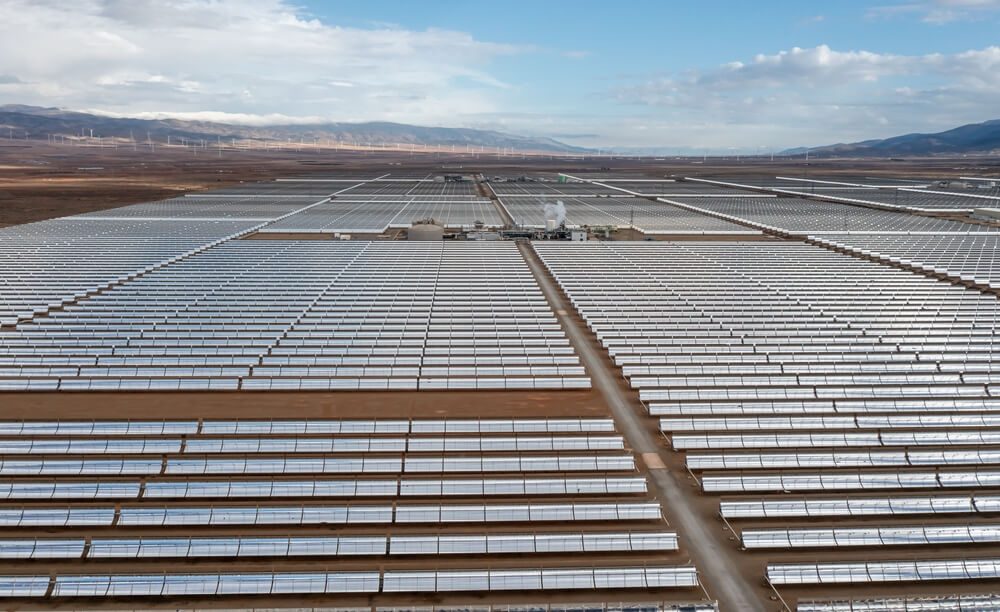 Spain and Portugal show what national-level pilot schemes can achieve: During its sun-soaked daytime hours, the Iberian Peninsula generates more power than it needs
At the same time, Spain and Portugal show what national-level pilot schemes can achieve: During its sun-soaked daytime hours, the Iberian Peninsula generates more power than it needs.
True, enhanced inter-connectors between the Iberian Peninsula and France could give other European consumers more access to abundant, cheap electricity.
But France has objected to such arrangements, and not just because it wants to protect its nuclear plants from Spanish competition.
During the nighttime hours, especially when the wind is not blowing, French nuclear plants (which reliably generate power around the clock) might be called on to balance the Iberian grid, whose fragility was laid bare by a blackout last year.
Although battery storage has become an increasingly promising solution to the intermittency problem, the costs and timelines for building such infrastructure remain unclear.
Balance between economic and political prudence
Ultimately, it seems utopian to think that European national governments could agree on fair, politically acceptable cost-sharing across European energy markets.
The energy conundrum casts doubt on the claim that “more Europe” is a silver-bullet solution to the continent’s competitiveness challenges. Sometimes less is more.
If each country is tasked with executing its own energy transition, governments will be properly incentivized to deliver low-carbon, low-cost electricity, and those with the most promising models will attract the most investment and high-value employment.
Europe must strike a careful balance between economic and political prudence
A good analogy is the idea of “competing currencies,” which the UK offered as a counterproposal to the monetary union promoted by France in 1990.
The level playing field required for effective competition would be secured at the EU level through rigorous carbon pricing.
This price signal would then prevent countries’ energy policies from undermining common goals, thus ensuring that its accommodation of political constraints does not become a hostage to zero-sum nationalism.
As always, Europe must strike a careful balance between economic and political prudence.
Brigitte Granville is Professor of International Economics and Economic Policy at Queen Mary University of London.
