The president of the European Council, António Costa, proposed that part of the next European Union budget, covering the period from 2028 to 2034, should be financed by a tax on the income of large digital companies.
His aim is to limit the growth of payments from national budgets precisely when the Union needs to begin repaying the principal of the debt it incurred from 2021 to recover from the pandemic.
Under his proposal, member states would contribute an average of 0.82 per cent of gross national income annually to the EU budget, instead of the current 0.80 per cent. Leaders will discuss the proposal on 26–27 November.
The European Commission proposed a common tax on digital services in 2018, but the member states did not reach agreement at the time, and Costa is now returning the proposal to the negotiating table.
The problem lies in the timetable, because the Union will start repaying the debt in 2028, while revenue from the tax can arrive only once all members have approved it.
If the first instalment falls due before the first tax receipts, governments will have to decide who pays the difference.
The debt repayment has a deadline; the tax does not yet
According to Costa’s draft, the tax would amount to 3 per cent of net income from internet advertising, from the intermediation of digital platforms between sellers and buyers and from the commercial use of user data.
It would be paid by companies with more than €750 million in annual worldwide turnover and more than €50 million in revenue from digital services in the EU.
Companies would pay tax on revenue from adverts sold to European customers, which would allow the Union to tax part of their business even when they declare profits outside the EU.
Costa calls on the member states to agree the collection rules during 2027. Under item 141 of the draft, tax revenue would start to flow into the EU budget on 1 January of the year following the year in which the member states begin applying those rules.
If collection were to begin in 2028, the first receipts would reach the Union budget in 2029, but the start date for collection has not yet been set
If collection were to begin in 2028, the first receipts would reach the Union budget in 2029, but the start date for collection has not yet been set.
In addition to the rules on the tax itself, governments must also adopt a decision stating that this revenue belongs to the EU budget.
Article 311 of the Treaty on the Functioning of the European Union stipulates that the Council takes this decision unanimously, after consulting the European Parliament, and that each country then approves it in accordance with its own constitutional rules.
Leaders at the summit can agree to continue negotiations on the tax, but before the first payment they must adopt two decisions: one on collection and one on whether the money belongs to the Union.
The tax would only cover a quarter of the instalment
Costa estimates that the five proposed new sources, together with the existing ones, would bring in about €60 billion annually.
How much the digital tax alone would raise depends on what is being taxed. In 2018, the Commission estimated that a 3 per cent tax on the services proposed at the time would yield about €5 billion a year.
An analysis prepared for the European Parliament estimates that applying the same rate to a much wider range of services, also including online sales of goods, digital media and rental of computing capacity over the internet, could bring in €25.7 billion in 2028.
Costa’s proposal by type of service is closer to the Commission’s 2018 model, but eight years of growth in digital commerce and advertising have passed since then, and governments have good reason to seek a fresh assessment.
Five billion euros per year would cover only a quarter of the average annual instalment of the recovery debt envisaged in Costa’s draft, and only from the year in which the tax starts to generate revenue.
According to Costa’s proposal, the seven-year EU budget would amount to around €1,583 billion at 2025 prices.
More money is earmarked for defence and competitiveness than in the current budget, but less than Ireland, which currently holds the presidency of the Union, proposed in October.
There is also less funding for aid to, and cooperation with, countries outside the EU. Governments seeking even greater savings should say which programmes they want to cut.
Under Costa’s proposal, €140.4 billion at 2025 prices would be set aside for debt repayment related to pandemic recovery over the next seven years
Under Costa’s proposal, €140.4 billion at 2025 prices would be set aside for debt repayment related to pandemic recovery over the next seven years, instead of the €149.3 billion proposed by the Commission.
Slower repayment would leave more money for defence and research, but some of the debt would be carried over into later budgets.
Another option is for members to pay more or cut other spending, and they must decide before the new budget takes effect in 2028.
Today, each member pays into the EU budget in proportion to the size of its economy, and the digital tax would be levied where the platforms make money.
A country where people buy a lot online would receive only a small reduction in its payments to the EU budget, but the platforms could pass part of the tax on to its citizens and businesses: to companies that advertise online, to businesses that sell through the platforms and, via higher prices, to customers.
For some members, the budgetary benefit could be smaller than the cost borne by their companies and citizens.
German Chancellor Friedrich Merz regarded Costa’s proposal as a step forward but still considered the budget too high.
He called for all 27 member states to participate in multi-year support for Ukraine but did not mention the digital tax.
For Germany, the largest contributor to the EU budget, the tax would mean a smaller payment but also the risk that Washington would retaliate with tariffs on European goods, and Germany, as the largest European exporter to the US, would suffer the most damage.
Paris already collects the revenue that Brussels is negotiating
France raised about €756 million from its own tax on digital services in 2024, according to an analysis prepared for the European Parliament.
The French presidency announced on 21 November that Costa’s budget, in its current form, cannot serve as the basis for an agreement, primarily because it allocates too little money to farmers’ incomes.
That comment applies to the entire budget, and Paris’s stance on the tax will depend on what happens to the money it already collects.
If a common tax replaces the French one, Paris will weigh the loss of domestic revenue against what it would save in contributions to the EU budget.
If both remain, governments will have to explain how they will prevent the same income from being taxed twice.
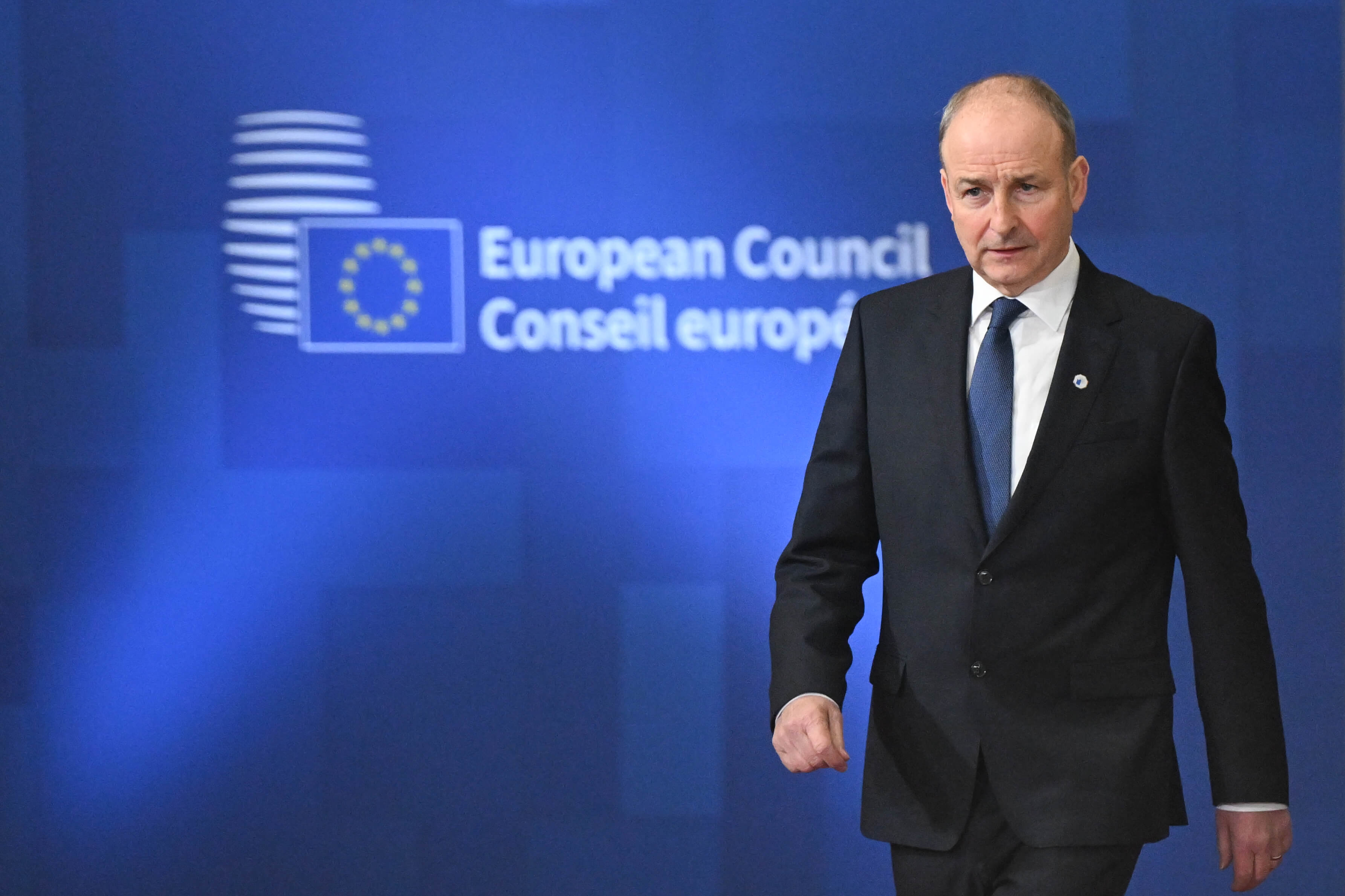 Irish Prime Minister Micheál Martin has spoken out against a common digital tax, arguing that any such changes should be negotiated at an international level
Irish Prime Minister Micheál Martin, whose country hosts the European headquarters of several major US technology companies, has spoken out against a common digital tax, arguing that any such changes should be negotiated at an international level and that a unilateral move by the Union could deter investment.
Ireland currently holds the presidency of the Council of the EU and in October proposed a draft budget, which Costa has now further reduced.
Dublin can negotiate the entire budget while at the same time rejecting one of the proposed sources of funding.
For a business that sells goods through a platform, the cost of the service is also important.
The tax would be paid by a large company, but it could pass some of the cost on to clients by raising the price of adverts or brokerage commissions.
A business that can easily switch to a competitor will resist price increases more readily than one for which a single platform provides access to customers.
Governments that tax technology companies should also monitor how much those companies subsequently charge European firms.
In a February 2025 presidential memorandum, Washington signalled that it was considering trade measures in response to foreign digital taxes it regards as discriminatory.
In June 2025, Canada suspended tax collection ahead of the first payment, stating that it wanted to continue trade negotiations with the US.
Since the new EU tax requires the consent of all member states, Washington only needs to persuade one government that US tariffs would cost it more than it would save in payments to the EU budget.
Defence pays the price of European delay
At the summit, leaders are more likely to agree to continue work on the digital tax than to approve advance budgeting of that revenue.
Countries that pay more into the EU budget than they receive from it have grounds to support the search for new revenue, while France and other countries that already tax platforms have grounds to reject a solution that would deprive them of their own revenue.
Until that difference is resolved, the agreement to continue negotiations says little about how much each member will ultimately pay.
The responsible solution is for governments at the summit to agree how much they are prepared to contribute without a digital tax
If governments include a tax in the 2028 budget that has not yet been adopted, they will have to cover the shortfall with higher contributions, spending cuts or slower debt repayments.
Defence and competitiveness will be the first to be affected, even though the funding for them in Costa’s proposal is already lower than in the Irish proposal.
The responsible solution is for governments at the summit to agree how much they are prepared to contribute without a digital tax, which programmes to protect with that money, and that tax revenue, when it starts to arrive, will reduce their contributions.
Without such an agreement, the cost will be borne by the very programmes for which the new revenue was sought, or by EU budgets after 2034, which would have to repay a large share of the common debt incurred for recovery from the pandemic.
