The European Parliament invited the Council of the EU to consider sanctions against individuals and companies that, by implementing the maritime agreement between Turkey and Libya, would violate the maritime rights of a member state of the Union.
It called on the European Commission to safeguard the construction of the submarine power cable between the Greek island of Crete and Cyprus, for which the Union has approved €657 million.
Ankara rejected the resolution on the same day. In early November, Turkey had already challenged the right of a French ship to examine the seabed along part of the route without its consent.
When the ship laying the cable reaches that section, it will be crucial for the contractor to know who guarantees that it can continue the work and who pays if the work is halted.
Turkey claims that part of the route runs over its continental shelf. In international law, this term refers to the seabed along a country’s coast, over which only that country has the right to explore and exploit oil, gas and other natural resources.
In a 2019 agreement, Ankara defined the boundary of that strip towards Libya and submitted its coordinates to the UN on 18 March 2020. Greece maintains that this line ignores the rights that belong to Crete as an island, and the EU refuses to allow an agreement between two states to determine the rights of a third.
For the contractor, this means that Greece issues the permit for works between Crete and Cyprus, while Turkey seeks to require its consent for part of the route.
Ankara no longer has to choose between Tripoli and Haftar
A day before the vote in the European Parliament, the Libyan state news agency announced that the law confirming the agreement with Turkey had been published in the official gazette.
The parliament based in eastern Libya had voted on the agreement on 20 October 2026, almost seven years after it was signed by the then government in Tripoli.
At that time, the forces of Khalifa Haftar, the commander who controls the east of the country, were trying to capture Tripoli, which was being defended with Turkish military assistance. In contesting the agreement, Greece had until now been able to point out that it was not accepted even by the parliament in eastern Libya, which had rejected it for years. That parliament has now ratified it.
Ankara held talks with both Libyan sides within four days. Turkish Foreign Minister Hakan Fidan met Prime Minister Abdulhamid Dbeibah in Tripoli on 21 November.
On 25 November, Haftar met in Ankara with the Turkish ministers of foreign affairs, defence and energy, Chief of the General Staff Selçuk Bayraktaroğlu and Director of Intelligence İbrahim Kalın.
Haftar was accompanied by his sons: Saddam, his deputy in command; Khaled, the chief of staff; and Belkasim, who heads the Libyan Development and Reconstruction Fund.
Greece signed contracts with the US company Chevron and the Greek company Hellenic Energy for the exploration of four blocks
The Turkish announcement lists only the participants, with no information on the topics discussed or any possible agreements. From the composition of the delegations, however, it is clear that those responsible for the army, intelligence, energy, and the country’s reconstruction sat at the same table.
The consent of both Libyan parties gives Turkey greater political certainty in its dealings with Libya, while Greece maintains its legal objection. Libya’s National Oil Corporation and Turkey’s state oil company, TPAO, signed a memorandum in June 2025 to explore four offshore areas.
In February 2026, Greece signed contracts with the US company Chevron and the Greek company Hellenic Energy for the exploration of four blocks, two of which lie south of Crete.
From the published description of the Turkish-Libyan deal, it is not possible to determine whether these areas overlap with the Greek blocks. Only the coordinates in the permits for specific works will show this.
The value of the licence has already been tested at sea
According to a resolution of the European Parliament, Turkey sent warships in July 2024 to disrupt the Italian ship Ievoli Relume, which was surveying the seabed for a cable route off the Greek island of Kasos, east of Crete.
Parliament considers the area part of Greece’s exclusive economic zone, a strip of sea where only Greece has the right to exploit natural resources. After diplomatic talks, the ship completed its scheduled work off Kasos, but the survey along the rest of the route did not continue.
On 15 October, the Greek government announced that a contractor acting on behalf of the project owner had requested permission to proceed. The French-flagged ship was put to sea in November, more than two years after the Kasos incident.
On the same day that Greece issued the permit, Turkey demanded that its own approval be sought for part of the works. Greek Minister of Foreign Affairs Giorgos Gerapetritis stated on 14 November that the ship was operating in international waters and solely on the basis of a Greek licence.
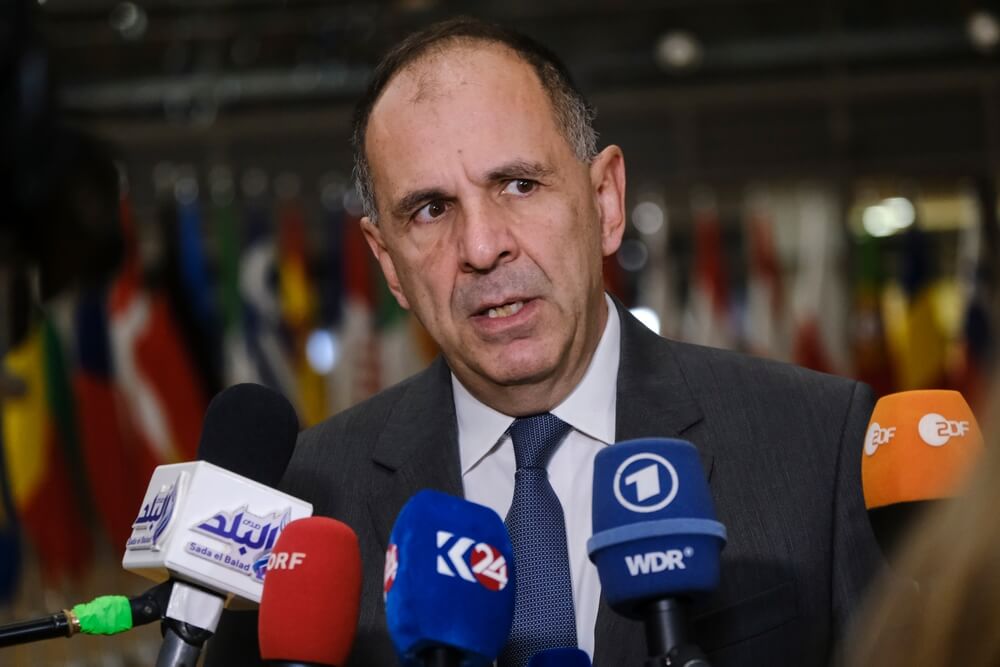 The dispute concerns two questions at the same time: who owns the seabed along that part of the route, and whether the examination carried out before laying the cable is scientific research or an integral part of the laying - Giorgos Gerapetritis
The UN Convention on the Law of the Sea, the basic international treaty governing the use of the sea, allows all states to lay cables on the seabed of another state, subject to restrictions protecting that state’s rights. For scientific research in the same area, however, the consent of the state that holds those rights is required.
By describing the examination of the route as illegal scientific research, Ankara classifies it precisely among the activities for which it can demand its own approval. Turkey has not acceded to the Convention and bases its demand on rules it regards as a generally accepted part of international law of the sea.
Greece rejects the Turkish demand, so the dispute concerns two questions at the same time: who owns the seabed along that part of the route, and whether the examination carried out before laying the cable is scientific research or an integral part of the laying.
Greece and Cyprus, as is customary before offshore works, issued navigation warnings. These official notices inform ships in the area that a seabed survey vessel is operating there and that they should keep their distance. Turkey issued its own notice in November declaring those warnings invalid.
The captain of the survey ship thus faces two conflicting official messages concerning the same area. According to the Greek notice, the vessel is operating under a valid permit; according to the Turkish notice, it does not have approval for this work.
In September, the Greek foreign minister rejected the claim that the route had been changed because of Turkish objections. So far, neither side has publicly proposed an alternative route that would take the cable out of the area claimed by Ankara.
For Turkey, it is sufficient to delay work on one section, while Cyprus benefits only from a connection completed along its entire length. Only then would Cyprus be able to import electricity from the European grid, when domestic production is insufficient or expensive.
While work on the disputed section is on hold, the money invested in other parts of the route does not yet give Cyprus access to the European electricity market.
The contracts do not specify who pays for the ship that waits
In August, the Greek transmission grid operator, a cable construction company and cable manufacturer Nexans signed an agreement on seabed testing. A separate agreement provides for French infrastructure investor Meridiam to become the majority owner of the company that will build the cable.
In October, Nexans announced that it was coordinating preparations for the work with the project manager and with the Greek and Cypriot authorities. None of these announcements shows who bears the cost if the work is interrupted by a diplomatic dispute, or who decides for the contractor whether to stay on the route or withdraw.
The published financing documents do not state who pays for the ship and crew while they wait at sea, nor who pays for their return to the route
Construction is estimated at €1.9 billion, so EU grants cover about a third of the cost. In May, Greece and Cyprus were awaiting a new assessment by the European Investment Bank because there was a possibility that the total bill would rise. The published financing documents do not state who pays for the ship and crew while they wait at sea, nor who pays for their return to the route.
Meridiam agreed to become the majority owner in August 2026, two years after the Kasos incident, at a time when it was already known that Turkey could challenge the works.
Every month of downtime is a month in which the cable does not generate income from the transmission of electricity, while construction costs and interest on borrowed money continue to accrue.
The Council has extended measures that currently do not affect anyone
In 2019, the EU Council introduced the possibility of sanctions in response to the drilling that Turkey was then carrying out in search of gas in the sea around Cyprus, in areas that Cyprus considers its exclusive economic zone.
In 2020, two managers of the Turkish state oil company TPAO were added to the list and in 2025 they were removed, so since then there has been no name on it. On 23 November, the Council extended the validity of those measures until 30 November 2027, changing only the date, so the sanctions still exist only on paper.
New sanctions, as Parliament is now requesting, require the consent of all governments in the Council. Parliament has specifically asked the European Commission to check whether the money that the EU gives to Turkey and Libya for joint programmes can end up in projects that implement the Turkish-Libyan agreement to the detriment of some member states.
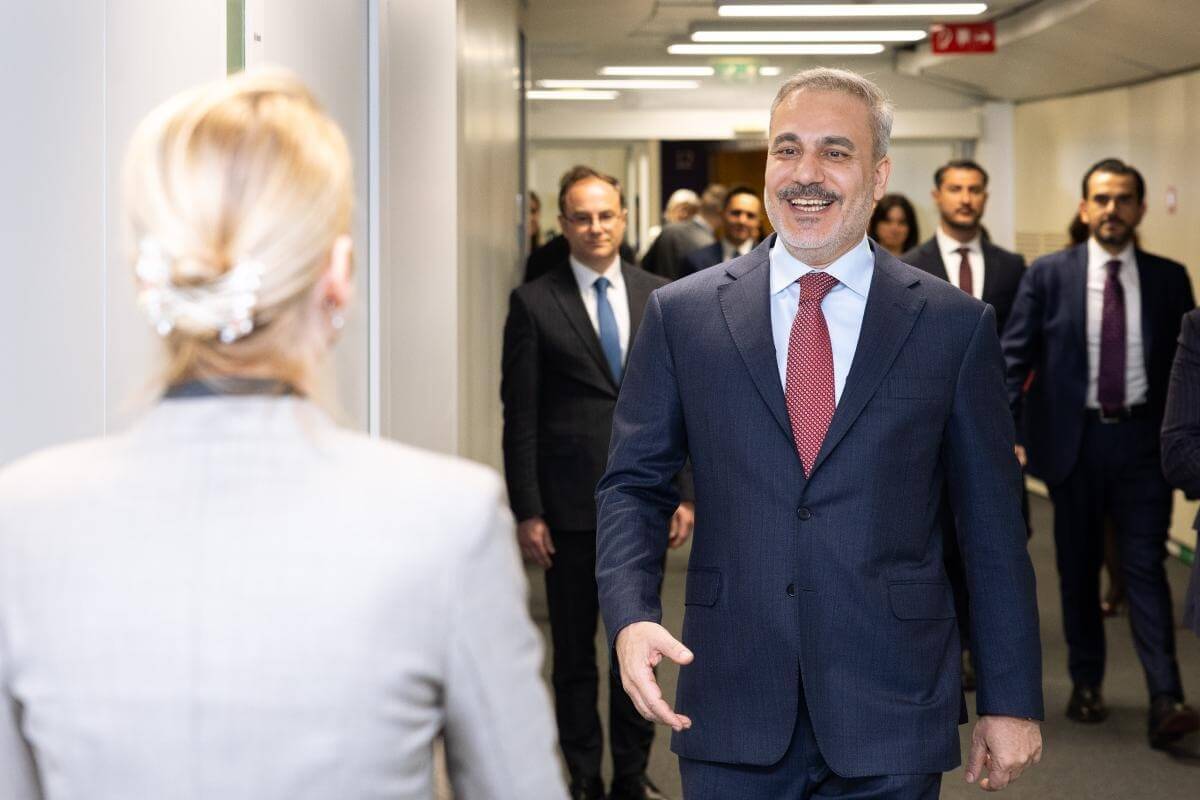 Greece and Cyprus, with the support of the European Commission, should determine before laying the cable begins who will speak to Ankara if the work is interrupted - Hakan Fidan
Companies from two EU member states are already operating in Libya with the Turkish TPAO. Spain’s Repsol and TPAO each hold 40% in the consortium that, in February 2026, received the right to explore for oil and gas in an area of the Libyan Sea about 140 km north-west of Benghazi, and Hungary’s MOL holds the remaining 20%.
That deal does not stem from the Turkish-Libyan maritime agreement. Sanctions that included broader business with Turkish companies in Libya would, however, also affect Repsol and MOL. The governments of Spain and Hungary will take this into account when they decide on sanctions, and their introduction requires the consent of both.
Greece and Cyprus, with the support of the European Commission, should determine before laying the cable begins who will speak to Ankara if the work is interrupted, who will give instructions to the contractor and who will pay for any delay.
There is also a legal framework for a temporary agreement with Turkey. Article 83 of the Convention on the Law of the Sea obliges signatory states, until they determine the limit of the continental shelf, to seek a practical provisional agreement that does not prejudice the final boundary.
Turkey has not acceded to the Convention and does not recognise the Republic of Cyprus, so in practice any such agreement would probably have to be concluded between Athens and Ankara. It would regulate how the works are carried out, without either side accepting the other's position on the border.
There is the greatest scope for such a discussion while the ship and crew are not yet in the disputed section. Without such an agreement, negotiations on any work stoppage can easily turn into negotiations on the border itself.
In the coming months, the dispute is likely to centre on individual approvals for the works, while agreement on the maritime border remains a distant prospect.
Ankara has the support of both Libyan sides, European measures over Turkish drilling in the Mediterranean are not affecting anyone so far, and Greece and Cyprus have not announced who will take responsibility if the work stops.
The first real indicator will be the start of laying the cable in the section that Ankara claims as its own. Until then, Turkey can delay the deadline for Cyprus’s initial connection to the European network by challenging the works directly, without sending a single warship.
