Libya’s House of Representatives, the parliament elected in 2014 that sits in the east of the country and backs Commander Khalifa Haftar, unanimously approved a maritime memorandum with Turkey on 20 October that it had rejected six years earlier. MPs also revoked the decision to sever political relations with Ankara.
The memorandum was signed in 2019 by Turkey and the government of Fayez al-Sarraj in Tripoli, against which Haftar was then waging war. With its military aid, Ankara enabled Sarraj’s forces to defend the capital.
The agreement is now backed by both of Libya’s opposing political centres.
For Greece, this is the most serious diplomatic setback since the signing of the memorandum.
The long-serving Speaker of the Libyan parliament, Aguila Saleh, stated last December that the agreement was legally void because Sarraj’s government had not received the confidence of the House of Representatives and the memorandum had never been ratified by the assembly.
With the vote in Benghazi, the official opposition of Libya’s only elected national parliament has disappeared.
Athens still disputes the maritime boundary, citing international law, but can no longer invoke the Libyan parliament’s position that the agreement should be rejected.
Saleh’s departure paved the way for change
Two weeks before the vote, on 6 October, MPs removed Saleh after 12 years as head of parliament and elected Al-Salhin Abdulnabi al-Obeidi, who had previously led the parliamentary group for cooperation with Turkey.
Saleh contested his removal, but the deputies who voted for it had become dissatisfied with his leadership of the assembly.
Under the new leadership, the obstacle that had blocked approval of the memorandum for years has been removed.
Athens tried to prevent this development. Greek Foreign Minister Giorgos Gerapetritis visited Benghazi on 28 March 2026, met Khalifa Haftar and his sons, and stated that the eastern parliament should not approve the Turkish–Libyan memorandum.
Saddam Haftar, Haftar’s son and deputy commander, paid a return visit to Athens in June, but even then he did not promise to block ratification.
Seven months after Gerapetritis’s request, the parliament approved the agreement without a single vote against it.
Turkey gains access to the military and political leadership of the country’s east, while maintaining cooperation with the government of Abdul Hamid Dbeibeh in Tripoli
Ankara had been preparing its approach to eastern Libya for more than a year. Saddam Haftar discussed military cooperation in Turkey in April 2025, and Turkish intelligence chief İbrahim Kalın met Khalifa Haftar in Benghazi in August that year.
Foreign Minister Hakan Fidan visited Tripoli on 11 August 2026 and Benghazi the next day, where he spoke with Haftar, his sons Saddam and Belgacem, and the then Speaker of Parliament, Saleh.
For Haftar, relations with Ankara broaden his circle of international partners, adding to existing ties with Egypt, Russia and the UAE.
In return, Turkey gains access to the military and political leadership of the country’s east, while maintaining cooperation with the government of Abdul Hamid Dbeibeh in Tripoli.
This position will become even more valuable if the two Libyan authorities unite.
Washington supports negotiations between the rival authorities, and US Secretary of State Marco Rubio met Saddam Haftar in June.
Media reports have also mentioned an American proposal in which Haftar’s family would play a significant role in a future joint government.
Chevron’s blocks are already the subject of a Libyan protest
On 20 June 2025, Libya sent a formal note of protest to the United Nations regarding a Greek tender for oil and gas exploration south of Crete.
In the attached report, Libya’s National Oil Corporation stated that the blocks ‘South Crete 1’ and ‘South Crete 2’ together cover 23,300 square kilometres, and that more than 85 per cent of this area lies within the maritime zone claimed by Libya.
Libya asserts this claim unilaterally, and no international court has yet ruled on the boundary between the two states.
On 16 February 2026, Greece signed contracts with the American company Chevron and the Greek firm HELLENiQ Energy for those two blocks, along with two other areas south of the Peloponnese. Chevron is leading the exploration and holds a 70 per cent stake.
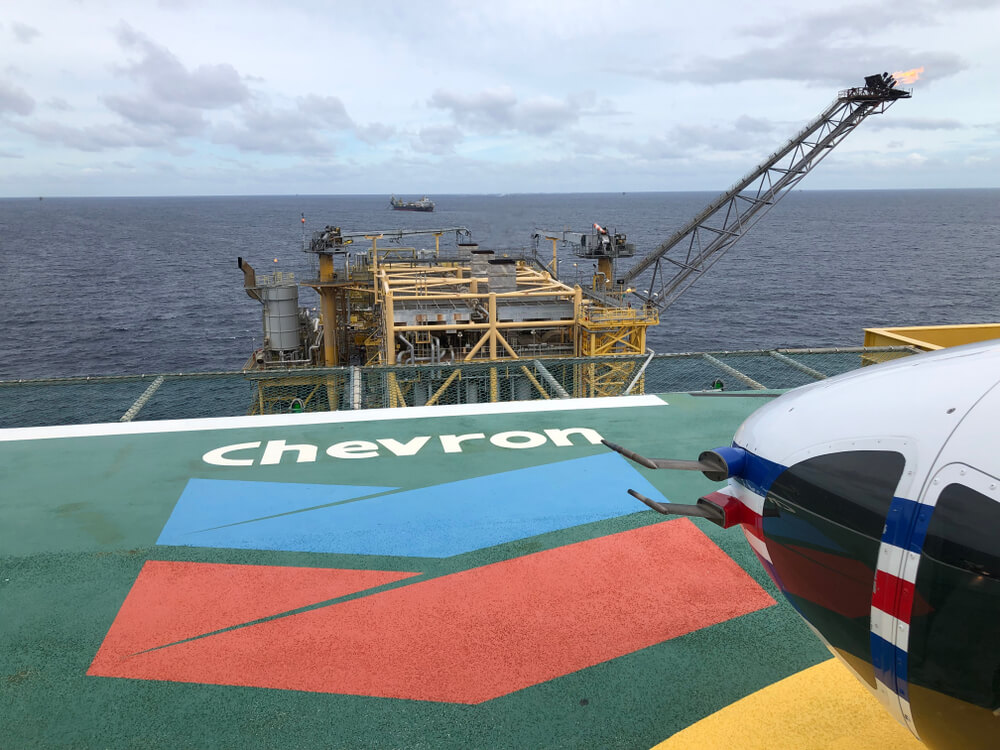 Chevron is present on both sides of the dispute and must maintain relations with both Athens and Tripoli
The four areas cover approximately 47,000 square kilometres. One of the largest American corporations has thus obtained rights to operate in a zone that Tripoli regards as partly Libyan; consequently, the dispute between the two nations has become its problem as well.
In a diplomatic note dated 24 August, Tripoli also protested against planned seabed surveys south of Crete and warned that continuing the work could jeopardise bilateral talks on delimitation.
Greece has already issued the permits, and Libya is now contesting them with the backing of both its centres of power.
Chevron also operates in Libya, where in February it secured rights to explore an onshore block in the Sirte Basin.
The Turkish state-owned company TPAO has separate agreements with the Libyan National Oil Corporation and in February obtained a participating interest in exploration blocks alongside Spain’s Repsol and Hungary’s MOL.
Chevron is therefore present on both sides of the dispute and must maintain relations with both Athens and Tripoli, while Turkey strengthens its position in Libya’s energy sector.
Cairo tries to save both partners
Ankara is also discussing military cooperation with Haftar’s forces. In July, Al Jazeera, citing sources familiar with the negotiations, reported that an agreement in principle had been reached on the construction of military facilities, surveillance systems and officer training in Turkey.
Neither Ankara nor Benghazi has officially confirmed the details, but the meetings held indicate that military relations have become an important part of the political rapprochement.
Cairo has not yet accepted the Turkish–Libyan maritime boundary
Egypt has long supported Haftar and, in 2020, signed an agreement with Greece on part of the maritime boundary.
Meanwhile, relations between Cairo and Ankara have improved, and Al Jazeera reported in July that the two countries were coordinating their actions in Libya and Sudan. Cairo has not yet publicly accepted the Turkish–Libyan maritime boundary.
On 20 October, Egyptian Foreign Minister Badr Abdelatty spoke with Gerapetritis specifically about Libya and security in the Eastern Mediterranean.
Cairo seeks to preserve relations with both partners, and the 2020 agreement with Athens continues to protect its maritime claims.
Crete defines the boundaries of the Greece-Turkey dispute
On 20 October, Greece reiterated that Turkey and Libya do not have opposite or adjacent coasts, because Crete lies between them, and that Ankara is ignoring the island’s rights to maritime zones.
Athens referred to the international law of the sea and to its agreements with Egypt and Italy.
In June 2025, the European Council restated its position that the Turkish–Libyan memorandum infringes the sovereign rights of third states and cannot produce legal consequences for them.
On the evening of 20 October, the President of the European Commission, Ursula von der Leyen, and the President of the European Council, António Costa, stated that they deeply regretted the decision of the Libyan parliament, described the memorandum as null and void, and expressed solidarity with Greece and Cyprus.
Ankara claims that islands cannot have as much influence on delimitation as Athens attributes to them
Ankara claims that islands cannot have as much influence on delimitation as Athens attributes to them.
The memorandum was registered with the UN, but Greece has not recognised the boundary it defines.
The dispute has already delayed the subsea electricity cable project between Greece and Cyprus.
Greece announced that applications had been submitted to continue seabed surveys, work required to lay a cable worth around €1.9 billion.
Part of the planned route passes through maritime areas that Ankara claims under the 2019 memorandum; Turkey therefore insists that any surveying must be agreed with it in advance. Greece maintains that Turkish permission is not required.
French firm Nexans is working on the project, which is backed by the EU and the US, meaning that any Turkish attempt to halt the work would directly challenge an initiative supported by two of Athens’ key Western allies.
Offshore work will test the impact of the Benghazi vote
In the coming months, Ankara will seek to translate the Benghazi decision into new energy deals and more formal military cooperation with Haftar’s forces.
TPAO already holds a contract to survey four offshore blocks, while talks on training and military infrastructure provide the basis for new agreements.
Cooperation with Turkey strengthens Haftar’s camp in negotiations over a future Libyan government, allowing Ankara to expand its influence without abandoning its partners in Tripoli.
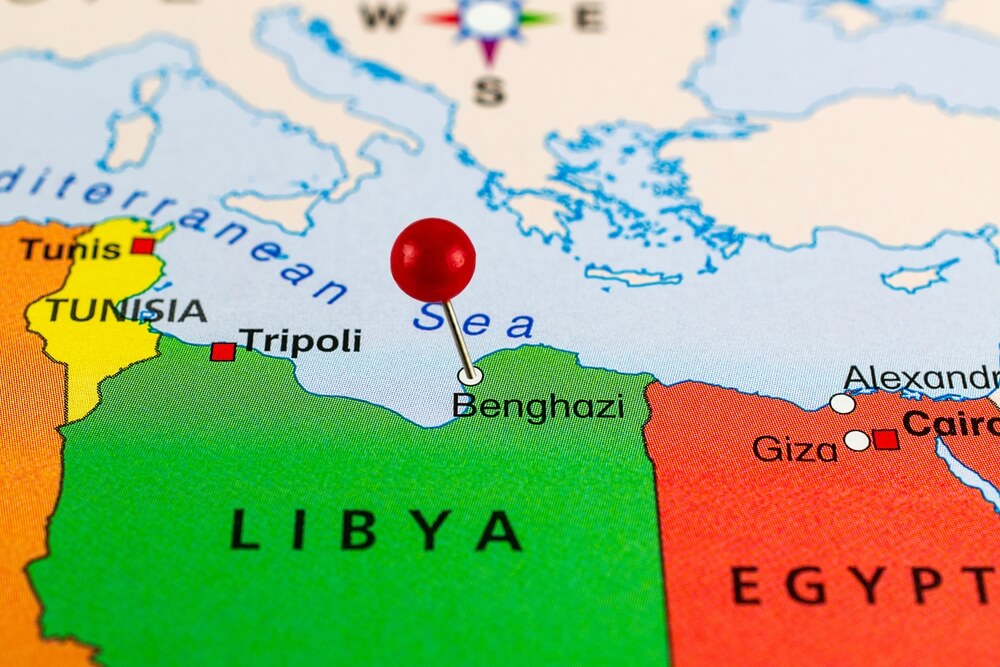 The first dispute will concern physical operations at sea. Chevron is due to begin exploration south of Crete, while a French vessel is scheduled to continue surveying the subsea cable route
.
In 2024, when the route was due to be mapped in waters east of Crete, Turkey deployed warships to the area and Greece postponed part of the work.
There was no confrontation at sea, but the survey of the disputed section of the route remains incomplete two years later.
Any subsequent vessel is likely to meet the same Turkish response, with Ankara now able to argue that its delimitation is backed by both Libyan centres of power.
Greece will retain EU backing in its legal challenge to the memorandum. Egypt will avoid taking sides, as cooperation with Ankara in Libya and Sudan is as vital to Cairo as its agreement with Athens.
Six years after the conflict, Turkey has secured at the negotiating table what it could not achieve on the battlefield.
The faction that took up arms against it in 2020 and refused the maritime pact has now formally endorsed it.
