On 10 November, the United States and Taiwan signed a memorandum launching a programme for American civil servants to work in Taiwanese institutions. After language and professional training, American officials will be able to spend up to a year in Taiwanese ministries, parliamentary offices or other organisations.
The aim is for Washington to better understand the state and political system of the island, whose defence it has supported for decades, even though it officially recognised the government in Beijing in 1979 and has no diplomatic relations with Taipei. The first participants have not yet been named.
The memorandum was signed at a time when defence cooperation between the two sides had been waiting on Washington for an unusually long period.
For years, the US administration and Congress had been calling on Taiwan to accelerate the strengthening of its military.
At the same time, the sale of US weapons worth approximately $14 billion had been on hold for months awaiting President Donald Trump’s decision, even though the Taiwanese parliament had already approved the funds for the purchase.
The exchange programme itself did not proceed quickly either, as almost four years passed between the passing of the law and the signing of the memorandum.
Objections to Taipei’s slowness are well founded when it comes to domestic weapons programmes, which the opposition majority in parliament cut and delayed this year, but the pace of strengthening Taiwan’s defences is increasingly dependent on deferred decisions in Washington.
Taiwan provided the funds; the White House hesitates
The roughly $14 billion package includes US Patriot missiles to destroy incoming missiles and aircraft, an automated air-defence command-and-control system, and a radar capable of tracking attacks from all directions simultaneously, unlike older systems that scan only part of the horizon.
For Taiwan, this represents far more than a diplomatic gesture towards Beijing. Taipei intends to integrate these assets into the “T-Dome”, a multi-layered anti-missile and anti-aircraft defence network currently under development.
How early radars track threats, how rapidly command nodes share data, and whether interceptors are deployed in time will determine whether Taiwan can withstand numerous strikes.
In September, US senators Elissa Slotkin and Thom Tillis, a Democrat and a Republican respectively, urged President Donald Trump to approve the sale, noting that Taiwan had already allocated the necessary funds in its May supplementary budget.
Although the parliamentary opposition in Taipei has delayed specific domestic procurement programmes, it bears no responsibility for the holdup of this package, having cleared the appropriations in the spring.
Trump described arms sales to Taiwan as potential leverage in broader bilateral negotiations
Following his May summit with Chinese President Xi Jinping in Beijing, Trump described arms sales to Taiwan as potential leverage in broader bilateral negotiations.
Secretary of State Marco Rubio noted in June that the proposal was still under review, while US defence officials have referred to inventory audits to ensure domestic stockpiles can support potential contingencies involving Iran.
By late October, policymakers in Washington were increasingly discussing proposals to divide the package into several smaller sales. Military cooperation with Taiwan has not ground to a halt – Washington approved a separate package worth approximately $11 billion last December – yet a final ruling on the new sale is still pending.
Any delay in approval extends lead times throughout the procurement chain, from contract finalisation and industrial manufacturing to logistics, crew training and system integration.
Even if the White House authorises the full consignment, Taiwan’s air defence network will not see operational benefits until the entire pipeline has been delivered, granting Beijing additional strategic leeway for its own military expansion.
The opposition controls the money, Washington the weapons
President Lai Ching-te of the Democratic Progressive Party does not have a parliamentary majority. The opposition Kuomintang, a party more open to dialogue with Beijing, together with the smaller Taiwan People’s Party, decides on defence funding.
In May, they cut the government’s proposed special military budget from approximately $40 billion to $25 billion and removed part of the domestic weapons projects, including drones. US officials criticised the decision, and the Taiwanese government warned that planned deadlines would be jeopardised.
In August, however, parliament retained the full NT$63.4 billion (about $1.9 billion) earmarked for drones in the regular budget. It then rejected the government’s special six-year drone plan of about $6.4 billion and passed its own, worth about $7.3 billion, funded through annual budgets.
The government opposed this, arguing that manufacturers can hardly sign multi-year contracts if the money depends on an annual vote, while the opposition argued that the annual budget gives lawmakers better control of spending. Disputes over funding and oversight can delay projects even when all parties agree they are necessary.
At the beginning of November, the government sent an additional request to parliament for approximately $18.5 billion, of which about $4.4 billion was for defence, and on 3 November deputies referred it to committees.
Taipei argued, cut and delayed this year, but ultimately made a decision on defence funding each time
A day later, the relevant committee unblocked funding for 74 items in the defence budget, but several large programmes remained unresolved, including the procurement of the American NASAMS anti-aircraft system.
Opposition lawmaker Ma Wen-chun explained that Washington has not yet sent Taiwan an official offer specifying prices and terms for part of the American weapons, and without it Taipei cannot sign the contract, release the funds or begin deliveries.
Both sides are late with these purchases, because the Taiwanese parliament is withholding the money, and Washington has not yet prepared the documents without which the purchase cannot begin.
In Washington, pressure on Taiwan comes from Congress and the military leadership, while the decision on the new package rests with the White House.
Congress can demand faster investment and expand cooperation through legislation, but it cannot approve sales in place of the president.
Two conflicting American messages reach Taipei: one that defence needs to be urgently strengthened, and another that it is not known when some of the most important systems will even be available for purchase.
Taipei argued, cut and delayed this year, but ultimately made a decision on defence funding each time. Washington has not approved any new major arms sales to Taiwan since December, and part of what lawmakers in Taipei are disputing depends on offers that have yet to arrive from Washington.
In terms of how decisions are actually made, Washington has no reason to blame Taipei for the slow pace this autumn.
Senator, Rubio was in a hurry; as Secretary of State, he is waiting
The exchange programme shows the same problem on a smaller scale. Senators Ed Markey and Marco Rubio proposed it in 2021, and Congress wrote it into law in December 2022.
In May 2024, the two, along with a group of senators from both parties, wrote to the then secretary of state, Antony Blinken, demanding that the deal with Taiwan be completed without delay so that the first trainees could arrive by the end of that year, and warning that the statutory deadlines for beginning negotiations on implementing the programme had already been missed.
Experience gained in Taiwanese institutions could be useful to officials who will manage relations with Taiwan on their return
The memorandum was not signed until 10 November 2026, almost two years after Rubio took over the State Department. As a senator, he hurried others; as secretary of state in June, he said the $14 billion arms package was still under consideration.
By law, participants can spend up to a year learning Mandarin Chinese and getting to know the region, followed by up to a year in Taiwanese institutions or related organisations. After returning, they must remain in US federal service for at least four years, or two if their programme is shorter.
The law bars them from intelligence work during the exchange, and the programme expires at the end of 2029 unless Congress extends it. Experience gained in Taiwanese institutions could be useful to officials who will manage relations with Taiwan on their return.
First Shenzhen, then the decision on weapons
Trump and Xi are expected to attend the Asia-Pacific Economic Cooperation (APEC) summit in Shenzhen, China, on 18 and 19 November, ten days before Taiwan’s local elections on 28 November.
It is highly likely that Trump will not approve the entire package before meeting Xi, as this would limit his room for manoeuvre, and he has so far delayed the decision despite pressure from both major US parties.
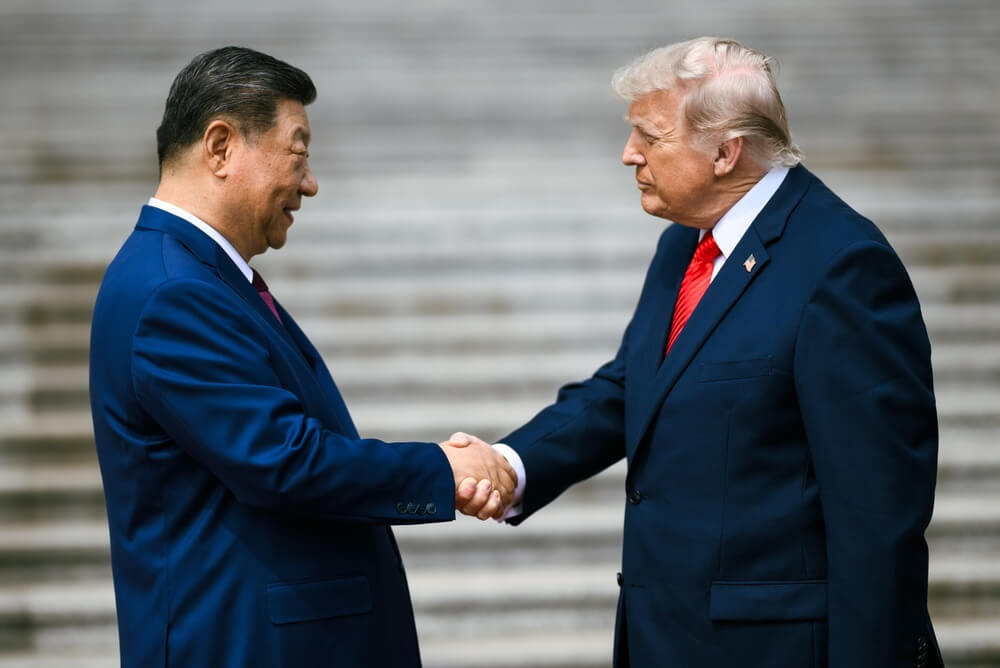 Trump and Xi are expected to attend the APEC summit in China ten days before Taiwan’s local elections on 28 November
After the summit, the most realistic outcome is that the White House will approve the package in stages. This would allow procurement to continue while avoiding the political burden of a single decision worth $14 billion.
Which systems Washington approves first will be crucial. Air defence only works when radars, command equipment and missiles are linked into a single system, and missiles that arrive without the other components cannot provide full protection.
Ahead of the local elections, the opposition Kuomintang party, which controls parliament with a smaller ally, will argue that there is no reason to rush into spending money before Washington decides what to sell to Taiwan.
President Lai’s government will respond that parliament must not become a new brake on the day the US decision is announced.
The dispute suits Beijing, which benefits from bickering between Taipei and Washington over deadlines that it would otherwise have to enforce through pressure.
For years, Washington has been asking Taipei to prove that it takes the Chinese threat seriously. This autumn, it owes that proof itself and will provide it only when it approves the weapons for which Taiwan has already allocated the money.
