On 17 July, North Korea strongly denounced the RIMPAC exercise in Hawaii as a US warfare exercise and announced a “chain of proportional countermeasures”.
In a statement by the state agency KCNA, the role of South Korea is particularly highlighted, as its navy is, for the first time, leading the multinational maritime component of the exercise.
Pyongyang has been criticising US–South Korean manoeuvres for decades, but this time it was responding to a shift in Seoul’s position within the wider alliance system.
South Korean ships are no longer present only as part of the national contingent; their admiral is now coordinating the naval forces of the countries taking part in the world’s largest international naval exercise.
This role does not give Seoul command of the entire RIMPAC exercise. The exercise is led by US Vice Admiral Jeffrey Jablon, commander of the Combined Task Force, while Rear Admiral Kim In-ho leads the Combined Forces Maritime Component.
The multinational leadership also includes Chilean Commodore Andrés Howard as deputy commander, Japanese Rear Admiral Takuo Kobayashi as vice-commander, and Canadian Brigadier-General J. S. Davis as head of the air component.
The precise division of responsibilities shows the true extent of South Korea’s progress. Seoul has not taken over the American role, but it has been given responsibilities normally entrusted to navies capable of planning, coordinating and conducting complex operations with a large number of partners.
A command that Seoul did not previously have
RIMPAC 2026 runs from 24 June to 31 July. It involves 30 countries, more than 30 surface ships, five submarines, 15 land contingents, more than 206 aircraft and about 30,000 members of the armed forces.
The exercise includes anti-submarine warfare, air defence, amphibious operations, missile and artillery fire, mine clearance, military medicine, search and rescue and natural disaster response. In such a configuration, commanding a naval component is an operational role, not a ceremonial honour.
South Korea is the first Asian country, and the fourth country after the United States, to be entrusted with this role. Its contingent includes the Aegis destroyer ROKS Jeongjo the Great, the frigate ROKS Daejeon, the amphibious assault ship ROKS Cheon Ja Bong, the submarine ROKS Dosan Ahn Changho, and P-8A maritime patrol aircraft.
Decisions on deployment, priorities, force protection, anti-submarine operations and the use of air support must pass through a command system
The choice of these platforms reflects Seoul’s most important tasks: early detection of missile and air threats, tracking submarines, protecting maritime routes and operating within a joint command system with US and other allied forces.
The value of this role is as evident at headquarters as it is at sea. The naval component commander must balance different rules of engagement, communications systems, logistical requirements and national constraints. He must turn a politically assembled coalition into a force capable of executing a common plan.
Decisions on deployment, priorities, force protection, anti-submarine operations and the use of air support must pass through a command system in which each nation retains control of its own units.
For a navy seeking greater influence within the US–South Korea alliance, such an arrangement represents a more serious demonstration of capability than the size of an individual ship or the number of strikes it conducts.
From participation to leading operations
South Korea’s rise within RIMPAC has been gradual. In 2022, Rear Admiral Sangmin Ahn commanded the combined amphibious task force for the first time. Two years later, a South Korean officer was appointed deputy commander of the naval component.
In 2026, Kim In-ho took over the entire component. This sequence shows that the current decision is not a gesture for a passing political moment. The US Navy has been testing the capabilities of South Korean staff for several cycles and has steadily increased the scope of their responsibilities.
Washington is thus changing how it uses alliances in the Indo-Pacific. US forces still retain overall command, key strategic capabilities, and most of the logistics infrastructure.
For Seoul, the change extends the military horizon far beyond the immediate defence of the Korean Peninsula
Partners, however, are increasingly tasked with managing specific parts of large operations. This distribution allows the United States to maintain control over the whole while increasing the number of states that can assume the burden of command during a regional crisis.
For Seoul, the change extends the military horizon far beyond the immediate defence of the Korean Peninsula. The South Korean Navy has been developing capabilities to protect trade routes, conduct anti-submarine operations and carry out longer-range missions for years.
RIMPAC allows it to connect those capabilities to operational planning involving the United States, Japan, Canada, Australia and European navies. South Korea’s position is therefore no longer assessed solely by its contribution to the defence of its own territory, but also by its ability to organise the joint action of countries whose security depends on the same maritime routes.
Greater independence within the American system
The exercise comes as President Lee Jae Myung seeks a faster transfer of wartime operational control from the United States to South Korea. The process is based on meeting agreed military conditions, and Seoul wants to complete it during Lee’s term, which runs until 2030.
The South Korean Ministry of Defence has designated 2026 as a key year to test the capabilities of the future combined command under South Korean leadership.
RIMPAC is not a formal part of that review, and commanding the naval component does not mean that Seoul has met the requirements for the transfer of operational control, but the connection still exists.
The decision to entrust a South Korean admiral with command of a multinational naval force shows confidence in the staff procedures, communication, planning and leadership that will be required in the future command structure on the Korean Peninsula.
Seoul thus gains justification for conducting complex operations, while Washington gains practical insight into how the South Korean command operates under pressure.
The transfer of operational control will not mark South Korea’s exit from the US system
There is also a limit to South Korean independence. Kim In-ho is in command within an exercise organised by the US Pacific Fleet, following a plan whose overall direction is determined by the US commander.
Greater responsibility therefore does not weaken the alliance; it makes it operationally more demanding and increases reliance on common procedures.
South Korea is gaining greater scope to deploy its forces, but at the same time it is moving deeper into a system in which its navy is expected to operate alongside the United States, Japan and other partners in crises that may extend beyond the Korean Peninsula.
This is an important political distinction. For years, Seoul has spoken of greater military independence while simultaneously developing its capabilities through American exercises, technology and command standards.
The transfer of operational control will therefore not mark South Korea’s exit from the US system, but it will change the distribution of responsibilities within that system. A South Korean general would assume a leadership role in the defence of the peninsula, while US forces would continue to provide key intelligence, air, naval and strategic capabilities.
The sea enters the centre of Korean deterrence
Pyongyang's reaction comes as North Korea ramps up its naval programme. At the end of June, the approximately 5,000-tonne destroyer Choe Hyon was commissioned.
In early July, Kim Jong Un oversaw the test launch of a strategic cruise missile and the testing of anti-ship, anti-submarine, anti-air and electronic systems on another destroyer, the Kang Kon. He ordered that ship to be put into service within two months and announced further construction of larger warships.
Open-source data does not yet confirm that North Korea possesses a reliable fleet capable of sustained long-distance operations. New ships must undergo rigorous checks on propulsion, sensors, weapons, crew training and logistical support.
South Korea’s role in RIMPAC has a broader significance for North Korea than simply another exercise
However, their importance should not be underestimated. Pyongyang is seeking to bring the navy, long the weakest branch of its armed forces, into the nuclear deterrent and raise the cost of allied action in the seas around the Korean Peninsula.
South Korea’s role in RIMPAC therefore has a broader significance for North Korea than simply another exercise. It shows that Seoul can integrate its own Aegis ships, submarines and patrol aircraft into a much larger network of allied capabilities.
Pyongyang can respond with new cruise missile tests, accelerated commissioning of destroyers, and more frequent exercises of naval systems. Such steps are likely to have limited operational value in the initial phase, but will increase pressure on South Korea to invest further in anti-submarine defence, early warning, and port protection.
After Hawaii comes a broader responsibility
The most likely follow-up will not be a rapid transfer of overall wartime command to Seoul. It is far more realistic for the United States to assign additional command posts to South Korean officers during the next major exercises, while the capabilities of the future combined command are tested separately and cautiously.
Washington will look for evidence that South Korea can conduct operations, provide logistics and make decisions within a multistate system. Seoul will use this experience to argue for greater influence in the alliance and to accelerate the process of gaining operational control.
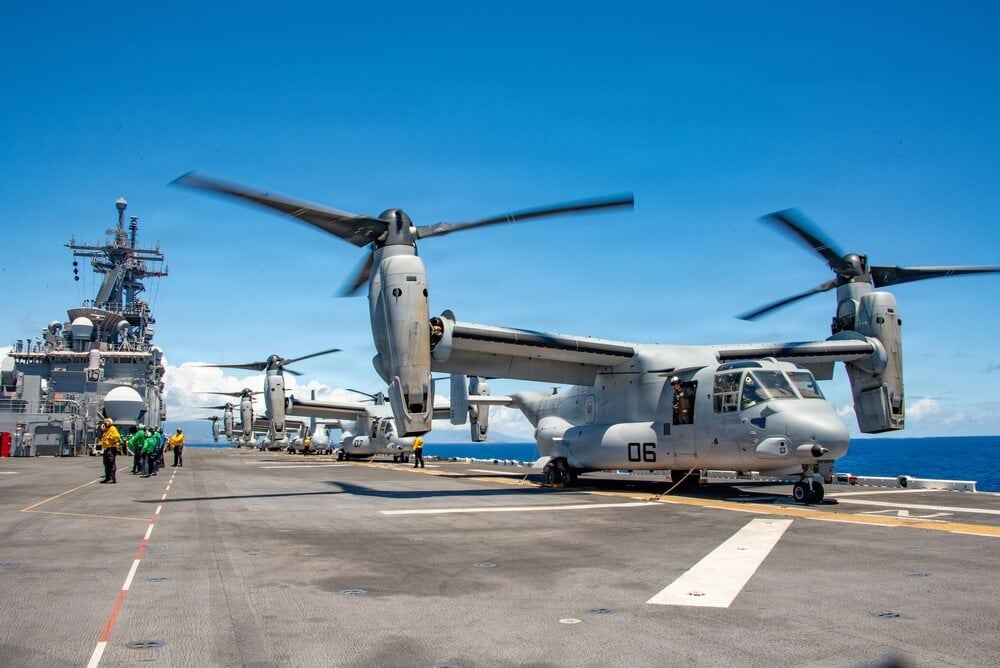 Washington will retain strategic control but will increasingly expect Seoul to plan operations, lead joint forces, and assume responsibility beyond the immediate area of the Korean Peninsula - RIMPAC 2026
These developments will bring the South Korean and Japanese militaries closer together at a practical level, even as the two countries’ political relations remain sensitive.
Joint command procedures, data sharing and anti-submarine operations will become more important than ceremonial declarations of cooperation.
Pyongyang will portray any such move as proof of the creation of a broader military bloc and will use it to justify its own naval and missile programmes.
Its response is likely to be seen at sea rather than at the negotiating table, through new cruise missile tests, accelerated destroyer outfitting and an increased naval presence in the state’s military propaganda.
RIMPAC 2026 indicated the direction in which the US–South Korea alliance will develop. Washington will retain strategic control but will increasingly expect Seoul to plan operations, lead joint forces, and assume responsibility beyond the immediate area of the Korean Peninsula.
That process will strengthen South Korea’s position within the alliance and speed up talks on transferring wartime operational control, but it will also narrow Seoul’s room to remain outside future crises in the Pacific.
This is why the command role in Hawaii is more important than the exercise itself: it shows that the United States is no longer preparing South Korea solely for defence against Pyongyang, but for a much broader military role in Asia.
The real test will come when Seoul must decide whether to make its forces available in a regional crisis that is not directly related to the defence of South Korea.
