UK prime minster-in-waiting Andy Burnham is betting on a transfer of powers to the regions to act as a driver of growth in an economy dominated by London and the southeast.
Burnham is on course to be anointed as Keir Starmer’s successor by the ruling Labour Party later this month. The former Greater Manchester mayor has meanwhile been promoting devolution as the signature policy of his approaching premiership.
Launching his unchallenged leadership bid last month, he pledged to redistribute power across the UK in an effort to “drive good growth in every postcode”.
Although the promise is countrywide, attention will inevitably focus on Burnham’s own north of England, a region that feels itself disproportionally blighted by decades of deindustrialisation and London-centric rule.
Hence the current revival of a historic debate on the so-called north-south divide in which northerners are routinely caricatured as earnest and put-upon toilers and southerners as a cosseted elite.
The origins of north-south divisions
George Orwell summed up the northern perspective ninety years ago when he wrote in The Road to Wigan Pier: “The Northerner has grit, he is grim, dour, plucky, warm-hearted and democratic; the Southerner is snobbish, effeminate and lazy – that at any rate is the theory.”
The challenge for Burnham, as for previous politicians who have tried to bridge the gap, is that the origins of north-south divisions predate modern politics and even the foundation of the state.
The seeds of the cultural, social and even political distinctions were planted long before the intrepid southerner Orwell ventured north.
Burnham’s plan sounds revolutionary until it’s recalled that the Romans tried something similar
Some historians date England’s divisions and the region’s decline to 1069 when the conquering King William I laid waste to the north and its inhabitants who were rebelling against the imposition of Norman rule.
But perhaps the north-south divide is older still.
Burnham’s plan to shift part of the prime ministerial office in London’s Downing Street to Manchester sounds revolutionary until it’s recalled that the Romans tried something similar. For a time they ruled Britannia from both Londinium and the northern provincial capital, now known as York.
Where the invisible border lies
The Roman strategy was to strengthen the colony’s defences against restless northern tribes. Will Burnham’s own strategy now placate those restless northerners who believe they have been left behind?
And do those northern whingers have a case? Some statistics suggest they do.
Research for the UK’s Institute of Fiscal Studies (IFS), published in 2020, found that the UK is one of the most geographically unequal countries in the developed world. Compared with 26 other developed countries, it ranked near the top of the league table on most measures of regional economic inequality.
That was the year after Boris Johnson marked his Conservative Party’s election victory with a pledge to boost economic performance outside of London and the southeast, to ‘level up’ across the country and to revive the fortunes of the UK’s left-behind towns and cities.
On a series of metrics, from income to employment, education and even life expectancy, the north continues to lag behind
Sound familiar? Johnson wasn’t the first – or last – politician to promise to rebuild the provinces, notably the north, with limited results.
On a series of metrics, from income to employment, education and even life expectancy, the north continues to lag behind.
A paper published by the IFS last year nevertheless cautioned that, while the north–south divide was evident, there was significant variation within regions. In other words, the north was also home to some of the better-off, while the prosperous south had its own pockets of deprivation.
One complication of the north-south controversy is that no one quite agrees on where the border lies.
Haughty Londoners like to joke that the north begins at Watford, just 20 miles outside the capital. A more serious consensus is that the invisible border stretches from the Irish Sea in the west to the eastern Humber Estuary.
The workshop of the world
The area’s heyday was the industrial revolution, which was to change the region, change the country and change the world.
The north not only emerged from humble beginnings to become the workshop of the world, it was also a birthplace of radical reform as towns such as Manchester grew.
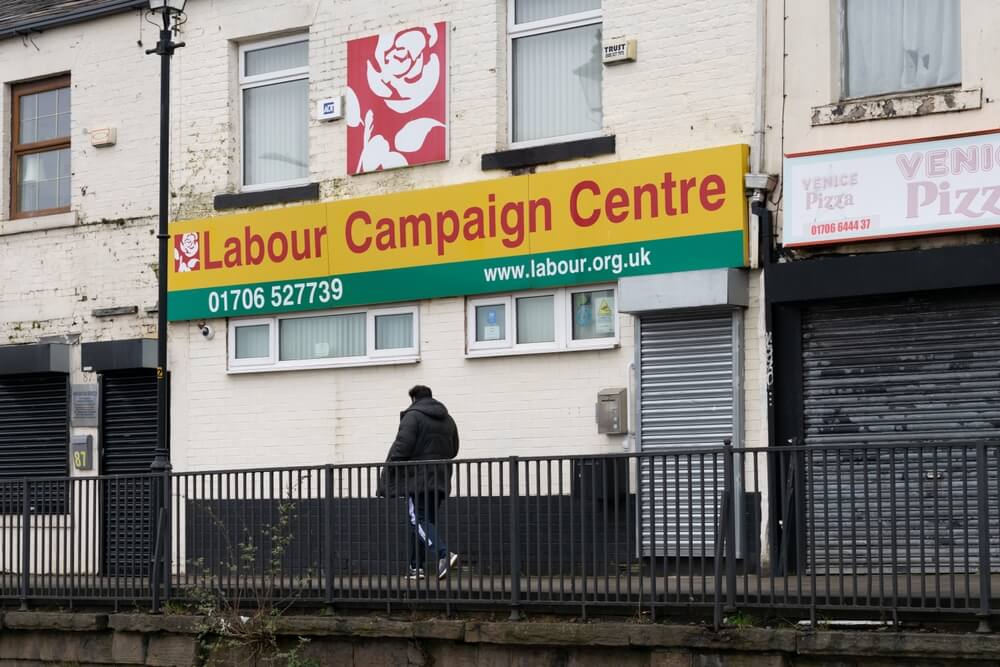 The north was to become a heartland of the nascent Labour movement and a reliable stronghold of the modern party
The north was to become a heartland of the nascent Labour movement and a reliable stronghold of the modern party. That began to change as a majority of its disgruntled voters backed an exit from Europe and many switched their allegiance to right-wing Reform.
Now Burnham wants them back in the Labour fold, which is perhaps a significant motive in his current focus on the region. The King of the North, as he has come to be called, at least has form, credited with reviving the fortunes of the city of which he was mayor.
Even liberal economists are sceptical, however, that he can restore the region’s capacities through devolution and state-aided reindustrialisation when so much of the UK’s earning capacity, from lucrative financial services to technological innovation, has shifted southwards.
A revival of a pre-modern model?
A backlash is already stirring among those who fear that the south’s wealth will be squandered on paying the north’s bills.
The Telegraph newspaper has already calculated that homeowners in the south face bills almost three times higher than the north under plans to reform the municipal tax system that would target properties in more affluent parts of the country.
Even some northerners have their doubts. Cumbrian-born Chris Blackhurst wrote in The Independent that Burnham should “do us a favour and dial down the Northern shtick”.
“There is deprivation all over Britain, just as there is wealth,” he wrote at the weekend. “Poor housing, health poverty, lack of job opportunities; ill-funded, crumbling, inadequate infrastructure – the list of issues that beset much of Britain do not just apply to a single area.”
Once Burnham is behind his prime ministerial desk his northern focus may be eclipsed by more pressing national and international issues
The Economist said Burnham’s “Manchesterism” had already created the phenomenon of the “chippy” southerner (translation: aggrieved, resentful, paranoid) who mirrored the perceived characteristics of the northerner.
The magazine concluded that “chippy southerners see devolution as little more than redistribution in disguise; a ruse for greedy northern bastards to snatch what they can.”
Once Burnham is behind his prime ministerial desk – or rather desks, as he will have a spare one in Manchester for at least one day a week – his northern focus may be eclipsed by more pressing national and international issues.
As for the future, devolution in principle has evident virtues. Scotland and Wales already have their own assemblies. Perhaps other regions might see a revival of a pre-modern model in which they largely ruled themselves.
Looking back to the distant past, why not an autonomous Northumberland or Cumbria to federate with their other British neighbours? Meanwhile, Londoners are only half-joking when they muse that their southern jewel would be better off as an independent city state.
