Career diplomats watching the latest instalment of the Peter Mandelson drama unfold in the British parliament this week might be forgiven for concluding that the weighty task of representing the country abroad is best left to professionals like them.
The UK’s ousted ambassador to Washington was hardly an amateur when it came to foreign affairs. The former MP, Labour minister and European Union commissioner spent decades cultivating his international connections.
But his chequered trajectory towards his country’s top diplomatic posting was also mixed with periods of private lobbying and wheeler-dealing. And it was one of those international connections, his long-term friendship with convicted American paedophile Jeffrey Epstein, that eventually led to his downfall.
Prime minister Keir Starmer’s decision to task such a controversial figure with massaging the ego of Donald Trump’s administration has once again returned to haunt him with the revelation that Mandelson had failed his security vetting.
Insisting that he had been kept in the dark by the since dismissed head of the Foreign Office, Olly Robbins, Starmer confessed to parliament this week that he should not have appointed the man known in British politics as the Prince of Darkness.
As part of his defence, Robbins this week told parliamentarians that there had been a strong expectation from Downing Street that Mandelson "needed to be in post and in America as quickly as humanly possible".
A dangerous trend in diplomatic appointments
The affair has inevitably focused attention on the possible consequences to Starmer’s troubled premiership. It also raises questions about what civil servants and academics regard as a growing politicisation of diplomacy.
In a trend that is by no means confined to the UK, key roles that would once have gone to career professionals are now assigned to political allies, former business cronies and high-profile former spin doctors such as Mandelson.
Although a tradition of political patronage in diplomatic appointments was most pronounced in the US, it was found to be spreading in other jurisdictions
In an article in the journal of Britain’s Royal Institute of International Affairs in 2024, months before Mandelson’s appointment, its academic authors lamented a politicisation of diplomacy that weakened the professionalism of the foreign service and arguably endangered the external relations of states.
Although a tradition of political patronage in diplomatic appointments was most pronounced in the US, it was found to be spreading in other jurisdictions.
Similar concerns were raised the same year when former senior diplomat Peter Ricketts, now a member of the House of Lords, reflected on the politicisation of the civil service in general.
He said a trend towards ministers wanting to pick the official they felt most comfortable with was a dangerous one. “You begin to lose the challenge that the civil service ought to represent,” he said in an interview.
Financial pressures on the Foreign Office
When it comes to the UK’s trained diplomatic corps, the challenge comes at a time when the Foreign Office is confronting other pressures, including financial ones.
The department is facing almost 2,000 redundancies, about a quarter of the workforce, as part of a four-year restructuring and cost-saving plan that critics say would undermine the UK’s response to future crises such as that now gripping the Middle East.
Trump weighed into the debate this week by posting that the appointment was a “really bad pick”
None of the pressures, however, account for Starmer’s choice of Mandelson to fill the crucial Washington post. In retrospect, he would have been better to leave the job in the safe hands of career diplomat Karen Pierce by extending the tenure of the UK’s first woman ambassador to the US capital.
There have even been suggestions that Pierce would have been the preferred choice of Donald Trump, given Mandelson’s past negative comments about the president. Trump weighed into the debate this week by posting that the appointment was a “really bad pick”.
Trump is, of course, no stranger to such partisan choices.
The further marginalisation of career diplomats
The appointment of non-diplomats to foreign posts rose even higher than the already routine 30 per cent in Trump’s first administration in what the American Foreign Service Association termed the further marginalisation of career diplomats.
The problems faced by some of his media, business and family appointees in adjusting to the norms of politics and diplomacy might serve as a warning to other leaders tempted to rely on partisan amateurs.
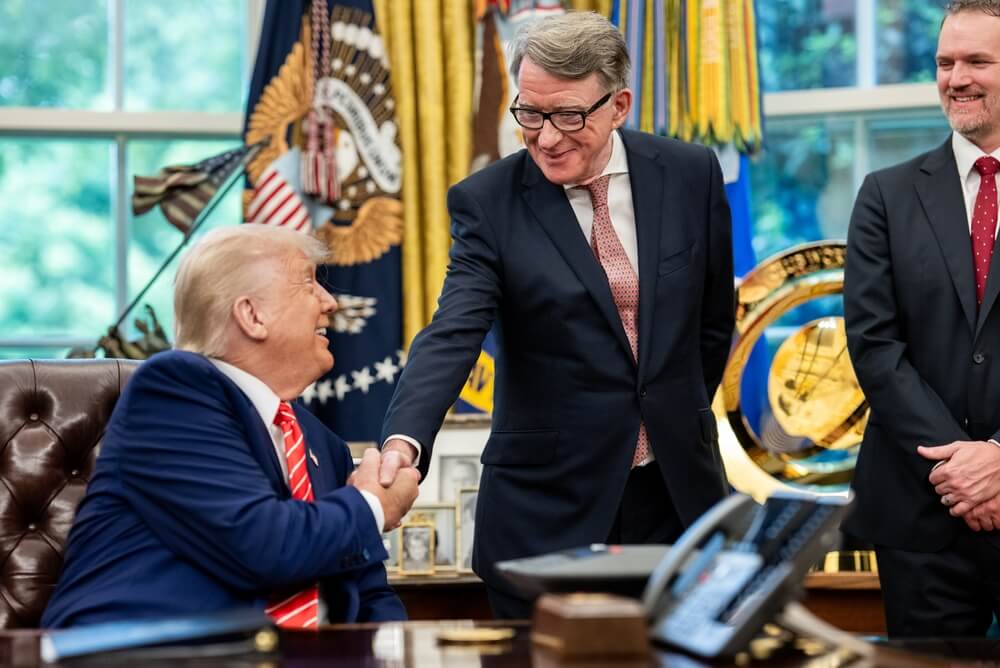 The Mandelson affair may reinforce the lesson for British politicians that the negative baggage such appointees might bring to the task of defending their country’s interests will often outweigh the perceived benefits
The Mandelson affair may reinforce the lesson for British politicians that the negative baggage such appointees might bring to the task of defending their country’s interests will often outweigh the perceived benefits.
Starmer appointed Mandelson at the urging of his then chief of staff, Morgan McSweeney, a fellow Labour fixer credited with masterminding Starmer’s takeover of the party and subsequent election victory.
McSweeney quit his post in February after publication of the Epstein papers revealed the full extent of Mandelson’s relationship with the late paedophile. However, an early test of whether the government had learned the lesson of the debacle came before his departure.
Stirrings within the Foreign Office
An early frontrunner to fill the post caused by Mandelson’s sacking was former private consultant and Starmer business adviser Varun Chandra.
The possibility of his appointment prompted stirrings within the Foreign Office about the choice of another non-diplomat, although no one questioned the talents or probity of the man credited with securing last year’s UK-US trade deal.
The Financial Times quoted people close to the Foreign Office as saying the restructuring of the department and the prospect of further job cuts had already damaged morale.
The newspaper quoted one former ambassador as saying that appointing someone from outside the normal Foreign Office channels risked leaving senior staff feeling undermined.
In the end, the Starmer government went for Christian Turner, a diplomatic veteran who previously served in the Washington embassy as first secretary and joined the Foreign Office in 2005.
It is not known what effect the Mandelson debacle had on the government’s choice. But Chandra’s loss was the foreign office’s gain and that of those career diplomats who believe the task of safeguarding the country’s interests abroad is best left to them.
