The outcome of local elections rarely merits the adjective ‘historic’. But the results of this week’s voting in a range of UK constituencies look set to make the grade.
With the ruling Labour party facing an electoral wipeout in former strongholds, Keir Starmer’s continued role as prime minister is in question, while other established parties also face being eclipsed by insurgents on the right and left.
In the biggest set of elections since Labour was elected to office in 2024, voters in England will choose some 5,000 representatives to run 136 local councils. Those in Scotland and Wales will pick who sits in their devolved parliaments.
Mid-term local and regional polls always serve to some extent as an unofficial referendum on the current performance of the parties occupying the benches of the Westminster parliament.
The difference this time, ahead of polling on May 7, is that party leaders are actively prioritising their stance on national and even international issues in their appeals to local voters.
The big potential winners, meanwhile, are right-wing Reform and radical left Greens, who both currently have only minimal representation in the national parliament.
The results will therefore serve not just as an unofficial mid-term referendum but will also refine expectations of a reshaping of national politics ahead of the next general election in 2029.
The “anyone but…” trend
The challenge of what might be termed the nationalisation of local politics is that it risks skewing democratic choices at the most fundamental level.
Voters concerned about who is best equipped to fill their local potholes or save their local library are this week being courted by politicians on issues as diverse as national defence and the plight of the people of Gaza.
In what has been termed an “anyone but…” trend, many voters will also be opting for candidates best placed to defeat the party they most oppose.
Labour is set to lose control of the devolved Welsh Parliament for the first time since its 1999 creation
That phenomenon may influence the outcome in Wales, for instance, where traditional Labour voters may decide to switch to the nationalist Plaid Cymru to forestall a potential Reform victory.
Either way, Labour is set to lose control of the devolved Welsh Parliament for the first time since its 1999 creation.
Another test for Labour will be London, where an electorate more than twice the size of that in Wales is expected to remain broadly loyal to the ruling party in the face of growing competition from Reform and the Greens.
A “perfect storm” of crises
Pre-polling speculation has focused heavily on the fate of the prime minister, with Starmer looking increasingly likely to face a deferred leadership challenge if this week’s results are as bad as anticipated. Some pollsters predict his party could be ousted from up to 2,000 seats.
The UK’s most well-known pollster, John Curtice, judged that while Starmer might stay on in the short term because there was no clear successor in sight, the likelihood of him leading Labour into the next election was very low.
In a weekend article published in The Observer, Starmer himself focused on global and national issues, including a rise in anti-semitism that he linked to the stabbing of two north London Jews. Last week’s attack has further traumatised a Jewish community that already felt under siege.
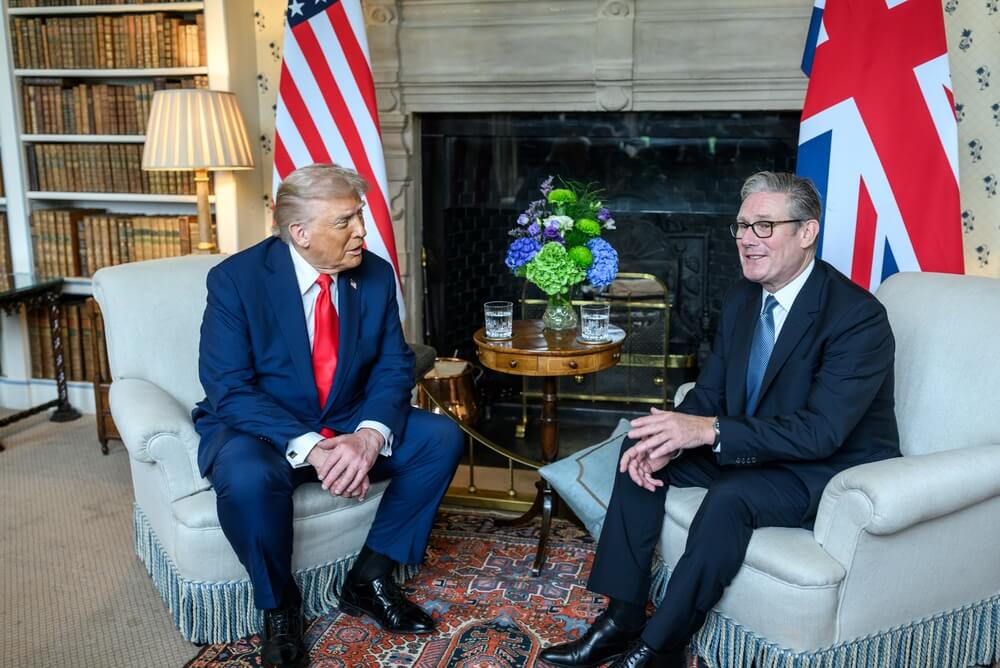 Keir Starmer described a “perfect storm” of crises heading for Britain’s shores, including wars and global economic strife
The prime minister described a “perfect storm” of crises heading for Britain’s shores, including wars and global economic strife in a world “that is more dangerous than at any point in my lifetime”.
The prime minister warned against the politics of grievance and division but made no direct reference to the upcoming elections. Perhaps his unwritten message was his party and the public should stick with the incumbent rather than risk a mid-term change.
The Conservative leader Kemi Badenoch, whose party is also facing potential losses in this week’s polls, acknowledged that the UK had moved from an era of two-party politics to multi-party politics. “That means that we need to do things a bit differently,” she told the BBC.
That inevitably involved rebuilding the status of the Conservatives under her leadership after its 2024 general election rout.
The challenge ahead
National and international developments inevitably affect voters’ choices in local and regional elections. But the current predominance of a top-down agenda should not eclipse the bottom-up nature of democratic politics.
In many ways, all politics really is local. The consequences of decisions taken at Westminster or conflicts half a world away will be felt by ordinary people in their streets and their homes.
Local and regional elected bodies should play a central role in helping their communities cope with the challenges and make their voices heard.
The key task of whichever candidates and parties are elected this week is to press for a greater and better funded role in determining the fate of local communities
Many issues that currently preoccupy voters, whether the availability of housing, the state of their high streets or the prevalence of petty crime, are nationwide concerns with potential local solutions.
And yet UK funding for local authorities has been under pressure for years, often leading to the closure of local facilities that help keep communities alive.
Research published by parliament recently revealed that the current spending power of English local authorities was about nine per cent below 2010-11 levels.
Perhaps the key task of whichever candidates and parties are elected this week is to press for a greater and better funded role in determining the fate of local communities, particularly those that have been left behind.
