I've made enough journeys between the UK, France, and Spain to know that European rail travel still feels disconnected. The booking process isn't always up to par, but the train experience is great.
For a multi-city trip, we frequently juggle several suppliers, different apps, disconnected tickets, and different passenger policies. One platform to book Eurostar and another to switch to SNCF or Renfe.
We calculate connection risks and personally monitor delays. We watch the next train depart while we deal with another operator at the station desk if one operator fails. Since many readers have been there and done that, I can see them shaking their heads.
That experience frustrates millions of travellers across Europe every year.
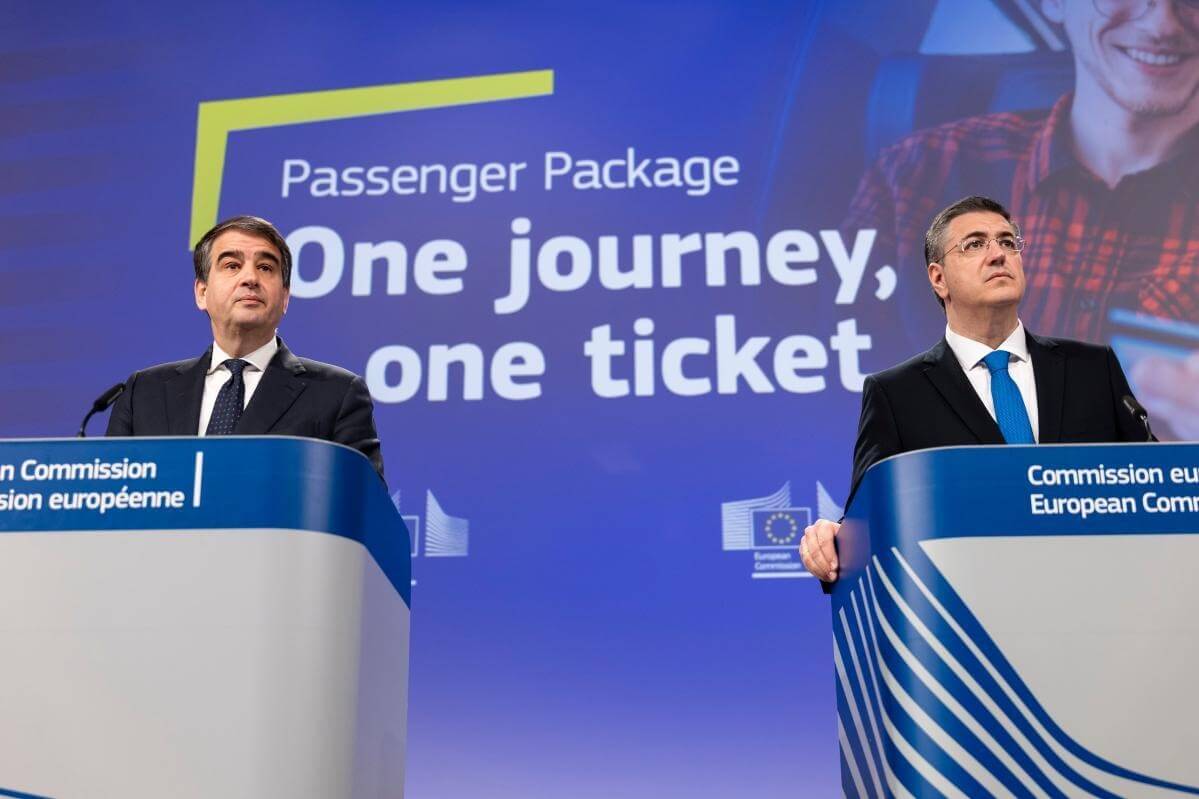
The European Commission announces something we’ve long wanted to see. “One journey, one ticket, full rights.” The initiative, if approved, aims to simplify rail travel across Europe through integrated digital ticketing, unified passenger protections, and cross-operator interoperability.
This proposal goes far beyond transportation policy. It is the potential towards a digitally connected European mobility ecosystem that finally puts passengers first.
Europe’s rail network already exists. The digital layer does not
Does anyone else think that there isn't enough digital cohesiveness in Europe? In its proposal, the European Commission addresses the existing fragmentation.
Travellers often find it difficult to plan multi-operator trips, evaluate routes, and fully understand their rights when travelling internationally. Systems for booking are still unclear. Platforms for ticketing are confusing. When separate tickets are involved, passenger protections fall apart.
When something goes wrong, operators rarely collaborate successfully in real time. The passenger always carries the operating burden.
Decades ago, airlines used alliances, combined booking systems, and integrated passenger rights frameworks to address this. That degree of cooperation throughout Europe was never fully realised by rail operators. The Commission wishes to alter that.
This proposal is a technology story as much as a transport story
Under the proposed framework, passengers could search for, compare, and purchase journeys across multiple rail companies in a single transaction on the platform of their choice. Independent ticketing platforms and rail operators would need to display travel options in a fair and transparent manner. Large ticketing platforms would also need to include competing services.
Consumers win when open digital ecosystems replace closed silos.
This proposal is a technology story as much as a transport story. APIs, multimodal transport data, interoperability standards, mobile ticketing infrastructure, real-time data exchange, and intelligent journey orchestration should determine this initiative's success.
Travel technology companies, SaaS mobility platforms, AI-powered route-optimisation providers, and digital ticketing innovators stand to benefit significantly if Europe implements this properly.
This initiative could create one of the world’s largest connected mobility marketplaces.
The passenger rights could change everything
These days, we usually lose protection for the next trip if we purchase separate rail tickets and miss a connection because one train arrives late. We absorb the expense. At the station, we negotiate. Stressed and worn out, we look for alternatives. The Commission aims to close that disparity.
In the event of problems, passengers using a single ticket across several carriers would get support, rerouting, reimbursement, and compensation. That instantly changes travellers’ psychology.
Europeans should buy a single ticket on a single platform and receive protection for the entire journey
Because uncertainty feels costly, people steer clear of complicated international rail trips. More than length, travellers are afraid of disturbance. A missed connection in Lyon or Paris can leave one feeling that the entire rail system is unreliable.
People rarely change their behaviour because institutions lecture them. People change their behaviour when systems become simpler, faster, and less stressful. This proposal recognises that reality.
I appreciate the human dimension behind the Commission's language. President Ursula von der Leyen framed the initiative around a very simple principle. Europeans should buy a single ticket on a single platform and receive protection for the entire journey. That sounds obvious, but why did Europe take this long to reach this point?
Why the final hurdles to innovation are the hardest to clear
Rail operators across Europe use different systems, legacy reservation architectures, pricing structures, and national regulations.
The Commission wants operators and platforms to establish fair and non-discriminatory commercial agreements for ticket distribution. While that sounds logical on paper, execution should determine credibility.
Europe should prioritise infrastructure upgrades over ticketing reform, according to several industry critics. They warn that digital simplicity is insufficient to address capacity constraints, rail bottlenecks, and disjointed high-speed networks. I am aware of that, but I reject the idea that Europe has to decide between the two.
 Europe established physical freedom of movement decades ago. Now Europe needs to complete the digital layer behind that promise
Infrastructure and digital experiences should work together, right? Due to a disconnected booking system, there is still conflict on modern trains. A perfect application connected to unreliable infrastructure also fails. Europe needs both.
When it comes to payments, identification verification, ticket access, disruption notifications, live routing, compensation claims, and multilingual customer service, travellers expect an integrated mobile experience. These needs seem to have been heard by the Commission.
Digital tools, integrated mobility services, multimodal trip planning, and cross-border booking interoperability are all mentioned in its proposal. Mobility is seen in Europe as an interconnected digital platform economy.
Public reaction suggests a desire for change. Online reviews from travellers say that the existing cross-border rail booking process is unpleasant, complicated, and unnecessarily disconnected. Stronger passenger rights protections for lost connections and delays are welcomed by others.
Every traveller wants seamless border crossings. Nobody wants five tabs, three apps, and uncertainty attached to every connection. Unless you live in my world, where 50 tabs open is child's play.
Europe established physical freedom of movement decades ago. Now Europe needs to complete the digital layer behind that promise.
If the European Commission delivers on this vision, rail travel across Europe could finally start feeling unified. That outcome would benefit travellers, climate goals, tourism, regional economies, and Europe’s broader digital ambitions.
I want to see operators work together so passengers finally experience rail travel as a single connected journey. Europe has talked about seamless mobility for years; now, Europe needs to build it.
