Poland’s largest energy company, Orlen, terminated a long-term contract for the purchase of liquefied natural gas from Qatar on 10 November, four days before the first Qatari tanker since March was due to arrive in Poland.
The vice-president of the company, Robert Soszyński, announced that the delivery was expected within 10 days, and shipping data published a few days earlier showed that the Al Kharsaah tanker was due to arrive at the port of Świnoujście on the Baltic on 14 November.
At the same time, Orlen maintained a second long-term contract with the Qatari state company QatarEnergy.
The cancelled contract was concluded in 2009, with deliveries beginning in 2016. It provided for one million tonnes of liquefied gas per year until 2034, corresponding to approximately 1.4 billion cubic metres of gas, or about seven per cent of Polish consumption in 2025.
Orlen has estimated the value of this year’s contract at €570 million, approximately $640 million. The contract will remain in effect for a further 60 days from the notice of termination.
It is the first known cancellation of a long-term contract with QatarEnergy since the war involving the United States, Israel and Iran disrupted Qatari exports in March.
As a legal basis, Orlen cited prolonged force majeure, meaning circumstances beyond the control of the contractual parties that prevent the supplier from making regular deliveries for months.
The announced tanker does not weaken that argument, because it is not known to which of the two contracts it relates, and a single shipment does not make up for the several-month delay.
However, the decision taken on the eve of the first expected delivery also requires a commercial explanation. The contract with an oil‑linked price was cancelled, and the contract whose price follows the natural gas market was retained.
Gas traders estimate that under the terminated contract Orlen was paying about 16 per cent of the price of a barrel of Brent crude for every million British thermal units, a standard measure of gas energy.
According to data from the US Energy Information Administration, the average price of Brent in September and October was between $114 and $124 per barrel, which, according to this formula, gives a gas price of $18 to $20. New long-term US contracts, based on traders’ estimates, offer gas at $6 to $7 per unit.
Orlen did not say that price influenced the decision, but with such a difference it is difficult to distinguish the legal reason from the commercial one, because the war gave the company grounds to abandon the more expensive formula while retaining Qatar as a supplier.
Poland secured alternative supplies before the war
When it signed the contract with Qatar in 2009, Poland obtained most of its imported gas from Russia.
Today, it has a terminal in Świnoujście that can convert 8.3 billion cubic metres of imported liquefied gas into a gaseous state each year. The Baltic Pipe gas pipeline, connected to Norwegian deposits via Denmark, has an annual capacity of approximately 10 billion cubic metres.
Orlen itself produces gas in Norwegian waters, and at the beginning of November it began receiving contracted quantities from the Plaquemines terminal, a facility belonging to the American company Venture Global in Louisiana.
Orlen is increasingly trading gas outside Poland. The company has sold six shipments in Asia, to customers in China, South Korea and Thailand, and plans to open a trading office in Singapore in the first quarter of 2027.
The number of Qatari crossings barely exceeded 30 per cent of the pre-war level
Such a business requires contracts that permit a choice of delivery location and a fleet of chartered tankers. For a company that sells gas in other markets as well, a contract with an oil-linked formula becomes a burden as soon as cheaper, more flexible gas becomes available.
Before the war, Qatar accounted for approximately one-fifth of global trade in liquefied gas. Iranian strikes on 18 and 19 March damaged two of the 14 gas-to-liquids facilities in Ras Laffan, Qatar’s Gulf coast energy hub. Export capacity was reduced by 12.8 million tonnes per year, about 17 per cent of the total, and repairs could take three to five years.
Gas from intact facilities must pass through the Strait of Hormuz, the only sea route out of the Persian Gulf, where the risk of attacks and high insurance costs continue to hamper regular shipping.
In October, 31 tankers carrying liquefied gas passed through the strait, 23 from Qatar and eight from the United Arab Emirates, according to data from the analyst company S&P Global Energy. The number of Qatari crossings barely exceeded 30 per cent of the pre-war level.
By early November, loading at Ras Laffan had recovered to about half its previous pace, but the number of ships leaving the Gulf was not increasing at the same rate. In such circumstances, a single tanker announced for Poland could not signal the resumption of regular Qatari deliveries.
Qatar buys protection in America
As it seeks to restore exports from its own facilities, QatarEnergy is contracting large volumes of American gas. On 22 October it signed agreements with Cheniere, the country’s largest exporter of liquefied natural gas, for up to four million tonnes per year from the Sabine Pass terminal in Louisiana and the Corpus Christi terminal in Texas.
A week later it concluded a deal to purchase three million tonnes per year from the Louisiana LNG project, operated by the Australian company Woodside. Deliveries from both projects will not begin until the start of the next decade, and part of Cheniere’s volume depends on a final decision on the expansion of one of the terminals.
A shipment from Texas or Louisiana can replace Qatari gas only if the buyer agrees
On 29 October, the director of QatarEnergy, Saad Sherida Al-Kaabi, explained the economic rationale for these purchases. If the Strait of Hormuz is closed again, prices on the international market are likely to rise sharply, and the Qatari company will be able to sell the gas contracted in America and recoup some of the revenue lost due to the domestic shutdown.
The large contracted volumes, however, do not give Doha the freedom to supply American gas instead of Qatari gas whenever it wishes. Many of the older Qatari contracts specify the terminal from which the gas must originate and the destination to which it must be delivered.
A shipment from Texas or Louisiana can replace Qatari gas only if the buyer agrees. QatarEnergy has already been buying individual US cargoes for some Asian customers this year.
Such arrangements are expensive while the war keeps gas prices high, and they cannot compensate for the permanent loss of capacity at Ras Laffan.
India does not have Poland’s alternative
The example of Petronet, India’s largest importer of liquefied natural gas, shows how differently the same disruption affects a customer that relies heavily on Qatar.
Under its contract, the company receives 7.5 million tonnes of Qatari gas annually, but only about six of the 75 to 80 shipments that were due to arrive between March and October were delivered.
Qatar still owes Petronet dozens of cargoes under a settlement reached at the end of 2015. At that time, after the drop in oil prices, the Indian company was taking significantly less gas than it had contracted, and Doha waived a fine of approximately $1.8 billion and substantially reduced the price.
Director Akshay Kumar Singh said on 2 November that the company is in talks to take over the backlog. The contract allows the remaining gas to be delivered until April 2029, but Petronet is seeking to receive it earlier.
The Indian company could probably invoke the same force majeure clause, but it has no substitute for Qatari gas
In 2024, Petronet extended its contract with Qatar for the period 2028 to 2048 and at the same time changed the delivery terms. Under the existing agreement, it takes over the gas at the Qatari port and organises transport, whereas under the new one, delivery to Indian terminals will be organised by the Qatari supplier.
For Petronet, this means that from 2028 the tanker charter, insurance and the risk of navigating through the Strait of Hormuz will be borne by the Qatari seller. By extending the contract, India has tied a large part of its LNG imports to Qatar for the next two decades.
Orlen could terminate one Qatari contract without jeopardising Poland’s supply and keep the one with the better price. At the same time, Petronet is negotiating when it will receive gas it has already contracted.
The Indian company could probably invoke the same force majeure clause, but it has no substitute for Qatari gas. That difference will also determine how far each of the two buyers can go in any future claims against Doha.
American exporters gain both buyers
LPG buyers are increasingly seeking contracts that allow them to decide for themselves where shipments will end up. According to estimates by the International Energy Agency, such contracts accounted for 29 per cent in 2016 and more than half in 2025.
Over the same period, the proportion of contracts in which the price follows the gas market, fully or partially, rose from about 30 to 45 per cent.
Much of that change has been driven by US exporters, whose contracts usually allow buyers to divert shipments and sell them wherever the price is higher.
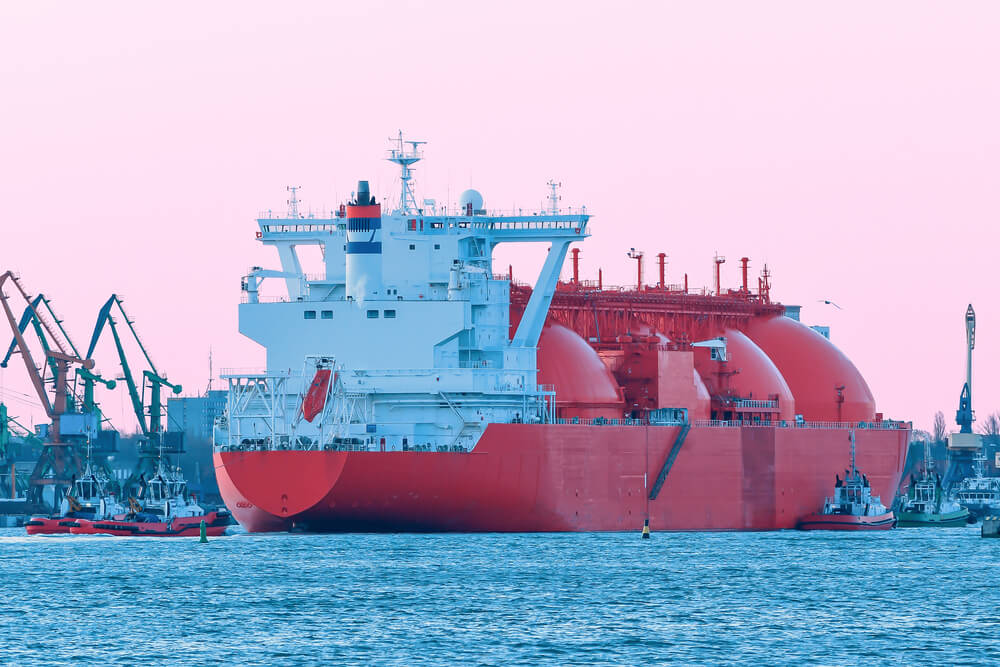 Europe is heading into winter with its lowest gas inventories since 2013, and importers need shipments that can arrive immediately
Still, American producers cannot immediately replace all the lost Qatari gas. Assuming that navigation through the Strait of Hormuz remains severely disrupted until the end of the year, the same agency predicts a fall in global supplies of liquefied gas of about three per cent in 2026 and a total loss of 150 billion cubic metres between 2026 and 2030 due to the war and damaged infrastructure.
Europe is heading into winter with its lowest gas inventories since 2013, and importers need shipments that can arrive immediately.
In 2027, a new round of negotiations on older Qatari contracts is highly likely. Buyers with Norwegian or US alternatives will seek lower prices, shorter terms after which prolonged force majeure allows termination, and an obligation on the seller to supply replacement gas from other sources during any downtime.
Buyers without alternatives, such as India, will primarily seek a more reliable delivery schedule and compensation for missed quantities.
Doha will retain much of its market power thanks to its reserves and low production costs, but in those negotiations it will no longer be able to dictate terms to buyers who have other options.
American exporters stand to gain the most. Orlen already buys volumes from them to offset part of Qatar’s deliveries, and QatarEnergy contracts gas from them to protect its revenues in future crises.
The contracts being signed today, with free choice of destination and prices linked to the gas market, will set the standard by which customers measure Qatar’s offers over the next decade.
