Although 2025 will probably be remembered as the year that US President Donald Trump upended the global trading system, the truth is that both of the world’s hegemons, the United States and China, have gone rogue.
Surging US protectionism and resurgent Chinese mercantilism are now twin scourges afflicting the rest of the world, especially developing countries.
While some apply the label “G-Zero” to today’s leaderless world, it is more accurate to say that we are dealing with a “G-Negative-Two” world.
Instead of providing global public goods, China and the US are inflicting global economic costs, and they are doing so in mutually reinforcing ways.
In some sense, Chinese mercantilism begat US protectionism. Trump’s long-standing tariff obsession derives from his fury-fueled conviction that trade surpluses abroad have damaged the US economy, especially its manufacturing sector.
In that world view, China, with its consistently large trade surpluses, was the provocateur-in-chief, even though in practice more countries have been targeted.
One of the world’s most protectionist economies
Trump’s “Liberation Day” tariffs in April, and the tumultuous iterations that followed, have made the US one of the world’s most protectionist economies.
On average, tariffs on exports of goods to the world’s largest market have jumped from just over 2% to 17%, an eightfold increase.
Tariffs have become an instrument for indulging the president’s erratic whims and furthering private interests
Not only has access to US markets been constrained, but it is also radically more uncertain, because tariffs have become an instrument for indulging the president’s erratic whims and furthering private interests.
In lawsuits challenging Trump’s justification for such sweeping tariffs, the Supreme Court has signaled that it will not second-guess the executive’s authority to determine what qualifies as a threat to national security.
Never mind that the same authority has been (implicitly) invoked to target Brazil for baldly political reasons, and to punish India for contradicting Trump’s claim to have brokered the peace in its border skirmish with Pakistan in May.
Restraining such an arbitrary and absurd exercise of presidential authority is surely the Court’s core responsibility.
But even if it does rule against Trump, he will have other ways to pursue the same protectionist agenda, and US trading partners will still be operating in a fog of uncertainty.
To be sure, the direct impact of Trump’s tariffs on other countries has been obscured by other developments in the US economy, notably the AI boom, which has propped up demand and imports. But there have also been indirect effects, and chief among these is Chinese mercantilism.
Chinese mercantilism
Of course, mercantilism has been etched in China’s economic DNA for centuries.
The Financial Times recently reported that China is making trade impossible because “there is nothing it wants to import, nothing it does not believe it can make better and cheaper.”
It was an echo of 1793, when Imperial Britain’s emissary, Lord Macartney, visited China to persuade Emperor Qianlong to open the Chinese market to British goods. In response, the emperor boasted:
“Our Celestial Empire possesses all things in prolific abundance and lacks no product within its own borders. There is therefore no need to import the manufactures of outside barbarians in exchange for our own produce. But as the tea, silk and porcelain which the Celestial Empire produces, are absolute necessities to European nations and to yourselves, we have permitted, as a signal mark of favour, that foreign hongs [merchant firms] should be established at Canton, so that your wants might be supplied and your country thus participate in our beneficence.”
Chinese mercantilism has been aggravated by Trump’s tariffs
Not only can we discern a similar attitude today, but Chinese mercantilism has been aggravated by Trump’s tariffs.
With access to US markets reduced and the Chinese growth model still so dependent on exports, the Chinese juggernaut has turned its focus to conquering markets elsewhere, especially in Southeast Asia.
Proximate economic necessity has supercharged a deep-seated predilection.
As Shoumitro Chatterjee and I have documented, China’s exports of low-value-added goods to developing countries have been rising sharply, undermining the competitiveness of these countries’ own domestic industries.
Despite rising wages, China still accounts for a large share of global exports, including in areas where it should have ceded space to poorer countries.
Moreover, it is becoming increasingly clear that China’s exports are not the result of some natural advantage; rather, they are being sustained by its exchange-rate policy.
As Brad Setser of the Council on Foreign Relations and others have argued, the renminbi is undervalued by about 20%.
Protectionism will become a broader phenomenon
Thus, while the Trump tariffs exacerbate China’s mercantilism, developing countries are opting for another round of protectionism to shield their domestic industries from the Chinese onslaught.
Mexico, for example, has just imposed tariffs on goods from China and India.
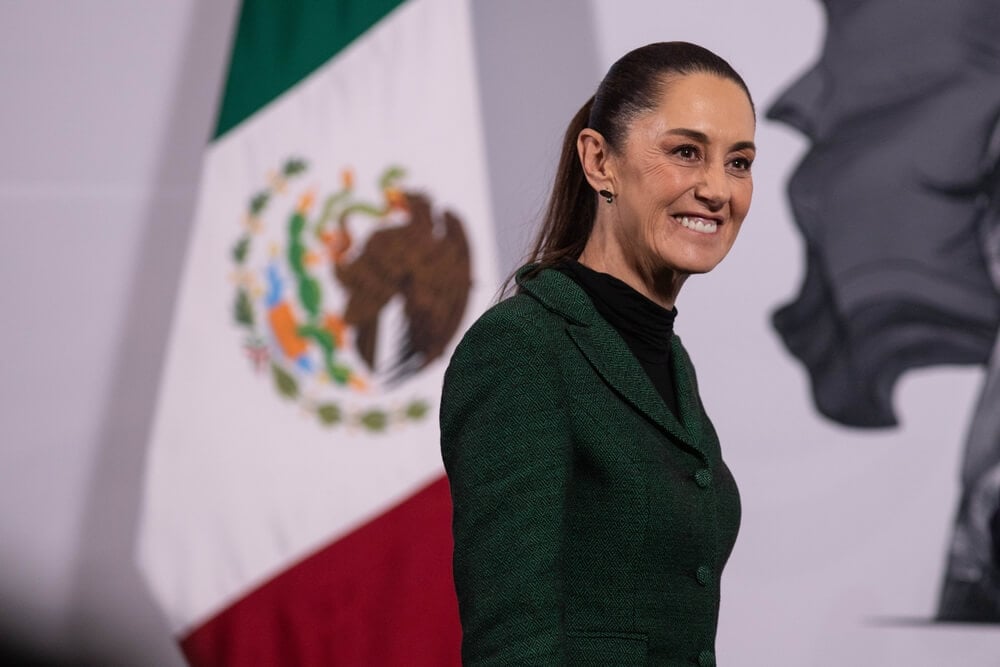 Mexico has just imposed tariffs on goods from China and India - Claudia Sheinbaum
But while other countries are seeking to shield themselves from China, targeting only one country is difficult in today’s world of complex supply chains.
Inevitably, protectionism will become a broader phenomenon.
What does this tell us about the near-term future? In recent research, Dev Patel, Justin Sandefur, and I find that the heady convergence of developing countries toward Western standards of living stalled in the last decade.
Slowing growth in the developing world has coincided with the reversal of globalization.
Exports of low-value-added manufacturing products such as textiles, apparel, and furniture are the engine of development.
If it stalls, the poorest people in the poorest parts of the world will be the first victims, and the blame will lie with the world’s two hegemons.
The US and China have more in common than they would like to believe. Both are hijacking the global economy and limiting trading opportunities for everyone else.
Arvind Subramanian is a senior fellow at the Peterson Institute for International Economics.
