António Guterres' term ends at the end of 2026, and the election of his successor comes at a time when the United Nations has limited political influence in key international crises.
This makes the election more than just a routine change at the top of the organisation. It is a process that will demonstrate whether the UN can still assert authority in a system where the main decisions are made by states, primarily the great powers.
The formal framework is straightforward: the candidate is proposed by the United Nations Security Council and confirmed by the General Assembly.
In practice, the decision is made within the Security Council, which is why the process is not conducted publicly but through closed consultations and political coordination between Washington, Moscow, Beijing, London and Paris.
At the same time, the election is taking place amid active conflicts that the UN has failed to influence, limit or stop.
This context shapes the perception of the process itself: the organisation is selecting a leader at a time when its political influence is drastically diminished.
A procedure that appears neutral but is not
The candidacy will be considered in the Security Council, where the five permanent members can veto any candidate.
Voting is secret, and a candidate does not have to be formally rejected; a negative signal in closed consultations is sufficient.
This makes the election process politically filtered from the outset. Candidates compete not only on merit but also on their acceptability to all five centres of power. In this system, the strongest candidate is often not the one with the most experience but the one who provokes the least resistance.
Candidates already holding high positions within the UN continue to perform their duties
The process was formally launched at the end of November 2025, with changes adopted by the General Assembly intended to introduce more order into the procedure.
The proposal includes greater transparency in campaign financing and recommends that candidates from within the United Nations system step down from their positions during the candidacy.
In practice, these rules do not have equal weight for everyone. Candidates already holding high positions within the UN continue to perform their duties, thus retaining institutional visibility and access to key actors.
Those from outside the system do not have this advantage. This raises questions about the fairness of the process, but there is no mechanism to enforce compliance with the recommendations.
Grossi – visibility as a political risk
Rafael Grossi enters the race as the candidate with the most prominent international involvement. As director of the International Atomic Energy Agency, he was directly involved in managing nuclear risks in Ukraine and Iran. His position provided him with access to the highest political levels.
At the same time, his position limits some of his political options. His relationship with Iran is openly conflicted.
Tehran regards him as an actor who has worked in favour of Western interests in overseeing the nuclear programme, and this view has been publicly expressed.
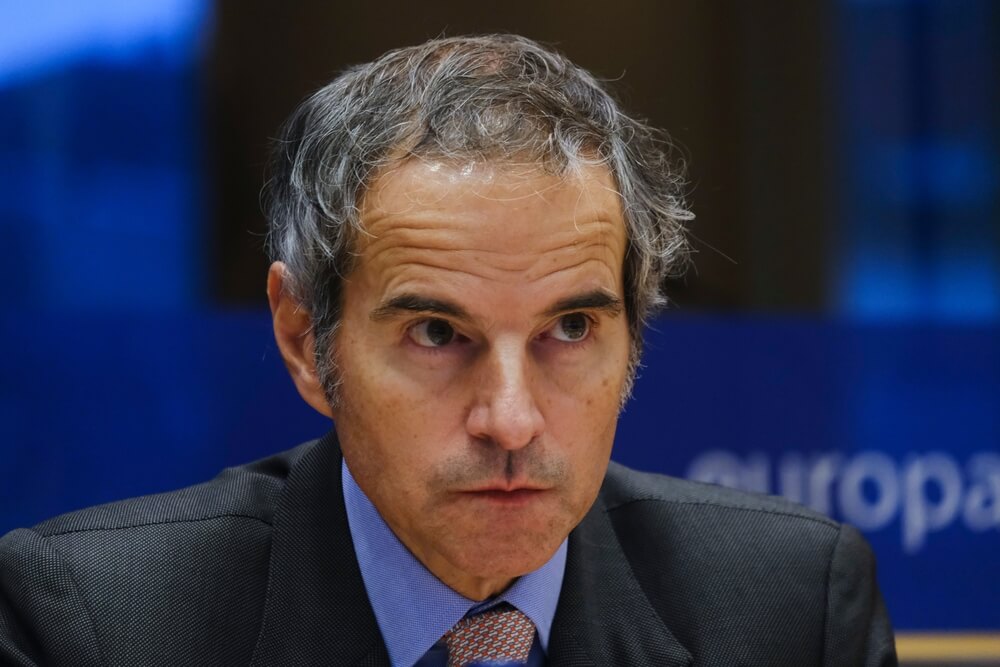 Rafael Grossi retains access to the highest political contacts and public visibility that other candidates lack
Iran has no formal role in decision-making, but its political influence among countries outside the Western bloc is not negligible.
This may not prevent his candidacy, but it could make it harder to build broader support and may create additional resistance in the General Assembly.
More importantly, Moscow and Beijing do not perceive his profile as neutral. As director of the IAEA, he operated within a framework that, in those capitals, is interpreted as aligned with Western positions. In a process where the absence of opposition is more important than active support, this is a significant problem.
His decision to remain at the helm of the IAEA during the campaign further complicates his position. He retains access to the highest political contacts and public visibility that other candidates lack.
While not formally prohibited, this raises questions about equal conditions in a race that, at least in principle, should be balanced.
Grynspan: the least controversial option
Rebeca Grynspan has a different profile. Her career is almost entirely within the UN system and international economic institutions.
As Secretary-General of the United Nations Conference on Trade and Development (UNCTAD), she focuses on development and the global economy.
Her key advantage is not significant political weight, but the absence of conflict with major powers.
A candidate who can proceed without being blocked has a structural advantage over those with stronger but more controversial profiles
Unlike the other candidates, there is no clear indication that any permanent member would veto her candidacy.
This is decisive in this process. A candidate who can proceed without being blocked has a structural advantage over those with stronger but more controversial profiles.
An additional factor is the political pressure on the UN to appoint a woman as head of the organisation for the first time. While this argument is not decisive for the Security Council, it influences the broader diplomatic context and perceptions of the legitimacy of the election.
Bachelet: a candidate who lost support before the vote
The candidacy of Michelle Bachelet, the former two-term president of Chile, demonstrates how quickly domestic politics can alter international positions.
Her nomination resulted from coordination among several Latin American countries, including Chile.
A change of government in Chile led to a withdrawal of support. On 25 March, the new Chilean government formally withdrew her nomination.
Michelle Bachelet's candidacy lost crucial political backing before the process even formally began
Thus, her candidacy lost crucial political backing before the process even formally began.
At the same time, resistance to her election increased in Washington because of her positions as high commissioner for human rights.
When the United States signals opposition and the nominating country withdraws support, the candidacy does not fail in the vote – it fails before the vote even occurs. In this scenario, the support of Brazil and Mexico has no practical effect.
Sall: a candidate without sufficient political support
Macky Sall, former president and prime minister of Senegal, is the only candidate from Africa. His experience leading regional organisations gives him a certain political weight.
The problem is the lack of unified support from Africa. His nomination comes from Burundi, not from a broader regional coalition. Without that support, his candidacy remains limited.
In a system where consensus is essential, a candidate without a clear base of support can hardly progress.
Regional rotation: an unwritten binding rule
Although there is no formal regional rotation rule, it operates in practice. The last secretaries-general came from Asia and Europe. The logic of diplomatic balance points to Latin America as the next region.
That is why, out of a total of four candidates in the race, three are from Latin America. The problem is that this advantage can easily become a weakness. Votes from the region are divided rather than consolidated.
Without agreement on a single name, no candidate from Latin America will reach the final stage with clear support. In such a situation, the Security Council seeks another solution.
Then, a candidate emerges who is not the first choice of the majority but is also not unacceptable to any of the great powers. In this process, that factor is often decisive.
In theory, a candidate must receive nine votes in the Security Council. In practice, the key condition is the absence of a veto
In theory, a candidate must receive nine votes in the Security Council. In practice, the key condition is the absence of a veto.
For Bachelet, the signal from the United States is negative. For Grossi, there are open questions regarding Russia and China. For Sall, the problem is a lack of support, not a veto.
That leaves Grynspan as a candidate without an obvious obstacle. In a system where elimination is more important than election, this is a key advantage.
The UN in crisis: the context that determines the election
The election of a new secretary-general comes at a time when the United Nations is operating with limited political influence.
The United Nations Security Council is in a state of paralysis. In the most important crises, there is no agreement among the permanent members, so no decisions carry real weight.
Financial pressure is constant. Delays in the payment of contributions, primarily by the United States, directly affect operations and planning.
The future secretary-general's influence is limited from the outset
At the same time, trust in the organisation is weakening in much of the world. In many countries of the Global South, the UN is not seen as a neutral framework but as a forum where power relations between the great powers are reflected.
In such circumstances, the future secretary-general's influence is limited from the outset. The role retains formal importance, but its impact depends on the willingness of states to give it political weight.
What is a realistic outcome?
If the process proceeds as in previous cycles, the decisive criterion will not be who the strongest candidate is, but who can pass without opposition from the permanent members of the Security Council. In such a system, a compromise is chosen, not a leader who changes the balance.
This means the candidate must be credible enough to lead the organisation, but he must not have a political profile that would arouse suspicion or resistance in Washington, Moscow, or Beijing.
The boundary between acceptable and unacceptable is not determined publicly but through closed consultations.
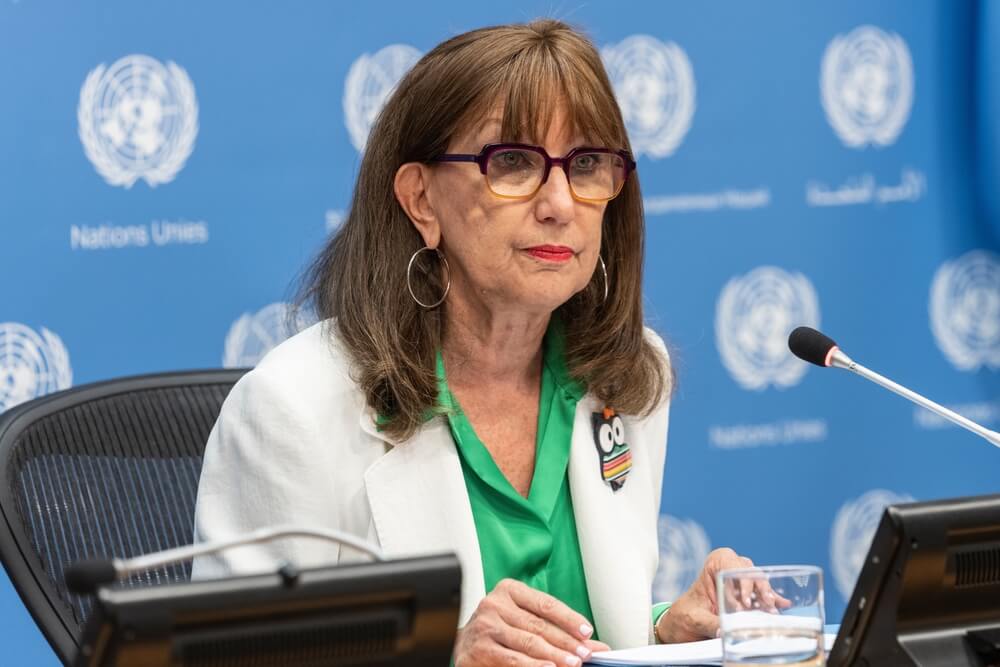 Rebeca Grynspan stands out because she avoids provoking opposition, not because of her influence
At present, Rebeca Grynspan fits this logic best. She stands out because she avoids provoking opposition, not because of her influence. This does not mean, however, that the outcome is predetermined.
Final rounds in the Security Council often change the balance of power. However, key decisions precede the formal vote, limiting the scope for surprises.
What is more certain than the name itself is what the election reveals about the state of the system. The new Secretary-General will not change the way the UN operates.
It can manage existing frameworks but cannot redefine them without the political support of major powers.
If a candidate is elected without conflict with the permanent members of the Security Council, it will confirm that the UN remains a place for coordination, not for decision-making. If the process becomes stalled or prolonged, it will further demonstrate how burdened the system is with internal divisions.
In both scenarios, the result of the election will not solve the problem. It will make it clearer. In this election, the UN determines not only who will lead the organisation but also how politically relevant it is.
