The killing of a cartel leader in Mexico may appear, at first glance, as a clear security victory. The state eliminates a long-wanted figure, and public sentiment briefly leans towards a sense of restored order.
Yet the issue extends far beyond the removal of a single criminal actor. What truly matters is the scale, depth, and systemic reach of the narco-economy represented by that leader.
This is not merely an armed organisation operating outside the law; it is a multi-billion-dollar economic ecosystem embedded in global trade, finance, and politics.
A brief history of the narco-economy
Latin America’s drug economy became globally visible in the 1980s with Colombia’s cocaine cartels. Medellín and Cali were not simply criminal syndicates; they were economic powers.
Cocaine flows into the United States have reshaped the Caribbean corridor and Central America. When pressure intensified in Colombia during the 1990s, production and distribution chains fragmented, and Mexico gradually emerged as the strategic hub. It evolved from a transit country into a key node of the global supply chain.
By the 2000s, Mexican cartels expanded beyond cocaine trafficking into synthetic drug production. Methamphetamine – and later fentanyl – offered higher margins with lower production costs.
Assessments indicate that Mexican criminal organisations control between 70% and 90% of the illicit drug market in the U.S
Reports from the United Nations Office on Drugs and Crime (UNODC) highlight the dramatic growth of synthetic drug markets over the past decade. This transformation significantly increased cartel profitability.
Several academic estimates suggest that major Mexican cartels generate tens of billions of dollars annually.
U.S. Congressional Research Service analyses and DEA assessments indicate that Mexican criminal organisations control between 70% and 90% of the illicit drug market in the U.S.
At such a scale, this is no longer “crime revenue”; it resembles the GDP of smaller economies. It is, effectively, a parallel economic system.
The scale of money and its mechanisms
The narco-economy operates through three interconnected stages: production, distribution, and laundering.
Production often begins in rural Latin America. Distribution relies on sophisticated transnational logistics networks. Laundering takes place in the shadows of the modern financial system.
Money laundering is the system’s most sophisticated component. Offshore financial centres, real estate investments, restaurant chains, construction firms, and certain financial instruments provide channels to reintegrate illicit funds back into legal circulation.
When the state withdraws, money fills the vacuum
According to Financial Action Task Force (FATF) assessments, global money laundering flows are estimated in the trillions of dollars annually, with drug proceeds representing a significant share.
Economists sometimes refer to an “illegal economy multiplier effect.” Even illicit money is spent, invested, and circulated. In certain Mexican towns, cartel leaders have funded weddings, infrastructure, and local aid, gaining a degree of social legitimacy.
When the state withdraws, money fills the vacuum. And money, regardless of its origin, can generate influence.
Political influence and institutional penetration
The narco-economy feeds politics in three primary ways: financing, intimidation, and infiltration.
First, electoral financing. Prosecutorial investigations in various Latin American countries have revealed cases where local campaigns received cartel funding.
Second, coercion. Mayors, police chiefs, and local officials are pressured into cooperation – or removed.
These organisations do not merely traffic drugs; they collect “taxes,” impose order, and sometimes provide social assistance
Third, institutional infiltration. Links are cultivated within security forces, customs authorities, and administrative structures.
Publications such as The Economist and Financial Times have noted that cartel financial power has created quasi-parallel governance structures in some regions.
These organisations do not merely traffic drugs; they collect “taxes,” impose order, and sometimes provide social assistance. This constitutes a direct challenge to state sovereignty and legitimacy.
Sectoral spillovers
Drug revenues do not remain underground; they seep into legitimate sectors, particularly:
- Real estate: High-value, cash-intensive transactions facilitate laundering.
- Tourism and entertainment: Restaurants, nightclubs, and hotels provide ideal cash-flow environments.
- Construction and infrastructure: Complex subcontracting chains obscure funding origins.
- Agriculture and logistics: Vertical integration strengthens operational control.
Criminal analyses frequently highlight real estate as one of the most common laundering vehicles. In some U.S. jurisdictions, enhanced scrutiny of all-cash luxury property purchases reflects awareness of this vulnerability.
What the El Mencho case reveals
Eliminating a cartel leader disrupts a node within a network – but it does not dismantle the network itself. The narco-economy is demand-driven, not personality-driven. As long as strong demand persists in North America and Europe, supply chains will reconfigure.
The criminological literature describes the “kingpin strategy” – targeting top leaders – as sometimes producing short-term gains but long-term fragmentation.
Poverty, inequality, weak institutions, and limited state capacity create fertile ground for narco-economic expansion
When a leader falls, internal competition intensifies. Smaller, more aggressive groups may emerge, increasing violence rather than reducing it.
Thus, the challenge is not solely a security issue. It is economic and social. Poverty, inequality, weak institutions, and limited state capacity create fertile ground for narco-economic expansion.
Where money goes, power follows
The narco-economy reminds us of a fundamental truth: money travels faster than ideology, faster than borders, faster than regulation.
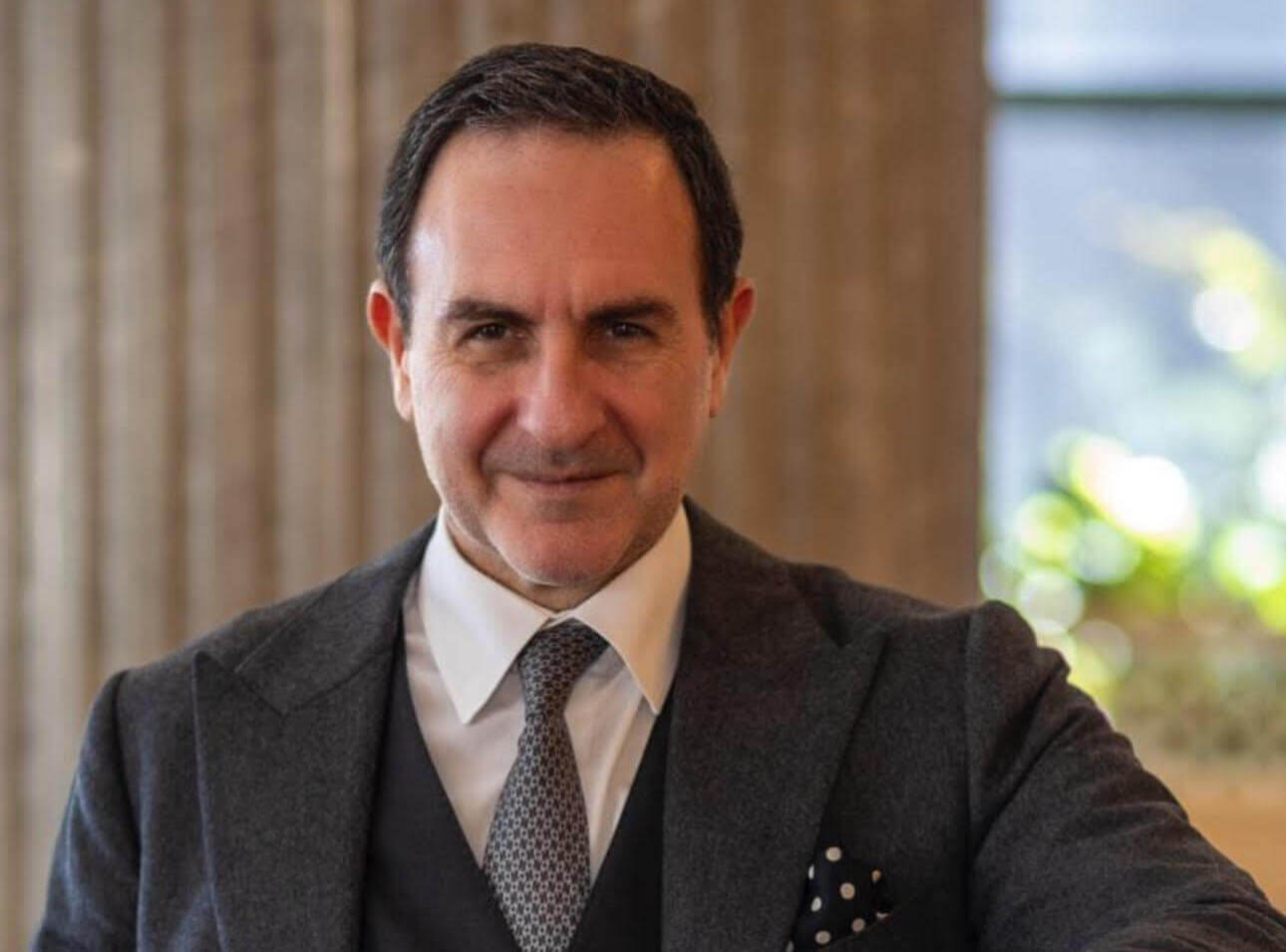 The drug economy is the dark mirror of globalisation - Emre Alkin
A state may eliminate a leader, but dismantling a multi-billion-dollar financial flow requires more than military force.
Without demand-reduction policies, financial transparency, coordinated anti-money-laundering enforcement, and inclusive local development strategies, the war merely changes names.
El Mencho’s death may represent a turning point. But the scale of the narco-economy suggests that the real battle is not only against armed traffickers in remote territories.
It is against opaque financial systems, global consumption patterns, and institutional weaknesses that allow illicit capital to circulate.
The drug economy is the dark mirror of globalisation. And that mirror does not reflect one nation’s failure alone – it reflects a shared structural vulnerability.
